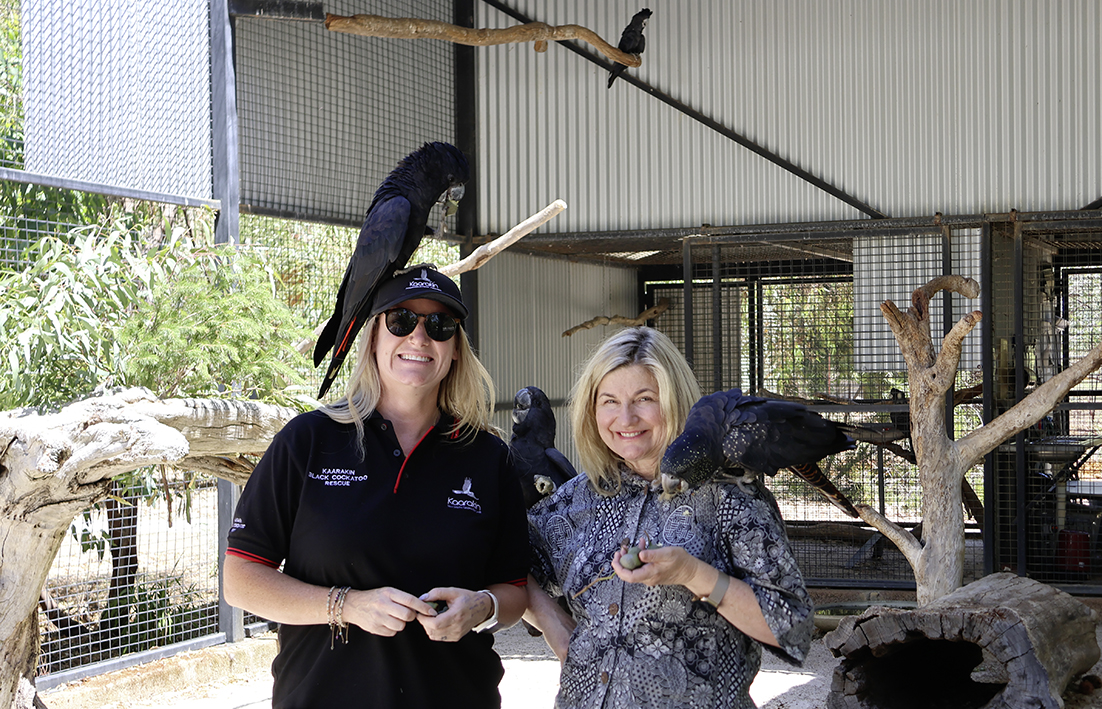
THE Kaarakin Black Cockatoo Conservation Centre in Martin has received $7100 to ramp up its H5 bird flu preparedness.
The funding will directly support the endangered Baudin’s and Carnaby’s black cockatoos and be used for a range of activities including assistance with disseminating a biosecurity plan for staff and providing additional staff uniforms to limit disease spread.
The funds are part of the Zoo and Aquarium Association’s second funding round of $1.9 million supporting 26 threatened species across 21 facilities, including the Kaarakin Black Cockatoo Conservation Centre.
This money is backed by a $5m Australian government grant to prepare vital populations of threatened native species for a potential outbreak.
It is also part of the government’s broader $100m investment to prepare for H5 bird flu, including $35.9m for environment measures.
“From eastern quolls and the New Holland mouse to the helmeted honeyeater and Tasmanian wedge-tailed eagle, across the country critical populations of native species are being safeguarded,” an association spokesperson said.
“While Australia is currently free from the serious and contagious H5 bird flu, this strain is causing mass mortalities in birds and some types of mammals overseas.
“Options for direct action to protect threatened species in the wild from a potential outbreak are limited, so protecting captive species populations is a crucial investment.”
Environment and Water Minister Senator Murray Watt said Australia remained the only continent free from H5 bird flu, highlighting the importance and urgency of the work currently underway across the country to prepare our most at-risk species and priority biodiversity.
“This funding will allow facilities to undertake critical preparations, such as installing wild bird preventions on enclosures, upgrading veterinary equipment and undertaking biosecurity training for staff,” Mr Watt said.
“This funding builds on the substantial investments already made by the Albanese Labor government in protecting and recovering threatened biodiversity.”