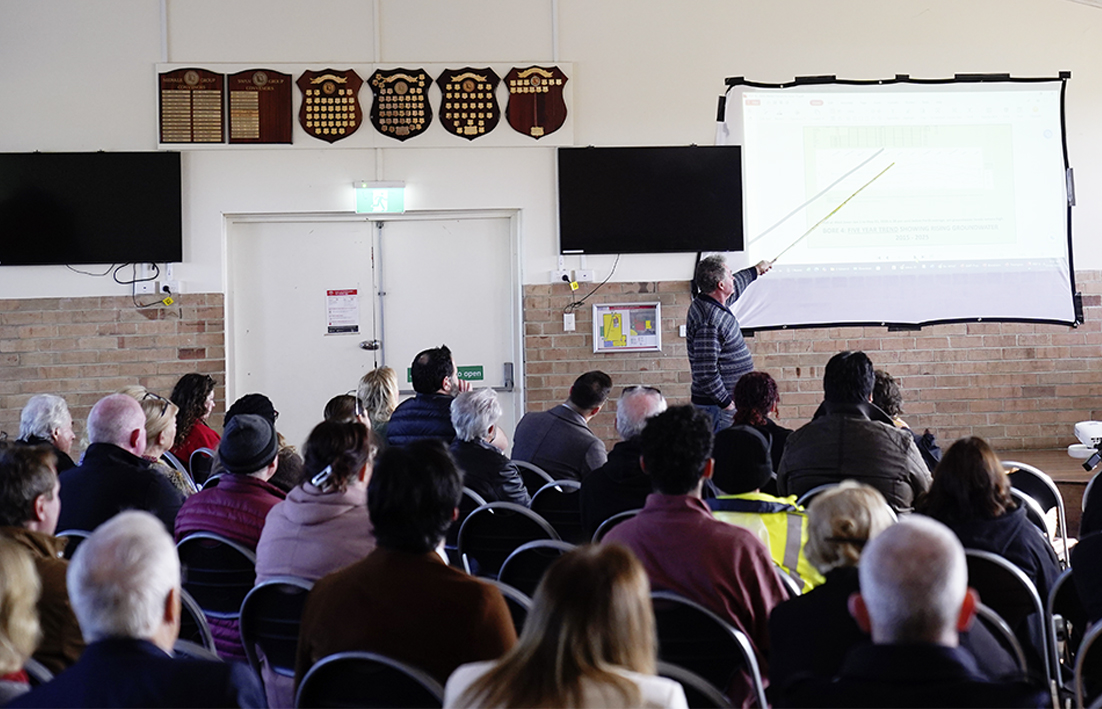
THE groundwater forum at Caversham Memorial Hall last Friday heard claims that groundwater impacts predicted decades ago are now being experienced by residents across parts of Swan’s northeast growth corridor.
The forum brought together academics, environmental advocates and affected landowners to discuss flooding, rising groundwater levels and the challenges posed by ongoing urban development.
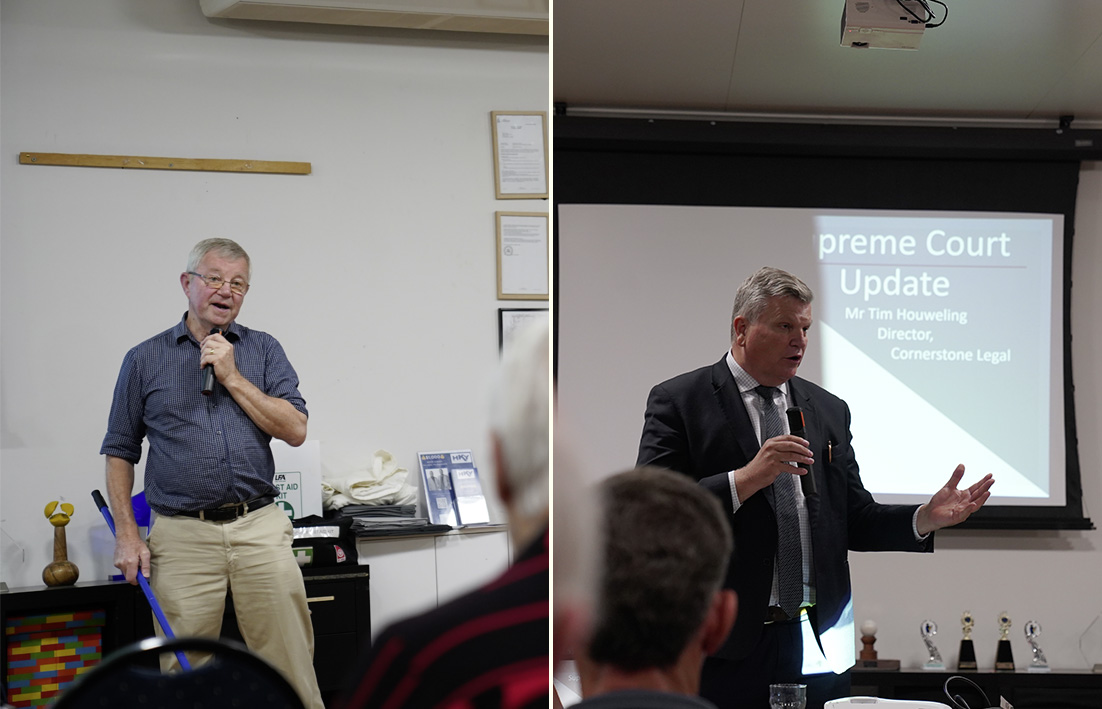
UWA academic and hydrologist Sally Thompson provided an overview of how groundwater moved through the landscape and why Swan Valley conditions differed from many other parts of Perth.
Dr Thompson said much of the understanding underpinning groundwater management in WA was developed in areas with deep sandy soils, where water could disperse more easily than in the Swan Valley’s shallower groundwater systems and clay-rich soils.
Drawing on field measurements and groundwater monitoring data collected over more than a decade, Dr Thompson outlined evidence suggesting groundwater levels had risen significantly in parts of Dayton following urban development.
She said researchers estimated substantial additional volumes of groundwater were moving through affected properties such as Swan Valley residents Harry Gratte and Cheryl Rogers’ tree farm.
Importantly, UWA Masters researcher Amirul Asraf Shah Nizamuddin had been observing and studying how groundwater was behaving at Mr Gratte and Ms Rogers’ tree farm over spring and winter and confirmed some of the residents’ suspicions.
“The slope of the water table (is) that one important factor that governs how (groundwater) is moving and its direction,” Dr Thompson said.
“The key takeaway here is that the groundwater is moving to the east.
“So any impacts from this development are moving away from the long-term monitoring network, at least on this side, and they’re not being seen by that network, but they are being felt by the property owners.
“Then we said, ‘Can we work out how much more water is moving just into this tree farm area because of the development?’
“This is where the fact that Harry has been measuring what’s going on in terms of water depths, for the past 10 years becomes really helpful, because it’s clear.
“The water table at their property is now about 1m or higher than it was in the past.
“This changing water level is very coincidental with the development.”
Dr Thompson described the increase as equivalent to roughly two Olympic-sized swimming pools of water per year flowing through the farm site compared with historical conditions.
Several speakers told attendees they had previously been informed they were the only people experiencing flooding issues before discovering similar problems were occurring elsewhere in the region.
Dayton residents Philipp and Marija Keller said flooding on their property had progressively worsened following nearby subdivision works, contributing to their decision to place the property on the market after 27 years.
“We’ve now got it on the market and we’ll be moving on,” Ms Keller said.
“But we’re not finished. We’re still here to share our story and hopefully get some action happening.”
The Kellers were active contributors in the Swan Valley, running Keller’s Farm selling free range and farm fresh eggs from their own chooks and making their own produce.
“For 20 years, we had a proper functioning system,” Mr Keller said.
“We had no flooding issues and had never gotten waterlogged. We had cows on our farm, fed them, could drive them into the paddocks and it was not a problem.”
Mr Keller said everything changed when subdivision began.
“Pretty much from day one we had issues with water pushing into our land and the level got higher and higher,” he said.
“One of the first major tragic things was when we lost around 100 chickens because they drowned.
“We got home and they were just sitting in water.”
Mr Keller said the water continued to create issues leading them to take down sheds and the home they had built in the valley.
“We had been told we were the only ones with that problem, no one else has had a problem, then we found out Harry had a problem as well.”
Next week, the story will continue as Echo News covers the blind-spots in data and the state government’s latest official response to the flooding in Swan.