THE Department of Planning, Lands and Heritage (DPLH) says managing increases in groundwater levels in Swan was the responsibility of local government however they will assist in addressing the problem.
Last week, Echo News covered the impacts of flooding shared at the groundwater forum.
Residents shared stories of being forced out of the Swan Valley by the issues and the way the groundwater rising coincided with development beginning in neighbouring areas.
Academics helped lay a foundational understanding of how groundwater worked, how it was understood at state level and why the flooding was an emerging issue previous developments didn’t force state planning to confront.
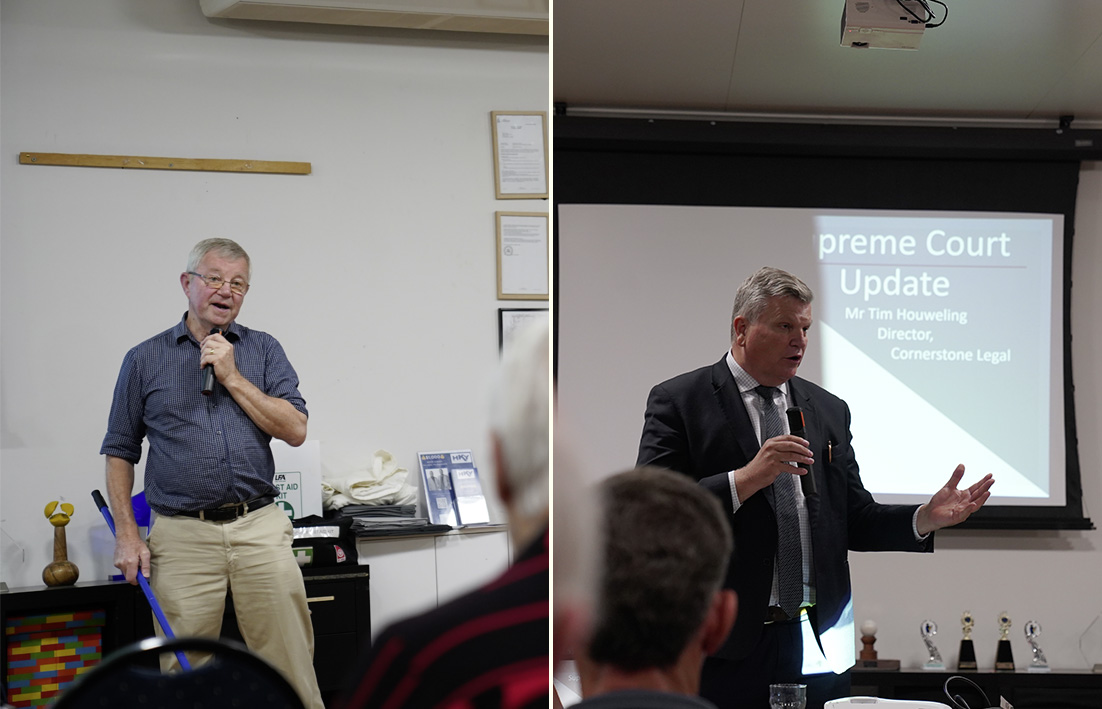
Ms Rogers and Mr Gratte presented photographs, monitoring records and observations collected over more than a decade, arguing that groundwater levels had steadily risen since surrounding urban development commenced.
The pair displayed historical and contemporary images of their property, documenting flooding, tree decline and changes to nearby wetlands.
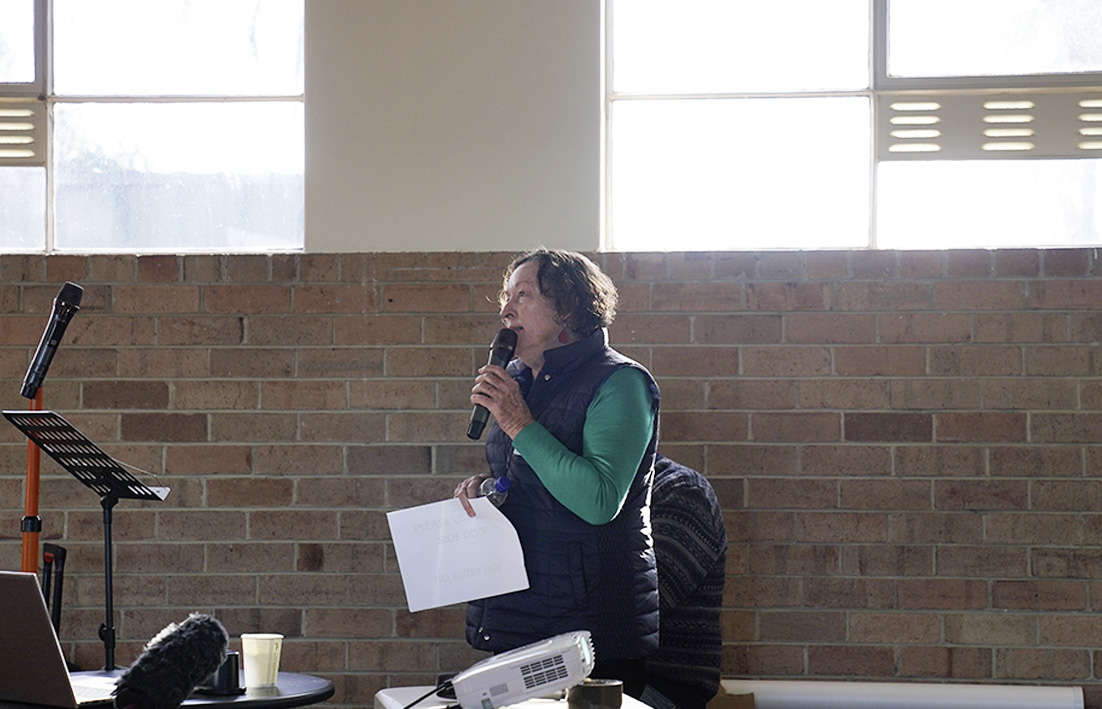
Swan Communities Environmental Alliance vice-chair Jan Zeck spoke about years of community-led monitoring and documentation across the northeast corridor, arguing residents needed to continue scrutinising planning proposals and collecting evidence of environmental impacts.
A recurring theme throughout the evening was the need for ongoing monitoring, review and adaptive management of groundwater systems as development continues across Perth’s northeast growth corridor.
Ms Thompson said the planning processes needed more attention as gaps existed, and the northeast corridor was a blind-spot in the planning framework’s knowledge of how to deal with water.
She said monitoring wells to the western side of ongoing developments communicated that water table levels were dropping, but there was a lack of the same type of historical monitoring in the east.
“It’s been really hard to have conversations about this in part because sometimes we talk to government departments and they say, ‘How can the groundwater be rising? It’s been falling since the 1970s. Look at our wells,’” Ms Thompson said.
“The Department of Water and Environmental Regulation (DWER) has long-term monitoring wells, and you’ll notice… they’re all either within or to the west of the development corridor (and) we don’t have long-term monitoring east of the development site.
“If we go to these wells, it is certainly true that groundwater is lower today than it was in the 1970s.
“If we zoom in a little bit more and we look at what’s been happening since development began in 2010, what we find at the majority of these wells is that that drying trend looks a little bit like it’s reversing.
“We see that in seven of the nine wells that are closest to this development area.
“It’s not really clear that we’re still in a drying situation according to these monitoring wells.
“The bigger problem though, is that they are biased towards the west rather than east of the development.”
Aside from the blind-spot in the data, Ms Thompson said historically deep sands and deep groundwater also meant water management shortfalls elsewhere were more forgiving.
Water would rise up between pores in the ground but then the steep slopes in that deep sand created a buffer that allowed the water to flow down and away quickly.
“But when we move this to somewhere with shallow ground water and lots of clay like the Swan Valley in the northeast corridor, and we let the same thing happen, we’re mostly going to have shallower slopes that are going to send water off the site and into neighbouring properties,” she said.
“There’s really a need to think about controlling how high groundwater should be allowed to rise within development areas.
“I think that’s probably the main thing that we should be thinking about addressing.”
During an ABC Perth morning radio interview on June 24, Ms Thompson said nobody was breaking the rules.
Ms Thompson suggested a potential development moratorium until the issue had a solution and a serious review of the planning surrounding groundwater management.
The radio interview revealed that DPLH released a statement which said increases in groundwater levels were likely due to site specific draining conditions and are the responsibility of local government.
“State government agencies are assisting the City of Swan with their assessment of the area to get a clearer understanding of the local urban hydrology and to help the city identify appropriate short and long-term mitigation measures,” the statement said.
In response to questions from Echo News, a state government spokesperson said the Western Australian Planning Commission (WAPC) is responsible for determining subdivision applications and setting their conditions.
“Subdivision and development processes are supported by detailed water management reports. These reports inform the design of drainage,” they said.
“Following subdivision approval, local governments play a prominent role in clearing conditions, including the implementation and ongoing management of drainage and groundwater systems.
“Subsequent proposals for development are generally assessed and determined by the relevant local government.”
Initial documents formed by state agencies, which then inform the entire process, are not within the City of Swan’s control.
The city, during that stage, can only advise and submit recommendations but holds no decision-making power.
In response to Echo News questions, City of Swan chief executive officer Stephen Cain said the city was essentially the last approval in a long line with many initial documents being out of their hands.
“In the development of large land parcels through sub-divisions, there are numerous documents related to water management at differing levels – district, urban and local – which are approved by bodies including the WAPC, DPLH and DWER, with input from the city,” he said.
“The city has sole responsibility for the review of construction of the physical infrastructure for installation in the sub-division, in alignment with previously endorsed plans. This is effectively the last approval in a long line.
“Ultimately the city inherits the public assets, and so it is in the community’s best interest to ensure it all functions as originally intended, but the city is not the authority responsible for approving the initial documents which set the direction for subsequent plans and reports.”
Mr Cain confirmed DPLH was assisting with the assessment of the affected area.
“Options currently being investigated seek to prevent infiltration of stormwater and look at alternate methods of re-use or disposal of this groundwater,” he said.
“Further investigation is still required to determine the specific causes of the problem, however, all potential solutions identified will require assistance and approval of state government departments to implement.”
As reported in Infiltration not a feasible strategy: SCEA vice chair (Echo News, October 31, 2025) Ms Zeck acknowledged the City of Swan had limited decision-making power and believed the solution had to involve more than just the city.
“Whatever happens has to have approval from the WAPC,” she said at the time.