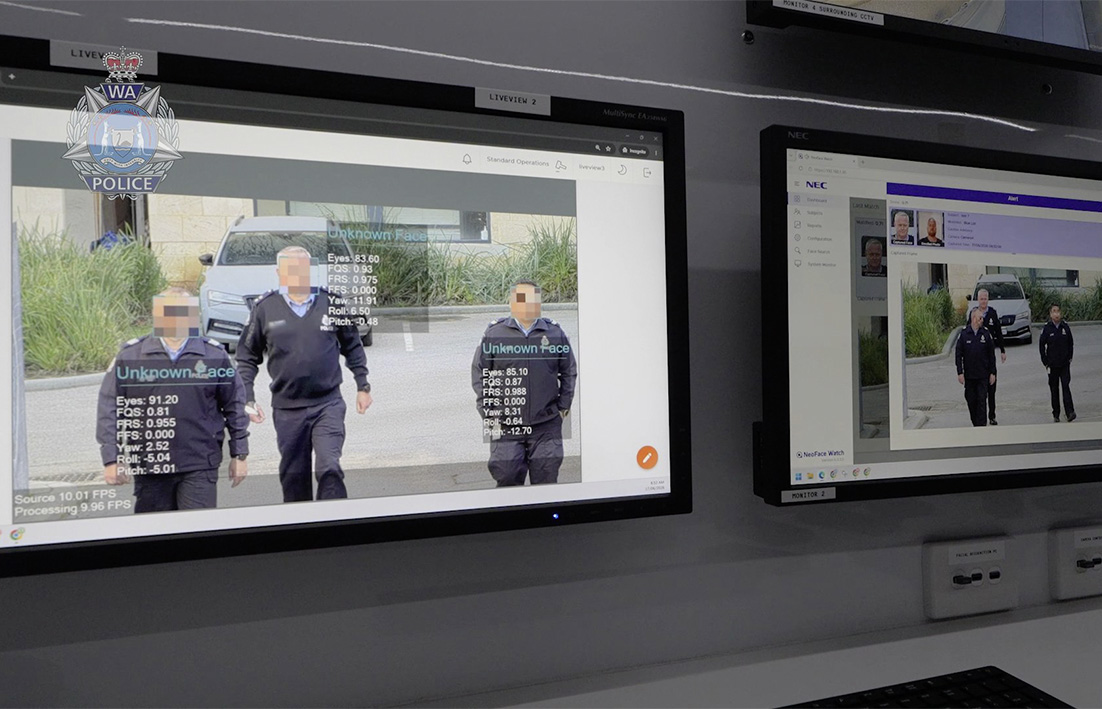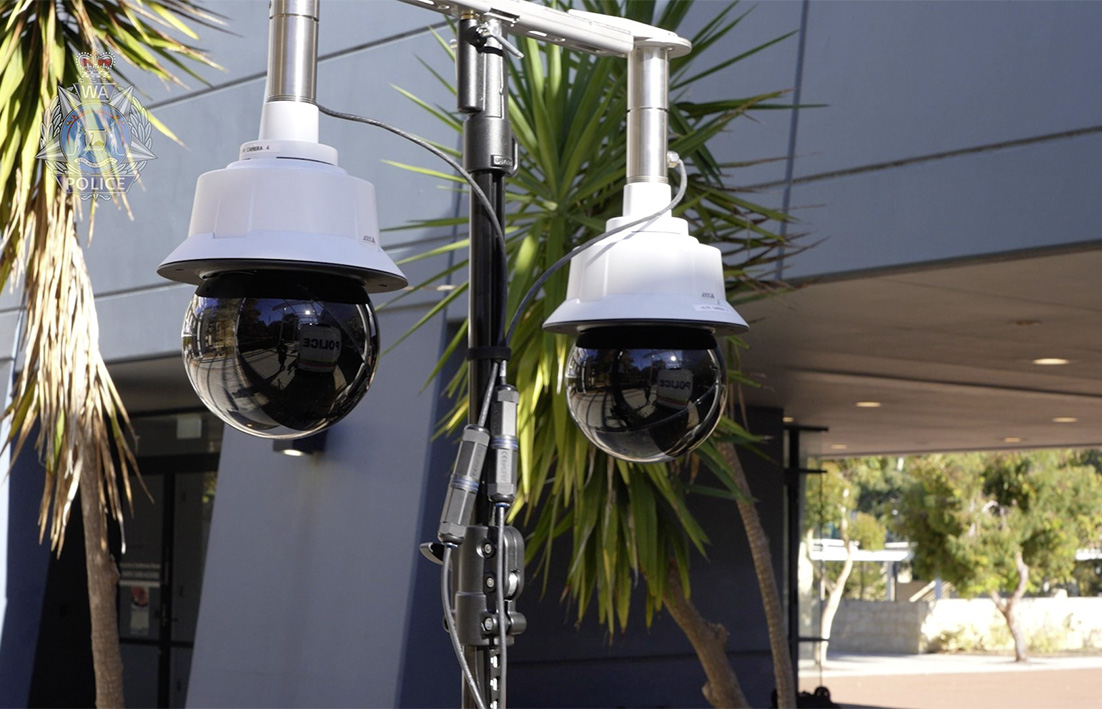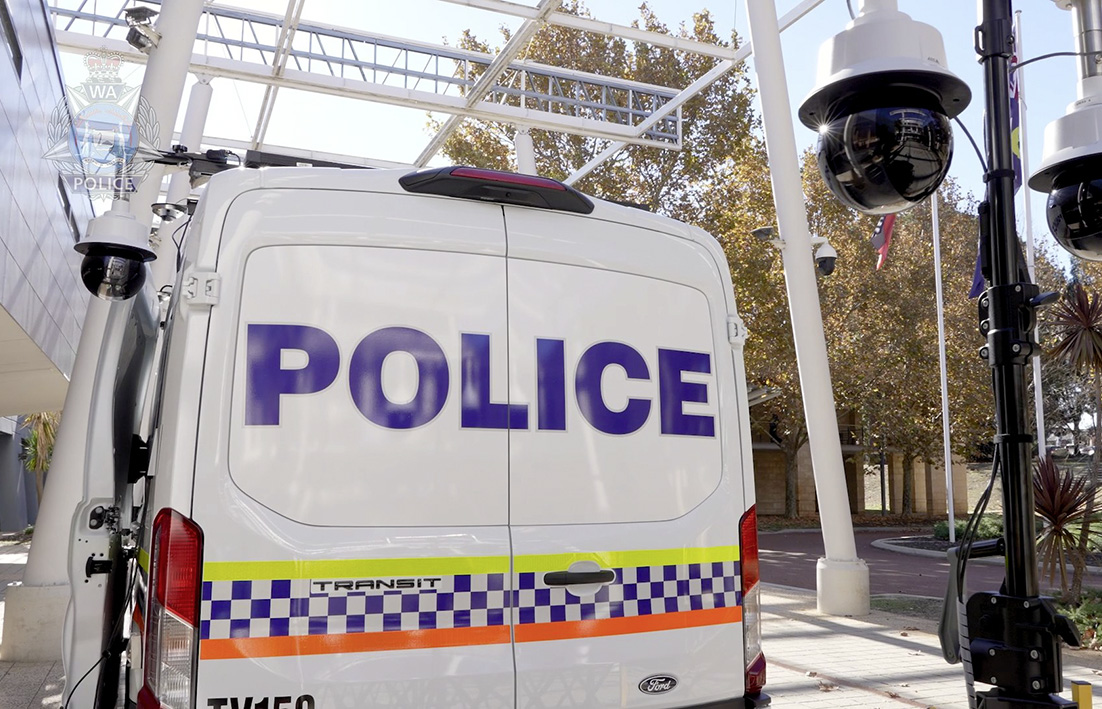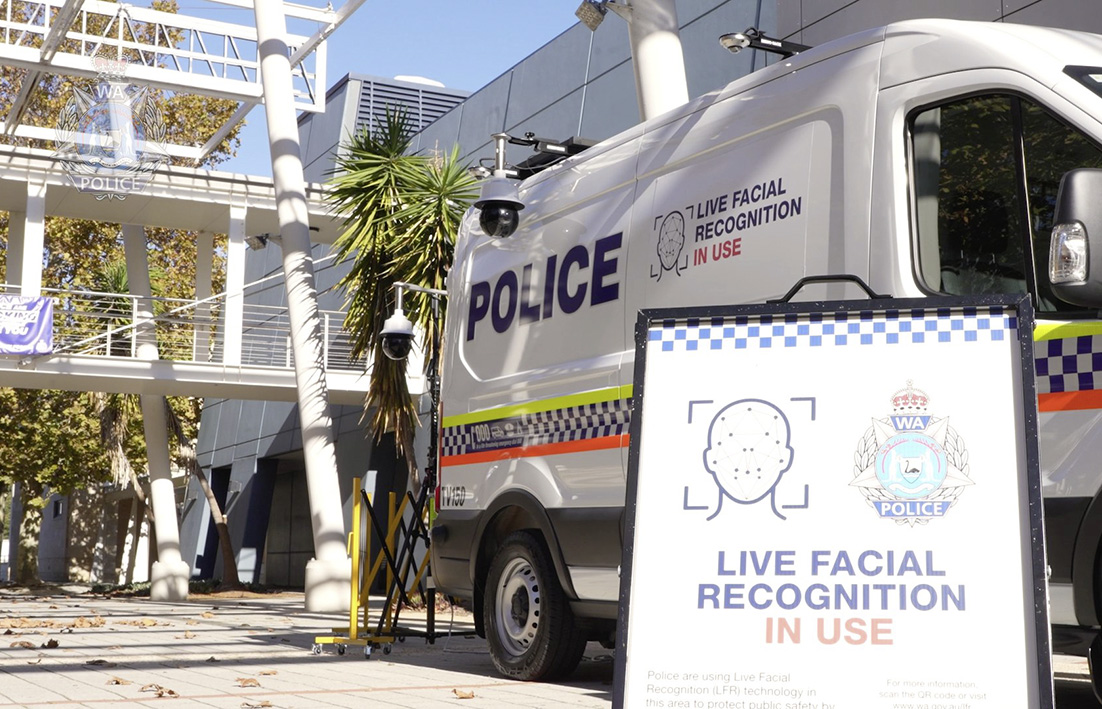
WA Police has concluded the first week of its overt live facial recognition (OLFR) technology trial, deploying mobile scanning units to high-traffic hotspots in Perth’s north-east including Midland Gate Shopping Centre and Ellenbrook Train Station.
The first week, running from June 22 to June 28, scanned 131,478 faces across Perth and generated 33 alerts to identify high-risk individuals and missing persons.
The cameras, found mounted on marked police cars in public spaces, automatically pixelate unlisted civilian faces in real time and then later deletes data so no ongoing public records are maintained.
During the first day of deployment at Midland Gate Shopping Centre, the technology flagged a 40-year-old man wanted in connection with a physical assault at an electronic repair store inside the shopping centre that had occurred one day prior.
According to police, the man had allegedly entered the retail store on Sunday, June 21 where he verbally threatened a staff member and knocked him unconscious before fleeing.
Stationed officers intercepted and arrested the suspect on Monday, June 22 charging him with assault with intent to rob, stealing, and two counts of breaching protective bail conditions.
For the greater metro area, the public scanning resulted in a further 18 total apprehensions, including 16 with active outstanding warrants.
The alerts also identified, 21 registered sex offenders, two persons who required welfare checks, and it also resulted in one false positive.
The mobile units continue to rotate through various suburbs around the Perth metro area including Claremont, Joondalup, and Armadale, as police evaluate the technology’s long-term integration into community policing.
Addressing the community concerns about public tracking, WA Police Commissioner Col Blanch said the initiative focuses on using modern technology responsibly to ensure safety while allowing the vast majority of people to go about their day with impact.
“Live facial recognition is about protecting people, not watching people. It is another tool to help police find the right people, at the right time, for the right reasons,” Mr Blanch said.
“This technology is the way forward when it comes to supporting frontline policing.
“It’ll help to get high-risk offenders off the streets sooner and reunite vulnerable people with safety and care more quickly,” he said.