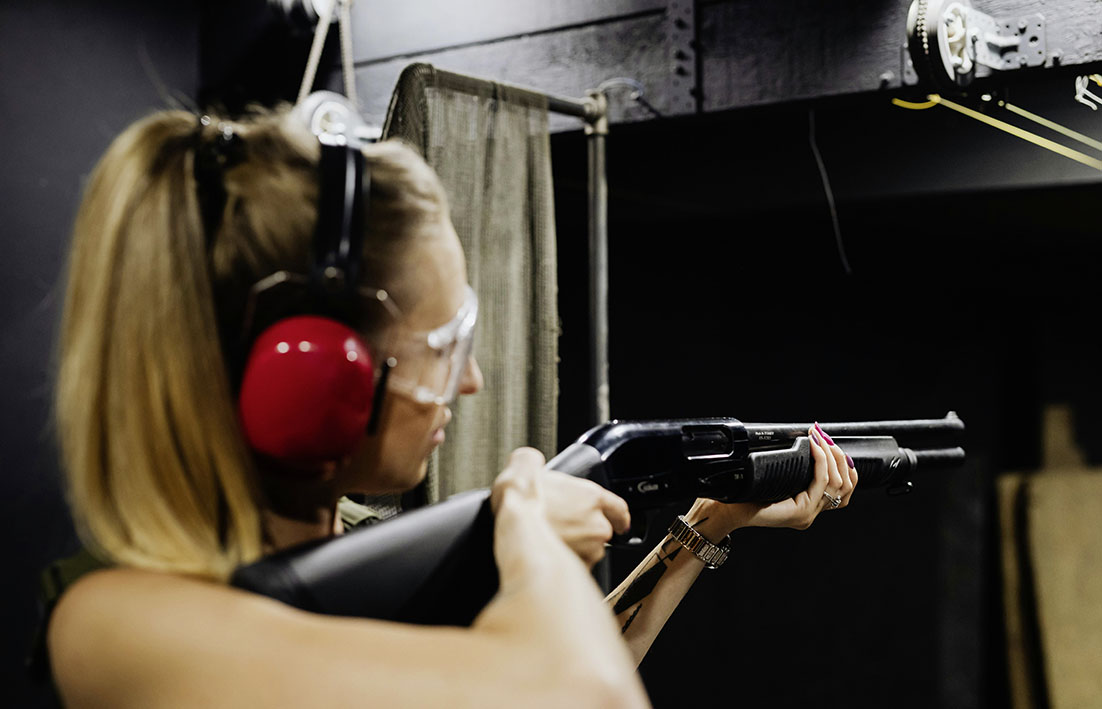
THE first day of public hearings into Labor’s Firearms Act has laid bare a litany of problems caused by the Cook government’s rushed and heavy-handed legislation, according to the Nationals WA leader Shane Love.
Mr Love said community safety organisations told the committee that confusion, poor communication from WA Police, and failures with the online firearms portal were undermining confidence in the new laws.
“When respected organisations like Injury Matters and the Alannah and Madeline Foundation are raising concerns about the rollout and calling for more resources for WA Police, it shows just how badly this process has been bungled,” Mr Love said.
He acknowledged the role the community groups who attended the hearings played in advocating for victim-survivors impacted by family and domestic violence.
“We have always supported the strengthened family and domestic violence provisions in the Act, and it was valuable to hear from these organisations around their views,” Mr Love said.
Shadow Agriculture Minister and Central Wheatbelt MLA Lachlan Hunter has also slammed the state government’s bungled firearms reforms, warning they could cripple vital animal control and biosecurity efforts across regional Western Australia.
It follows revelations from the Department of Biodiversity, Conservation and Attractions (DBCA) that the State’s Animal Control Agent program - which relies on trained volunteers to humanely euthanise injured wildlife - is now at risk because volunteers have been excluded from the new licensing arrangements.
“The government’s failure to properly consult has left a huge gap in our ability to respond to injured wildlife and manage feral animal threats on the ground,” Mr Hunter said.
“Volunteers who have operated safely and effectively for years are being sidelined. It’s not just a red tape issue - this has real consequences for animal welfare and rural biosecurity.”
Mr Love said the hearings exposed a stark gap between the glowing reports government agencies gave about WA Police, and the reality described by outside groups.
“Conservation groups described dealing with WA Police as frustrating and contradictory, with one person even spending three hours on hold seeking answers. It’s no wonder there is a lack of trust.”
Mr Love said he welcomed the decision to expand the Parliamentary Inquiry into Labor’s Firearms Act to include public hearings.
“These hearings are an opportunity for the truth to come out. Labor’s firearms laws are deeply flawed, rushed, and damaging, and the evidence is piling up for all to see.”
He has raised serious concerns about the mental health impacts of the Act, following the second day of public hearings in the Legislation Committee review of the laws.
Health professionals told the committee that the mandatory health assessments required under the legislation are complex and risk creating harmful unintended consequences.
“We heard that some people are choosing not to go to their GP to access mental health care because they fear losing their firearms licence,” Mr Love said.

YORK couple Mark and Katherine Else have been running their business for more than 30 years wearing hats as mechanic and gunsmith, nurse and midwife, YouTube creators, firearms owners and enthusiasts and have recently been involved with many people impacted by the real-world effects of the implementation of the Western Australian 2024 Firearms Act.
Mr Else said since the roll out of the Act he and his wife Katherine, have seen and heard from hundreds of people and wanted to have their stories heard.
“Some are at the point of absolute despair with the position they have been placed in by these new laws and how they have been implemented in an extraordinarily inadequate process, leaving many average decent licensed firearm owners feeling like they are criminals or at least being treated as such,” Mr Else said.
“These laws have seemingly been written without a meaningful understanding of what is required, let alone actually suited to the stated purpose of improving ‘safety’ for our WA communities,” he said.
He said many of the people he and his wife had spoken to in rural areas believe the Act demands overreaching control over every motion of a licensed firearm.
“Among many other things it can require police permissions to be requested for day-to-day operations of a rural property. A lot of these over complicated new laws, mean in effect, when involving a firearm, the farmer is forced into a position of either breaking the law or taking the risk of not protecting themselves or their livestock,” Mr Else said.
“The simple ‘be prepared’ attitude that all good operators run with, is no longer a legal option.”
Another perspective the Else’s spoke of was from people living in other parts of our rural areas, the country towns of WA.
Mrs Else said the Act had created a situation where many professional and skilled pest controllers have been confronted with many hurdles, that in the vast number of cases cannot be overcome, and therefore are unable to comply and continue to operate.
“These are the people who help keep control of vermin, such as foxes and feral dogs and cats. These people are in many cases our last and best line of defence for our more precious native wildlife,” she said.
“What has passed on by some people in these areas is that they are already seeing real world impacts on these most precious native marsupials, rodents, reptiles and birds.
“This story is also comparable to the many other now wild, introduced species, including pigs, camels, donkeys, deer and scrub bulls, which, if left unchecked, will cause irreparable damage to our West Australian bush and farmland.”
Mr Else said he shared a sense of overwhelming concern when discussing some of the very heart felt stories he has heard.
“Most are concerned over the enormous restrictions and costs placed on many of our older hunters, collectors and enthusiasts. People that have worked all their lives, followed the rules all their lives and now are involved in the sports of shooting for their pastime, their passion and their mental relaxation,” he said.
“But now people have found themselves and their sport or pastime being aggressively attacked with overreaching over controlling demands from our government and police force.”
Mr Else also shared one of many heartfelt stories like the one below, left as a comment on the couple’s YouTube channel.
“My treatment by WAPOL can only be described as exhausting to say the least. I have given up my collector’s license as those firearms were post WWII and I would incur the expensive safes and alarm systems. I have brought my firearm numbers down to seven as I am a primary producer as I can have up to 10.
“I have given up my ammunition collectors license as well and rendered three antique rifles and this does not seem enough to satisfy WAPOL. This whole time I have had to endure the suicide of my grandson and be the primary care person for my wife who underwent serious stomach surgery and is still recovering. Police were advised of all of this!
“The pressure that has been placed on us along with large numbers of kangaroos moving into our property has just been indescribable. But I am not giving up, and have made six submissions to the inquiry and signed the petition.
“Mark, you have been right all the way along. I have had a firearms license for over 40 years without any convictions recorded against me and that in itself should of shown WAPOL the type of person I am, but it doesn’t! So, let’s see how the next episode turns out for me and I will keep you informed,” the comment said.
Mr Else said he had heard so many stories from all over the state, and the honest heartache people face of having to give up firearms to be destroyed.
“These are firearms that are family heirlooms. Firearms that have been handed down from World Wars, from family members with meaningful histories. With stories and emotions that mean more to families and their descendants than many might even be able to begin to understand,” he said.
“To demand to give up or to damage these personal and family treasurers is nothing short of cruel and unusual punishment forced onto innocent, law abiding individuals that their only error is to be living in WA at the time of these new ideologically driven laws.”
As sporting shooters, Mr Else said something he and his wife had learnt being involved in shooting in many different urban areas was the amazing way it is able to be enjoyed by all.
“Young and old, able and disabled, males and females, there are disciplines that suit all. But now we have all of these disciplines under attack, especially for some of the less capable where they need more legal support and practical help, which means in affect under the 2024 Firearms Act they are no longer able to enjoy their sport/pastime.”
He noted also that sports shooting clubs and ranges have also suffered with these overreaching laws.
“Many being forced to close via an unusual reinterpretation of the range requirements. Also, the need of multiple official people to be at a range even when only one shooter is there by themselves,” he said.
“This is effectively stopping all the normal testing, sighting and general maintenance that has occurred without issue for more than 50 years.
“I have an enormous concern with the real-world effects of the Act, where many find themselves being without access to any means to legally own firearms.
“One of the ways this is being done, is by limiting the property letters that can be allocated to a property. This vastly limits the possible number of legally owned firearms and in affect, as explained by the government and the police force, it is designed to remove most legally owned firearms from the WA community.”
Mr Else said several groups of people he had spoken with are in this position.
“People have ranging uses and needs for firearms, including animal husbandry in small land lot communities, where one person provides firearm help to many in a small community, as well as conservationist pest controllers, small community butchers, even the likes of prospectors who work and camp out alone in the Australian deserts, where even self-protection is of real concern.”
He said there was no statistical evidence for the need for this change.
“If safety was the reason, there is a long list of things that sit higher, such as roads and vehicles, pharmaceuticals, medical malpractice, alcohol, mental health and recreational drugs. The list goes on,” Mr Else said.
“Even the statistics relating to firearms, are not what it might seem.
“Amongst firearm death statistics there are shootings with illegal firearms (of which we are told there are over one million in this country and these are not impacted by the new laws), shootings by the police, who are not licensed firearm owners, and suicide by firearm.
“This is a sad and tragic situation, but the firearm is not the cause. Another sad part of these statistics are accidents, where untrained and unlicensed people, who, with just the basics of training would never had been part of this list.
“The actual firearm and in particular sporting firearm statistics, show firearms sports to be one of the very safest in Australia.”
Mr Else said he believed that the laws were written without even a basic understanding of the actual use and activities of firearms in Western Australia.
“They were written to make it too hard for most people to keep firearms at all. So rather than just ask the people of Western Australia: “Do you think we should disarm the population?” he said.
“Instead, just write an Act and regulations that just make it too hard, laws that make people give up and get rid of their firearms and ‘get another hobby’ without the trouble of asking the people.”
He said the taxpayer funded review published in 2016 by the WA Law Reform Commission stated that the 1973 Act was actually fit for purpose, with only small alterations suggested, but this was rejected by WA Police.
“If larger change was sort, the only way would be if we brought all the people with vested interest to the table. Then we could build something that would suit all.
“The police are one small piece of the puzzle, the rest of the population should have the bulk of the voice, ‘government for the people, not government for the government.’”
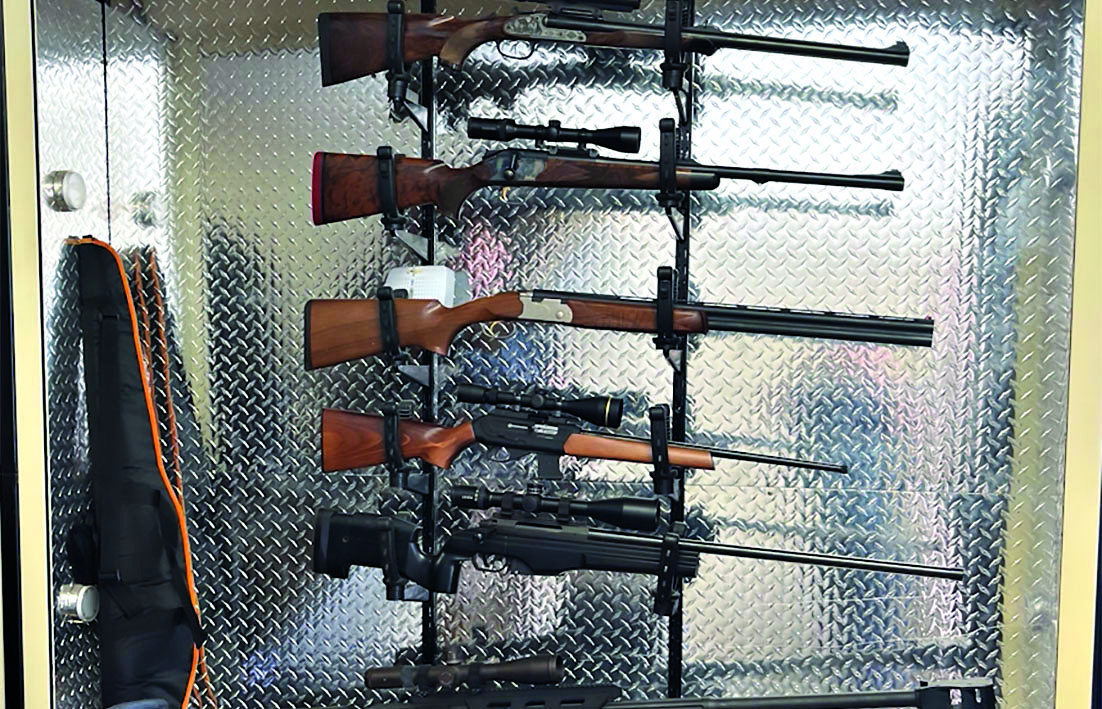
POLICE Minister Reece Whitby needs to front up and explain a data breach in WA’s new firearms licensing portal and ensure that an independent investigation is undertaken, according to Opposition Police spokesman and Kalamunda MLA Adam Hort.
He said an independent investigation by the Office of the Information Commissioner was essential to ensure how the breach occurred, whether appropriate safeguards were ever in place and whether there needs to be any changes to protect licensed gun holders’ data.
“The minister needs to explain when he knew about the data breach. Who has been affected, and how will they be told? And most importantly – what’s being done to make sure it never happens again,” Mr Hort said.
“Only weeks ago, the Minister told Parliament during estimates that the system was improving every day. This breach tells a different story.”
Mr Hort said the situation called for an urgent independent review.
“The Office of the Information Commissioner is responsible for upholding privacy protections and ensuring public agencies are held to account when things go wrong,” he said.
“Firearms reform is essential in Western Australia, but confidence in the reform process depends on getting the basics right.
“This $35 million portal is the mechanism through which those reforms are delivered. If the system itself isn’t functioning properly, the whole reform agenda is at risk.”
Mr Hort said his office had been inundated with complaints since day one of the portal going live.
“We’ve consistently heard concerns about system reliability – from crashes to delays in processing,” Mr Hort said.
“Public confidence in the portal was already limited, and this breach has only added to those concerns.
“The minister must take responsibility for this breach and stop shifting the burden onto frontline police.
“He needs to front up immediately. It’s not good enough to simply tell people to call a helpline. They’re already spending hours on hold, and it’s a poor use of police resources.”
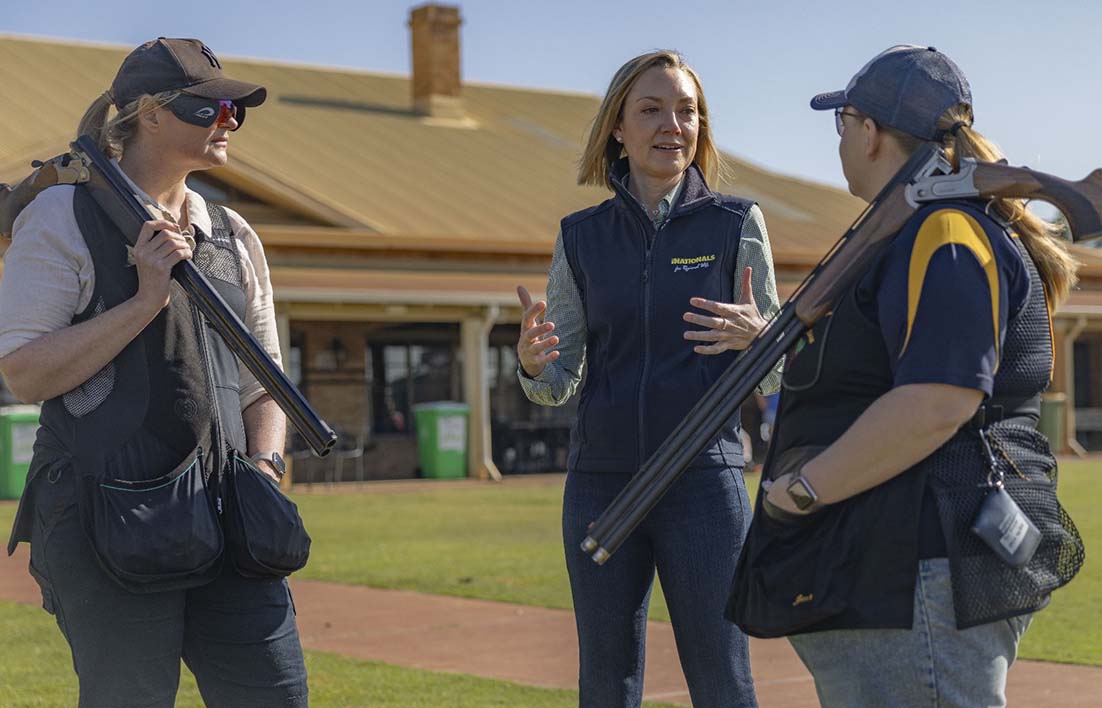
WHITEMAN Park hosted a successful state shooting carnival in the closing weeks of September and is set to host nationals next year, but the future of the sport remains uncertain.
Western Australian Clay Target Association (WACTA) vice-president Murray Cornish said the event was a success.
“It was a new format, and we tried to run it for eight days straight,” he said.
“We ran trap for four days and the other one was skeet for four days.
“It was a good success and (nationals) next year will be bigger and better.”
Mr Cornish said the state carnival was a simulation ahead of the national event to be held in Whiteman Park on April 2 next year, but new gun law changes concerned shooters.
“Every second person I talk to wants to know what’s happening with the gun laws,” he said.
“There’s been a lack of consultancy, the legislation and regulations aren’t complete, and so we’ve been largely left in the dark.
“We’ve tried to suggest things – there’s probably 10 different ballistics sports involved and each ballistics sports’ presidents goes to the meetings with police and the law reform commission but they’ve told us what they’ll do without much consulting.
“There’s a lot of concerned people and having to deal with the new laws is going to have a big impact on our sport.”
Mr Cornish said the main concern were the gun limits which he was worried will affect the competitive shooting due to different formats requiring different guns.
“How did they come up with limits?” he said.
“There are many different formats such as down-the-line, skeet, International Shooting, Sport Federation shooting, sporting, and you can’t use the same firearm for everything.
“The biggest thing is the numerical limit.
“In the law reform commission from 2016, one of the recommendations was that numerical limits don’t have anything to do with public safety.
“They’ve ignored that right through even though that was the 2016 recommendation.”
Nationals Central Wheatbelt MLA and Bullwinkel candidate Mia Davies said law-abiding firearms owners have raised with her serious concerns about the new firearms laws.
“Competitive shooters, like members of the WACTA, are particularly worried about restrictions on the number of firearms they can own,” she said.
“Many top-tier shooters who compete at state and national levels rely on more than five firearms to participate across various disciplines.
“Under (the) new laws, they’ll be forced to surrender some of their firearms, limiting their ability to compete and potentially causing a decline in membership, which could put the future of some clubs and events at risk.
“There’s also growing frustration about the lack of clarity on how these laws will be implemented, with regulations still not released, despite the laws coming into effect in early 2025.”
Mr Cornish said not much could be done until the regulation came out, but he didn’t think shooters would readily accept the changes.
“We’ll do what we need to save our sport,” he said.
“The average shooter who goes to shoot at a range, are not the problem in society but we’re targeted like criminals.
“The biggest thing the Western Australian Firearms Community Alliance did was the petition.”
The petition Mr Cornish referred to was signed by more than 32,000 people opposing the Firearms Bill 2024.
Mr Cornish said he felt the petition was ignored and competitive shooters were at a loss.
“You can’t do anything in the courts until you know what the laws are,” he said.
“Well, that was the highest petition put into Parliament and they took no notice and decided it wasn’t relevant and they weren’t interested.
“From here competitive shooters will have to keep the pressure going and let it be known that we’re not in support of the changes, and come the election in March, we can try to reverse some of this.
“It’s the only option we’ve got at the moment.”
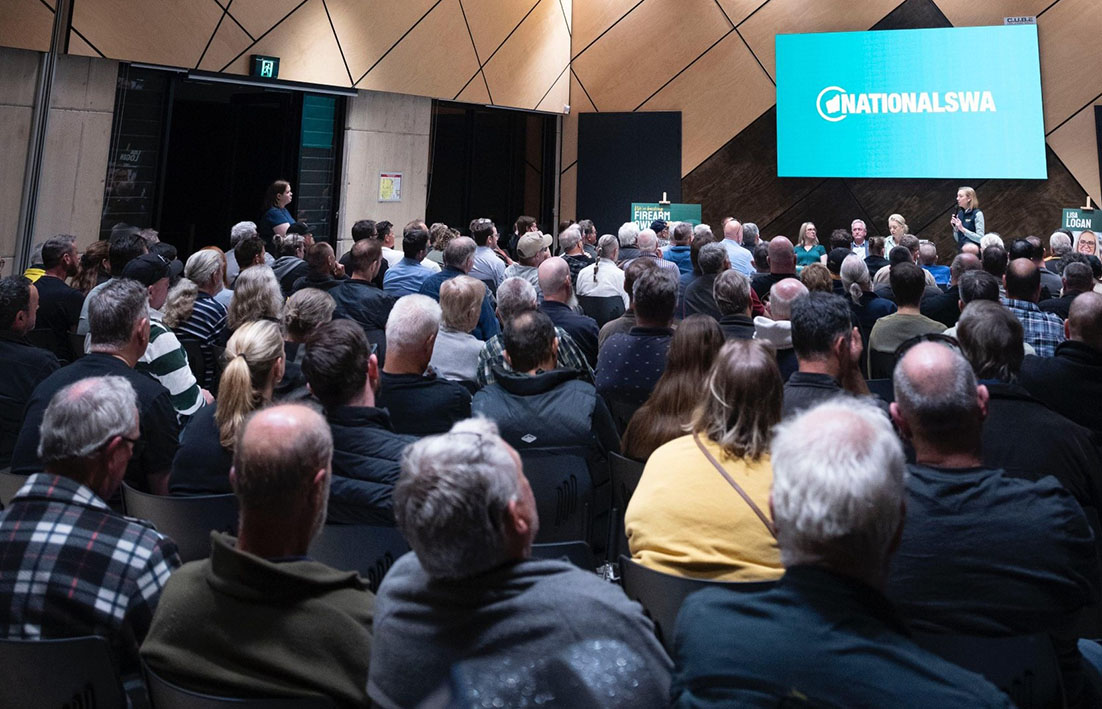
LAW-abiding firearm owners turned out in huge numbers to attend a firearms forum hosted recently by The Nationals WA at the Kalamunda Community Centre.
The event garnered such significant interest the venue had to be changed to accommodate more than 200 registrations.
Nationals’ federal candidate for the new electorate of Bullwinkel Mia Davies MP joined Opposition leader Shane Love, candidate for the state electorate of Kalamunda Lisa Logan and Senator Bridget McKenzie to present The Nationals' view on what they called the state government’s flawed firearm reforms.
Ms Davies said the turnout was indicative of the frustration felt by law-abiding gun-owners across the state in the wake of the Labor Government’s legislation.
“Minister Papalia has treated this community with complete disdain, painting them as criminals and people to be feared,” she said.
“His view of the world couldn’t be further from the truth. Gun owners are Olympians, volunteers in our community, business owners, friends, colleagues and family – not the enemy.”
Leader Shane Love said the fact that The Nationals WA had drawn a crowd of more than 200 people in the Perth metropolitan area showed that the party’s stance was resonating with many people disappointed with the state Labor government.
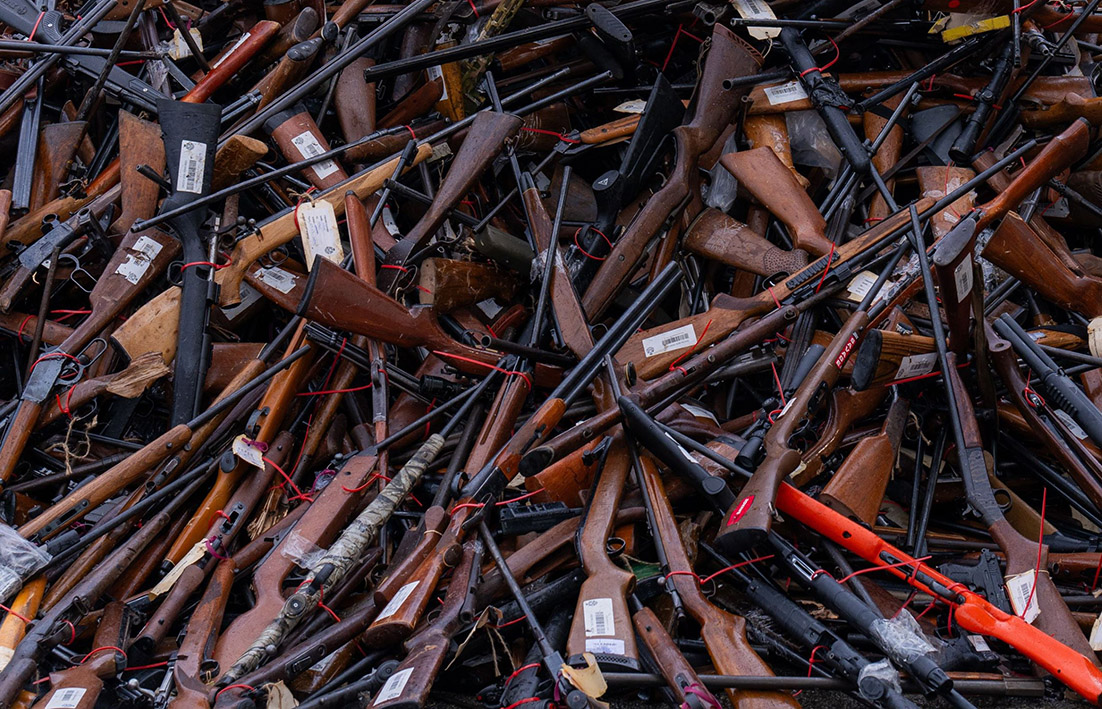
LAW-abiding firearms owners have raised serious concerns about Labor’s new laws, including a lack of due process which saw debate gagged and the laws rushed through Parliament in recent weeks, according to Nationals WA leader Shane Love.
“The Nationals WA are the only party which opposed Labor’s new firearms laws,” Mr Love said.
“Labor’s new laws will force many to surrender their firearms and severely impact regional firearms dealers. These laws are unnecessary and heavy-handed.
“That’s why The Nationals WA have committed to rewrite aspects of the Firearms Act 2024 if we are returned to government at the state election.”
Mr Love also criticised the ongoing treatment of the firearms community by the Police Minister Paul Papalia throughout the debate and the recent distribution of thousands of misleading text messages by WA Police.
“These texts, which were inaccurate, contributed to confusion and concern for many law-abiding firearm owners, by falsely stating the new firearms act had come into law,” he said.
The existing Firearms Act 1973 will remain in effect until the Firearms Act 2024 is proclaimed, which is expected to occur in March next year.
“WA Police should be helping firearms owners navigate the new process, not sending out misleading communications.
“And it’s disappointing the Police Minister has refused to apologise for this costly error, which has set taxpayers back around $26,000 and was totally avoidable.”
Legislative Council candidate Rob Horstman said as a regional resident and a licensed firearm owner, he understood the importance of firearms for pest control on the family farm, and also that many people also enjoy shooting for enjoyment – either as part of a gun club or recreationally.
“Shooting is one of the most inclusive sports out there and can be enjoyed no matter your age or ability,” he said.
“We’re just days away from the Paris Olympics, where WA’s own Laura Coles will compete on an international level, but the Labor Government is discouraging other West Australians from taking up this past-time.”
THE strictest gun laws in the nation have passed the Parliament of Western Australia, ensuring thousands of firearms are removed from the community.
In a nation-leading move, the number of guns an individual can own will be restricted depending on their licence type. Primary producers and competition shooters can have up to 10 firearms while recreational hunters are restricted to five.
The complete rewrite of WA’s 50-year-old Firearms Act has also seen the introduction of Mandatory Disqualifying Offences and Orders (MDOs), which strip guns from the hands of serious offenders such as family and domestic violence perpetrators.
Under the changes, anyone who applies for a gun licence must complete mandatory firearms training. All owners will also be required to undergo a regular health assessment and comply with new storage requirements.
Supported by a multimillion-dollar digital licensing and management system, an overhaul of the corrupted ‘property letter’ system gives power back to landowners and lease holders so they can control who enters and shoots on their property.
In advance of the legislation passing, the State Government had already doubled the penalties for gun crime, outlawed very high-powered firearms and introduced Firearm Prohibition Orders to target underworld figures.
To date, close to 14,000 guns from more than 8,000 people have been sold to the State Government as part of the ongoing voluntary firearms buyback scheme.
The $64.3 million buyback offers licensed gun owners up to $1,000 to hand in their weapon and remains open until 31 August 2024.
Premier Roger Cook said for the first time, WA’s firearms laws elevate public safety above the privilege of owning a gun.
“I’m unapologetic for our safety-first approach which strengthens gun controls and enhances public safety.
“Sadly, in recent years, we’ve seen the devastating consequences resulting from the misuse of firearms in our community.
“Those tragedies highlight the need to remove guns from people who don’t have a legitimate reason for owning one.
Police Minister Paul Papalia said the consultation process for the historic rewrite of the state’s 50-year-old Firearms Act has been long and extensive and thanked the Primary Producers Advisory Board, peak firearms bodies and community safety advocates.
“The reform removes thousands of unnecessary guns from our community while also enabling the legitimate and responsible use of firearms.”
FIGURES released last week from Police Minister’s Paul Papalia’s office reveal the Midland police district, covering an area from Ellenbrook, Mundaring and Forrestfield, has the most registered firearms in the state at 30,556.
This compares to the Perth police district, covering the CBD and western suburbs, with a total of 5752 firearms, with high totals also in the surrounding areas of Mandurah 26,150, Joondalup 24,739 Armadale 21,357 and Mirrabooka 14,914.
Surprisingly, the regional total of 175,409 registered firearms was only marginally higher than the metropolitan total of 151,404 firearms, not including those belonging to a licensed to dealer/distributor, for a total of 326,813 in the state, owned by 89,530 licence holders.
These figures do not include the 12,000 firearms returned as part of the recent $64.3 million buyback scheme and include firearm, collector and ammunition collector licence types only
Mr Papalia said since 2009, the number of guns in WA had increased by 65 per cent.
“Public safety is paramount, and that has been the key consideration when drafting the state’s new firearms laws.
“If there are fewer firearms in the community, there are fewer opportunities for them to be used illegally,” Mr Papalia said.
He said legislation currently being debated in the Upper House will introduce a limit on the number of firearms a person can own, toughen storage requirements and impose mandatory training and health checks for all gun owners.
“Firearm limits alone will remove over 10,000 firearms from the community,” Mr Papalia said.
“In addition to the proposed legislative changes, we have already stripped notorious crime figures and serious domestic violence offenders of their firearms and removed 280 unnecessarily high-powered guns from the community.
“This historic reform will make WA a safer place and will benefit future generations for decades to come,” he said.
He strongly encouraged all firearm owners to consider participating in the buyback before it closes, or the fund is exhausted.
“This is your one opportunity to get paid for your firearm by the government before the new laws come into effect.”
The released data shows WA Police licensing services revoked 215 firearms licences because of family and domestic violence or violence restraining orders between October 1, 2023 and March 31, 2024.
In April, there were 13 active cases of licence holders subject to restraining orders who had their guns handed back after an appeal to the State Administrative Tribunal.
Under the Firearms Act, licence holders subjected to violence restraining orders are not considered “fit and proper persons” to continue owning guns.
The state government will also introduce new laws requiring accused family and domestic violence offenders to have their guns taken from them by police as a mandatory measure.
Guns will be confiscated until the claims of violence are investigated and resolved.
The move follows from the recent murders of Floreat mother Jennifer Petelczyc and her daughter Gretl.