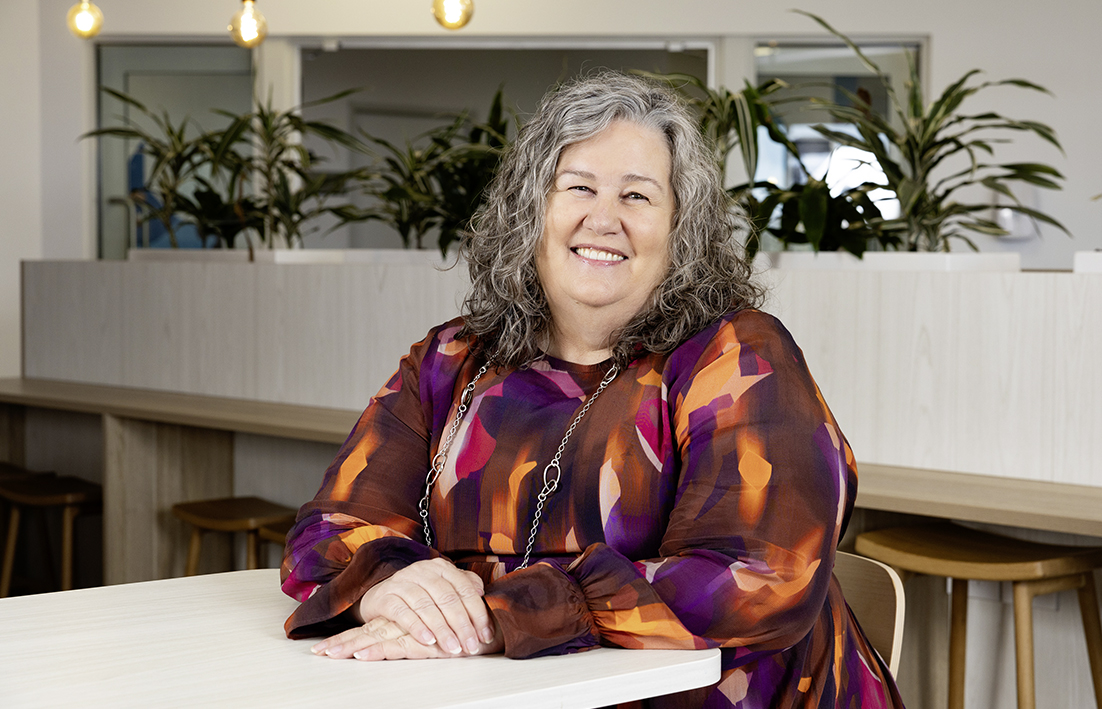
WHEN it comes to improving outcomes for some of society’s most vulnerable people – such as children and young people affected by family and domestic violence (FDV) including sexual and physical abuse – Parkerville Children and Youth Care chief executive officer Kim Brooklyn is a strong believer in elevating the voices of those most impacted by adversity.
Mrs Brooklyn, a 35-year veteran of the community services sector, said children and young people suffering from trauma and abuse often don’t disclose what they’re going through, are likely to be experiencing many types of adversity, and that a coordinated, multi-faceted and multi-agency approach – one that has child-centred responses at its core – was the most effective way to establish meaningful change.
“As an underlying force, FDV shapes much of what children show us, even when it’s not the issue bringing them to our front door. And when we fail to see it as the main driver, we end up chasing the symptoms,” Mrs Brooklyn said.
“This invisibility has consequences. Children don’t get the responses they need. Families don’t get the support that could create safety and healing. And we, as a system, keep responding in fragments to lives that are whole.”
Breaking the cycle of family and domestic violence was a key theme for Parkerville at this week’s National Family Safety Summit in Perth.
The charity’s adverse childhood experiences scale data highlights that out of 1056 children and young people, 445 (42 per cent) have experienced the impact of family and domestic violence.
The same children are also dealing with a range of adverse experiences: 65 per cent are also experiencing emotional abuse, 58 per cent are living with financial insecurity, 55 per cent are experiencing emotional neglect, 49 per cent are dealing with housing insecurity, 48 per cent are experiencing physical abuse, 31 per cent are living with food insecurity, and 43 per cent have also experienced sexual abuse.
“This tells us children are living inside a complex ecology of adversity and hardship where a lot of areas are connected. And this is why siloed, single-issue responses don’t work as well as they could,” Mrs Brooklyn said.
“Our data tells us we can’t address FDV without addressing housing. We can’t support a child’s mental health without understanding the financial stress and food insecurity their family is managing.
“We can’t intervene on educational disengagement without recognising the exhaustion that comes from chronic hypervigilance. Children don’t live their lives in service silos. They can’t separate these parts of their experience. If we’re serious about keeping them safe and supporting them to thrive, neither can we.
Cont. p17
From p9
“FDV weaves itself into a child’s developmental story and can shape how they form relationships, understand safety, learn, and move through the world.”
To help break the cycle of family and domestic violence, Parkerville is building a way of working that ensures every practitioner is equipped to see, understand and respond to the ways FDV shapes a child’s life.
The Parkerville model includes embedding FDV specialists in every service area, investing in evidence-based training, creating a shared language for FDV and child and parent safety, and using data in new ways to make visible what’s been hidden – helping frontline practitioners make sense of the complexity that each case presents.
Mrs Brooklyn said there is still work to be done.
“Most children who’ve experienced family and domestic violence are still living at home with their families. Their healing isn’t separate from their mum’s healing – it’s deeply connected to it.
“These mothers are doing the impossible: trying to create safety, stability and nurturing spaces for their children whilst they’re still carrying the impact of violence directed at them.
“If we genuinely want to break cycles of violence, we need to see mothers in their full context – as women and as parents. That means building responses that recognise both mothers and children have been harmed and both need support to heal – not treating them as separate issues, but as deeply connected.
“This is the work Parkerville is doing. And this is how meaningful change becomes possible - child by child, family by family, system by system.”