FIRES started by exploding lithium-ion batteries are intense and can engulf a room within minutes, making it difficult for firefighters to extinguish, according to the Department of Fire and Emergency Services (DFES).
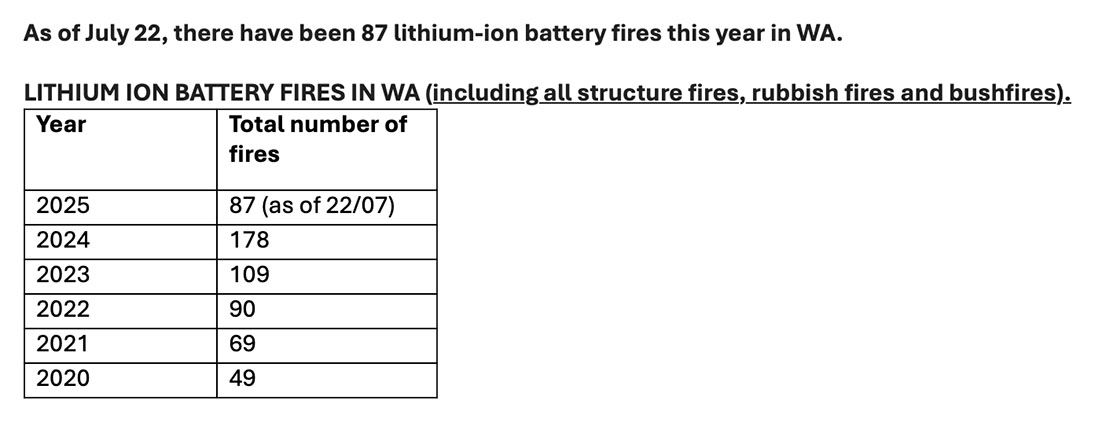
DFES deputy commissioner Craig Waters said as of July 22 there had been 87 fires caused by lithium-ion batteries in Western Australia this year.
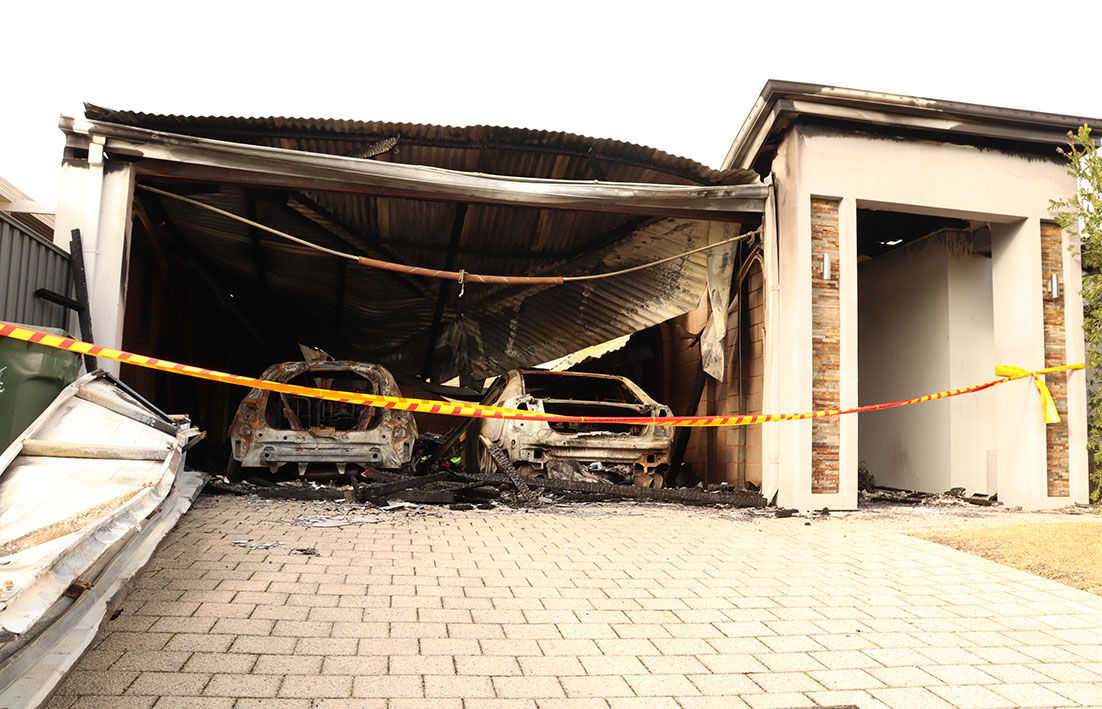
On Sunday, July 20 an Aveley home was destroyed after a fire caused by a lithium-ion battery caught alight in the garage with DFES receiving multiple Triple Zero calls about 2.48am.
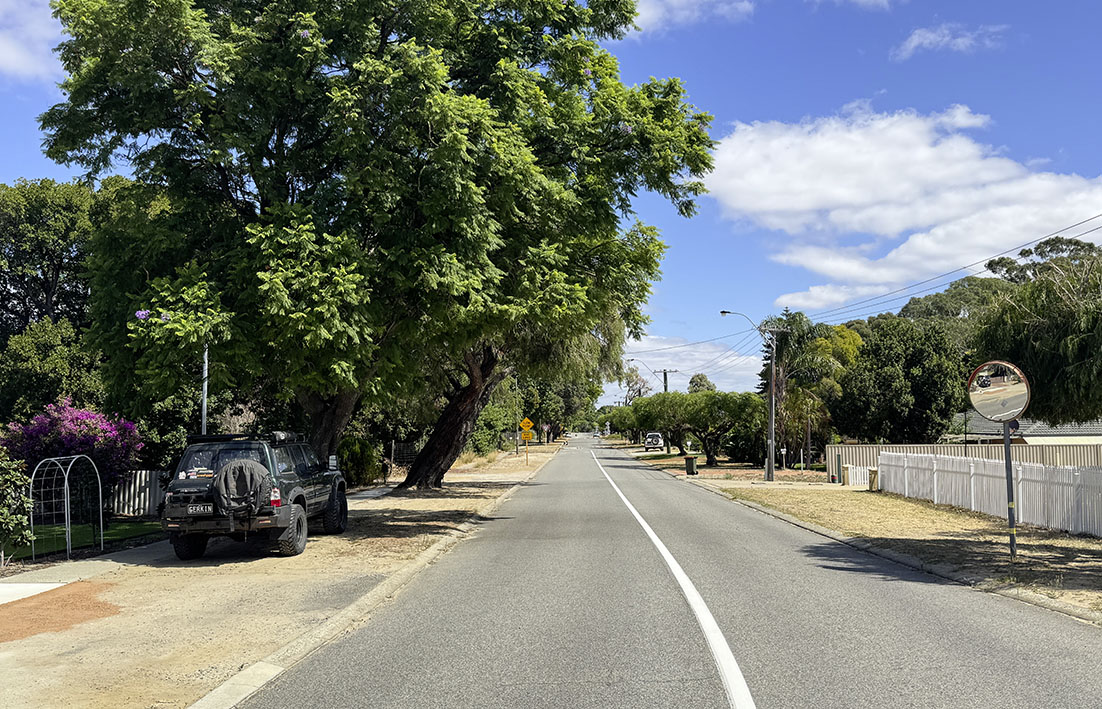
A DFES spokeswoman said when firefighting crews arrived the single storey home on Bellazario Promenade was engulfed in flames and the occupants had already left.
Nine firefighting appliances including career fire and rescue services from Ellenbrook, Kiara, Malaga and Wangara attended the scene.
About 4.30am a smoke alert was for people travelling along Bellazario Promenade and surrounding areas.
Firefighters had the fire contained and controlled by 6.21am.
“A DFES fire investigation officer deemed the cause of the fire was accidental due to a lithium-ion battery stored in the garage of the home,’’ the spokeswoman said.
“The battery belonged to a power tool and was not on charge.’’
DFES said this year in relation to lithium-ion batteries there had been 49 structure fire incidents, 35 other rubbish incidents and three small bushfire incidents.
So far this year the top three ignition sources for fires caused by lithium-ion batteries to date have been a battery not on charge – in storage or rubbish (26 instances), a battery charger – rectifier, inverter, charger (18 instances) and an e-rideable – e-skateboard, e-scooter, e-bike (18 instances).
Mr Waters said as more lithium-ion batteries – produced in their millions each year – were becoming far more common in households DFES continued to see an increase in fires caused by those batteries.
“Battery powered devices are a real fire risk if they are left on charge in isolated parts of the home like a garage, where people may not have a smoke alarm,’’ he said.
“Always purchase reputable products and check them for damage regularly.
“It’s important that people clean and test their smoke alarms regularly – working smoke alarms save lives.”
Key DFES safety tips include charging batteries on a hard surface away from flammable items, remove your device from the charger once fully charged, charge eRideables outside the home if possible and do not charge overnight, install a smoke or heat alarm in areas where devices are often charged and stored and never put lithium-ion batteries in household waste or recycling bins.
Visit the Recycle Right website to find out where to take lithium-ion batteries for disposal.