SWAN residents again raised concerns with the council over environmental protection with members warning urban development in the Swan Valley is putting wetlands and bushland at risk.
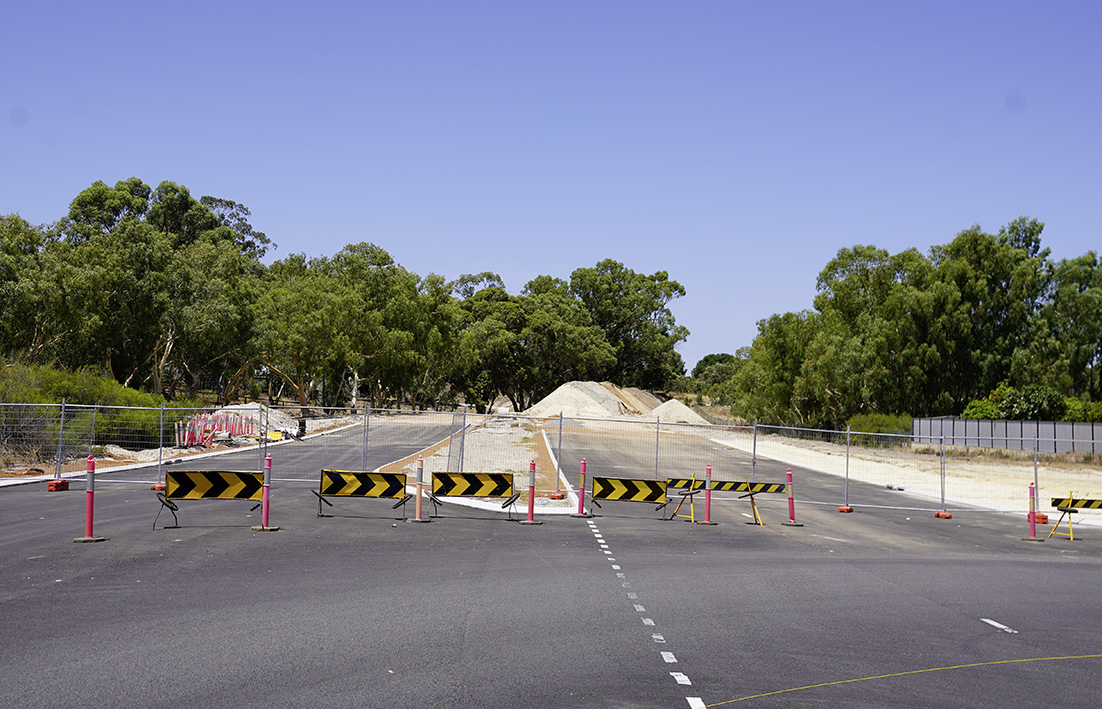
Swan Valley Ratepayers and Residents Association president Humphrey Boogaerdt sent in questions asking whether the design of the Henley Brook Avenue (HBA) road extension adequately accounted for the flood-prone landscape near Saint Leonards Creek.
Mr Boogaerdt worried that as design plans currently stood, the planned retention basin meant to manage stormwater runoff for the HBA was in in the middle of the area’s floodplain.
“When the floodplain is flooded, the retention basin will be flooded as well resulting in pollutants entering Saint Leonards Creek,” he said.
He then asked how the city was planning to redesign the retention basin.
The city said the basin design had been checked by its engineers and independent consultants.
“Pre and post development flows should be catered for within the subdivision which is not anticipated to impact on the roads drainage network currently designed,” they said.
“Staff will review the design in line with the recent issues that have arisen in the area and if required, update the design.”
Mr Boogaerdt then asked how the city was adhering to the Local Government Act requiring promotion of economic, social, and environmental sustainability and to plan for climate-change risks.
The city said its responsibilities were embedded in long-term strategic plans.
“The city, as with other local governments, deals with its ‘general function responsibilities’ through consideration and adoption of strategies and plans,” they said..
“The strategic community plan 2025-35 includes core strategy around the ‘natural environment’ and ‘built environment’ management, outlining ‘what we must do’.
“With subsidiary plans, such as the local biodiversity plan, asset management strategy and community safety plan articulating the ‘how’ we respond to these requirements.”
Mr Boogaerdt then questioned how such commitments could align with recent infrastructure works.
“How is it then possible that the City of Swan promotes the construction of a major road like Henley Brook Avenue through black cockatoo habitat, through Saint Leonards Creek floodplain, through pannage wetlands and through bush forever site 200?” he said.
The city said they did not ignore its ‘general function’ responsibilities and individual projects could only proceed if they fit within the approved plans for the metropolitan regional scheme and local planning scheme.
“Where they require regulatory approval from Main Roads WA or DWER for example, such approvals need to be in place before a project can proceed.”
Light pollution and its effects on birdlife in the area was also scrutinised by Mr Boogaerdt but the city maintained all streetlights were compliant with standards and kept as non-disruptive as possible to minimise impacts.
Meanwhile, Swan Communities Environmental Alliance vice-chair Jan Zeck used the public statement time to express concern over declining biodiversity across the city.
“I have consistently spoken about the loss of biodiversity, habitat and drainage associated with the urban rollout,” she said.
“Despite this and copious planning instruments requiring a balance between development and sustainability, the environment, which includes the liveability of new suburbs, continues to lose equity.”
Ms Zeck said the outcomes of current planning were “worse than the 20th century urban sprawl decried as unsustainable by earlier generations of planners and city fathers.”
“Land once modelled and vegetated by time is being denuded, flattened and filled to become characterless plains of treeless, featureless housing,” she said.
“There’s no space for a substantial tree on a new urban lot and barely space for mature street trees.
“Adverse outcomes are potentially monumental and if the city does not recognise and take steps to mitigate them now while there is the opportunity to retain what currently remains of our much-acclaimed biological hotspot then no amount of commendations will replace it.
“The time to act is now before land is irretrievably committed – waiting for a structure plan is too late.”
Her comments follow earlier coverage by Echo News of similar concerns about Bush Forever Site 200 and ecological linkages to Whiteman Park.
Last year, reported in Concern Bush Forever link to Whiteman Park cut off there was a proposal to remove part of bush forever 200’s protection and rezone it for urban development.
The following month, councillors voted 9-5 to not support the Brabham Amendment 1421, which would have allowed development near Whiteman Park and removed a bushland classification.
At that time, councillors and community members urged the protection of ecological linkage 32 which was a wildlife corridor connecting the Swan River through bush forever 200 into Whiteman Park.
As environmental concerns continue growing, a City of Swan tree protection local planning policy is scheduled for a council decision next month.