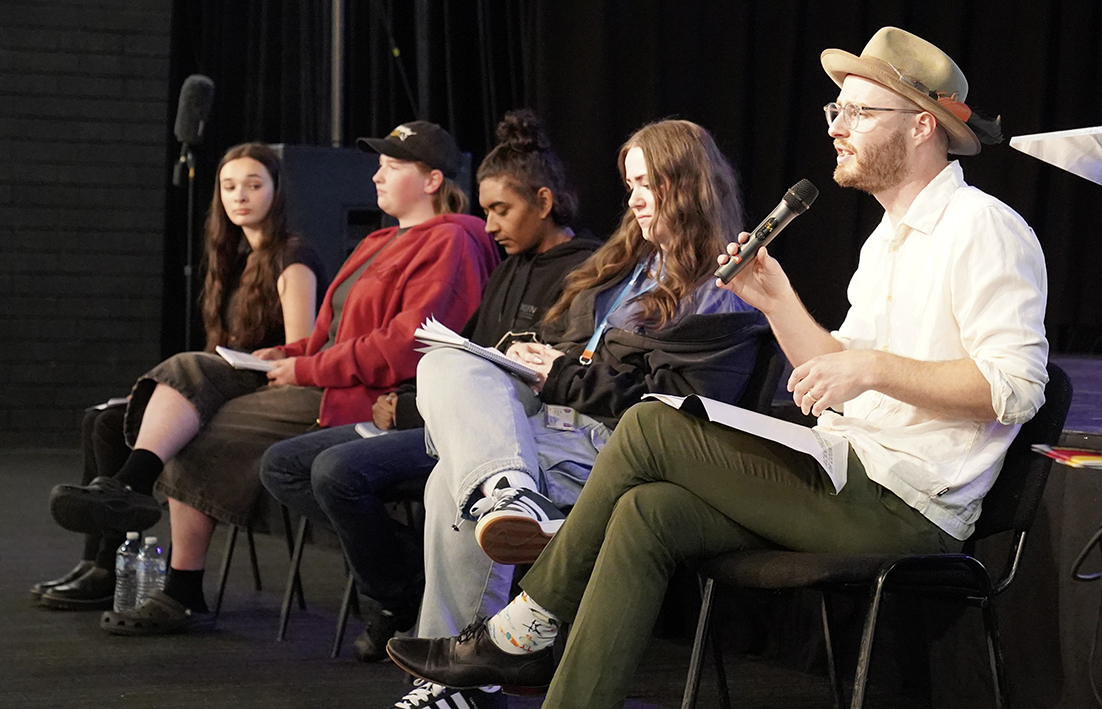
LEADERS in the homelessness sector gathered in Midland to discuss priorities in their pre-budget submission to state government in a push to end youth homelessness.
The theme of the November 17 forum was ending child and youth homelessness, with a range of speakers providing insights from lived experience, sector data and academic research.
The submission’s five priorities included committing to a housing first model, investment in housing variety, strengthening preventative programs, establishing a youth version of the Advance to Zero initiative, and investing in lived experience.
The first priority was a housing first for youth model, which prioritised the philosophy of getting secure housing and support sorted for a client before all else.
This contrasts with current models which are pre-conditional and require applicants for housing to meet sobriety standards and other conditions before being housed.
Youth homelessness advisory council (YHAC) committee members shared at the forum their lived experiences of homelessness and difficulty accessing services without a housing first model.
“It’s built on the understanding that housing is a basic human right and that young people cannot address the impacts of homelessness, mental health issues, alcohol and other drugs (AOD), family breakdown without first having a safe place to stay,” 18-year-old YHAC committee member Caitlyn said.
“Young people experiencing homelessness should not have to prove that they are deserving of housing and many are already dealing with trauma and instability and system fatigue from being denied referrals over and over again.
“If services demand compliance with criteria, then our most vulnerable young people are the first people to fall through the cracks of the homelessness system.
“Stable housing gives them room to regain control and from the safety of housing, they can work on the consequences of homelessness which are mental health, broken family relationships, education and employment that aligns with their own journey.
“It’s self-determination, giving young people agency rather than forcing them into adult centred systems.
“This is especially important in Western Australia where every day between 63 to 77 young people need crisis accommodation but only 1.3 beds are available.
“A youth specific housing first approach recognises that young people need support to reconnect with family and relationships and where safe re-engage with school or training access employment pathways, learn life skills and build a sense of identity beyond being homeless.
“They can do that from the safety of housing without having to worry that that will be taken away from them if they don’t meet conditions.
“The government should invest in housing first for youth because it’s evidence based, cost effective and it reduces the strain on crisis systems.
“By addressing youth homelessness early and in a way that’s appropriate for young people, we reduce future reliance on crisis services and improve educational and employment outcomes and prevent chronic adult homelessness from emerging.”
When asked about the barriers the committee members personally faced while accessing crisis accommodation as a young person, all committee members agreed barriers were there.
YHAC committee member Sully said he resonated with other members Kaya and Brooke’s experience of the emotional toll of being rejected after being given a sliver of hope.
“From personal experience, having mental health issues in the homeless sector makes it very difficult,” he said.
“A lot of crisis places have barriers and certain criteria you have to meet and unfortunately people coming off the streets into these places probably have severe mental health issues or AOD usage.
“So, (crisis centres) might say, ‘Yes, you can come in for a referral,’ and like (committee members) Brooke and Kaya were saying, you go in for an assessment and get your hopes up but they reject you because they find you have a mental health or AOD issue or your needs are too complex or whatever.
“It’s just that constant rejection which makes you feel like you don’t matter, like no one cares and you end up feeling invisible, so you create behaviours to protect yourself which makes it even harder.”
University of Tasmania communities and social justice associate professor Catherine Robinson brought interstate perspective and spoke about the invisibility of unaccompanied homeless children in current systems, the problems with the term “youth homelessness” and the urgent need to focus on intervention.
Dr Robinson said the term “youth homelessness” was misleading as the life-stage differences between a 12-year-old and a 20-year-old meant both had very different needs.
Yet, current systems grouping both age-groups under the umbrella term of “youth” meant that children experiencing homelessness at the lower end of the age range weren’t receiving adequate support.
“If you’re 12, a 20-year-old is like your grandpa,” Dr Robinson said.
“In their view, they’re a threat, so that younger cohort are avoiding the support service system because even if they know about it, they don’t want to go there because it’s scary.
“Our historical attachment to the idea of the homeless youth has gotten in the way of us being specific about the developmental needs of homeless children unaccompanied by a parent or guardian.”
Dr Robinson encouraged early intervention and for the sector to work with schools to identify at risk children before the cycle of homelessness began.
She pointed to projects such as the Geelong Project which operated through the community of schools and services model to help support families to nip the issue before it reached crisis point.
Although, intervention programs such as the Reconnect government program and services like Ruby’s existed, Dr Robinson said there needed to be more sector collaboration with schools without putting pressure on teachers to get involved.
The Child Poverty in Australia 2025 report found an increase of 33,000 children living in poverty in the state over the past three years with the rising cost of housing being the main reason.
More information on sector priorities to end youth homelessness can be found on the full submission document on YACWA’s website.