THEY haven’t even finished high school yet, but local students are already helping NASA tackle one of Australia’s biggest threats: bushfires started by lightning.
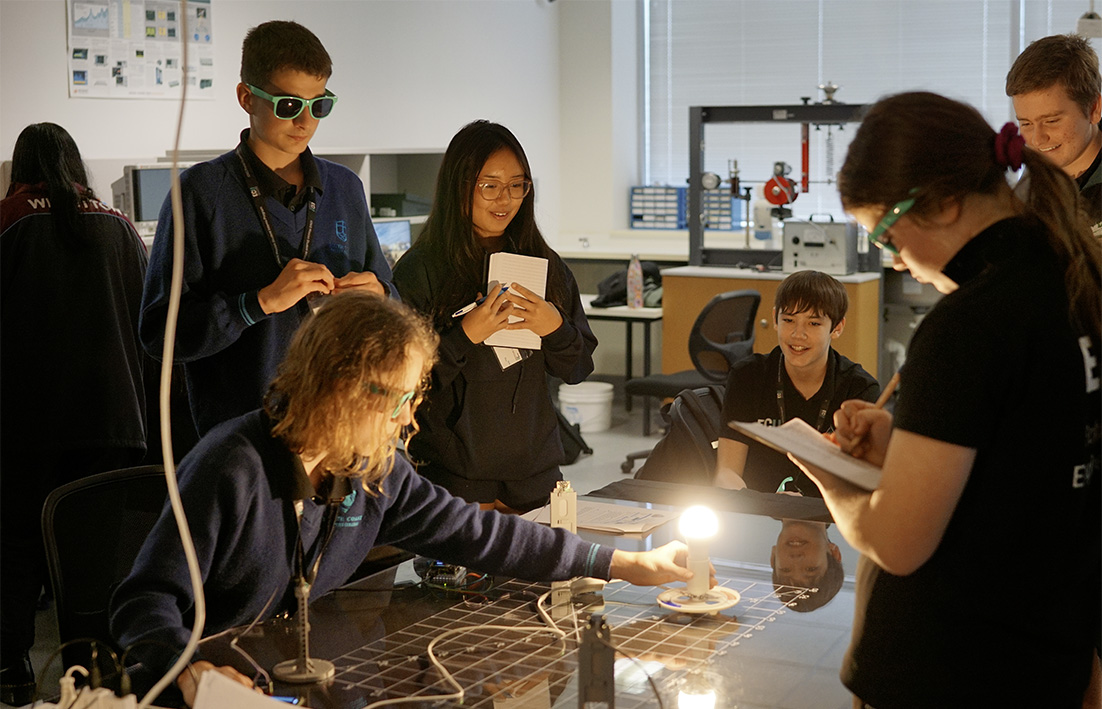
Students from Ellenbrook’s Holy Cross College, Swan Christian College, Governor Stirling Senior High School, Ballajura Community College and Malaga’s Al-Ameen College have joined 21 other schools in Edith Cowan University’s (ECU’s) IGNIS internship program, a unique STEM initiative giving teenagers the chance to gain hands-on experience of a real international space mission.
The students, from years 8 to 11, are working with NASA scientists, aerospace experts, ECU School of Engineering academics and Aboriginal rangers, helping to develop technology that can detect lightning strikes and give firefighters earlier warning of dangerous fires.
Lightning causes hundreds of bushfires across WA each year, many in remote regions which can burn undetected for days.
Students have been building mini weather stations in their classrooms to collect environmental data such as temperature, soil moisture, and humidity which help predict conditions that lead to lightning-triggered bushfires.
They’ve also been given a taste of university life through a series of on-campus IGNIS workshops and mentoring sessions.
ECU deputy vice-Chancellor (Research) and IGNIS mission leader Professor Paulo de Souza said the project has the potential to transform bushfire prediction and save lives.
“IGNIS harnesses space technology to tackle one of Australia’s most pressing challenges,” Professor de Souza said.
“This pioneering work will give us vital insights into fire prediction and community safety, providing research data for global scientists and fire investigators. It has the potential to save thousands of lives around the world.”
The IGNIS mission is a landmark collaboration between ECU, NASA and leading Australian universities, with ECU the only WA university involved.
The program will culminate in a graduation ceremony on November 30, where students will be recognised for their contributions to the IGNIS mission with certificates and NASA-linked acknowledgements.
“IGNIS is about empowering students to use their creative thinking, develop solutions for real-world problems and see themselves as part of something bigger,” Professor de Souza said.
“They’re not just exploring STEM. They’re shaping its future.”