CELEBRATING the work of seven prolific ceramists who respond to the unique and vast West Australian landscape, Mundaring Arts Centre (MAC Inc) will present The Clay Path and Picnic Terrain exhibitions from Sunday, August 24 to Sunday, October 26.
The Clay Path highlights selected ceramic forms from the Shire of Mundaring and City of Swan art collections alongside works chosen by the artists that reveal the evolution of their practice.
Presented in Gallery 1, The Clay Path showcases the enduring contributions of Alison Brown, Greg Crowe, Pippin Drysdale, Bernard Kerr, Warrick Palmateer and Garry Zeck to the evolution of clay practice in Australia, as they reflect on past works and where they are now in their artistic careers.
Pippin Drysdale is recognised as the “foremost interpreter of the Australian landscape in the field of ceramics” and her works are held in major museums, including Chatsworth and the Victoria and Albert Museum. In 2020 she was awarded an Honorary Arts Doctorate from Curtin University.
“For over forty years I have been inspired to share my feelings about the beauty of Central Australia and the importance of preserving the ancient cultural traditions of the people who have cared for them for so long, through my ceramic work,” Ms Drysdale said.
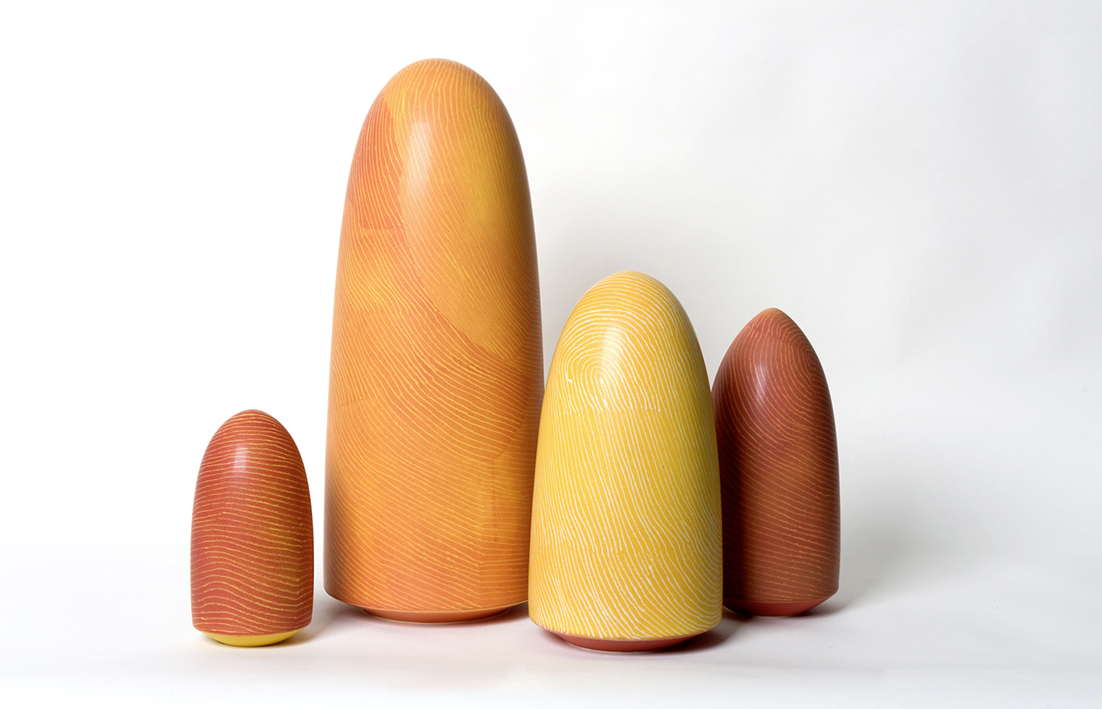
Drysdale’s Tanami Mapping series (2010) and Kimberly series (2008), on loan from the City of Swan Collection, celebrate the forms, ochres and red iron linear grooves of the rocky environments of the northernmost region of WA; “I’d like to think I’ve captured something of the macroscopic quality of light, the linearity and the oldness of our continent,” said the artist, who is currently in the midst of preparing for a major survey of her work.
Greg Crowe and Bernard Kerr present works closely related to the environment surrounding their studios in the Perth Hills.
Kerr who held his fifth solo exhibition at Midland Junction Art Centre in 2024, is a leading figure in Western Australian ceramics and education, and organiser of the Wedge: Australian Ceramics Triennale 2025. Kerr’s Kangaroo Paw Vases (2004), from the Shire of Mundaring collection, are a sculptural work that embody his investigation into the notion of form and function, the rocks and landforms of WA and the wildflowers that have evolved in them.
Crowe is renowned internationally for his use of clay dug from his Hovea property, the lustre of his woodfired glazes and the unique marks attributed to the unpredictable nature of the flame, salt and ash in action in his hand-built kiln.
The Clay Path features TD 246 (2015), a collection of ceramic vessels presented with reclaimed refractory timber are representative of Crowe’s continued exploration of firing and experimental approach to the treatment and clay.
Warrick Palmateer and Alison Brown bring another aspect of the landscape to their work through their shared love of the Southwest coastline and beach combing.
Whilst Palmateer is known for his unrestricted and ambitious scale which reflects the power and transformation of nature through the alchemy of a practiced craft, Brown’s works have an intentional spontaneity, as she explores layers of meaning and metaphor whilst challenging the materiality of clay.
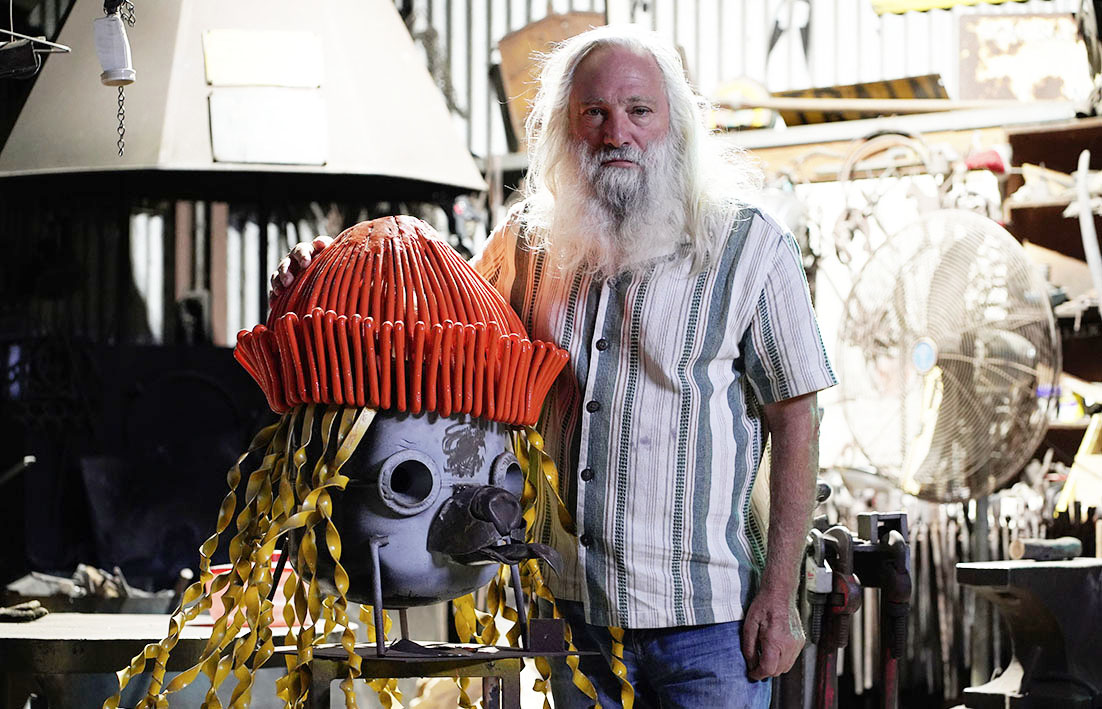
Similarly, Garry Zeck treats the clay vessel as both a classical form and a surface for his painterly explorations.
Having held over 50 solo exhibitions, Zeck’s work is held in state, national and private collections. His work is influenced by Chinese and Japanese aesthetics, through the sense of composition, brushwork and carving, and yet his subjects are distinctly Australian.
The Clay Path is an exploration of material, memory, and land. The physical properties of clay - drawn from the earth, shaped by hand, and forged in fire - become metaphors for the artists' own creative journeys.
The exhibition’s title serves as both literal and symbolic: a pathway made of and through clay, reflecting the evolving landscape of ceramic practice in WA.
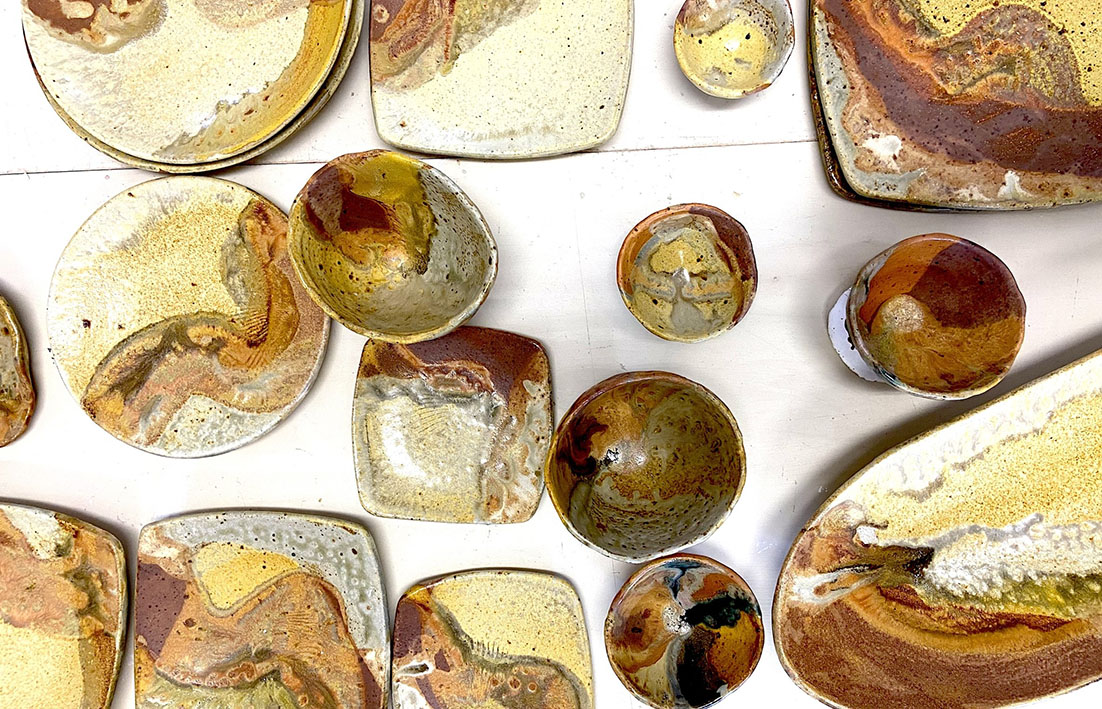
In Gallery 2, Jen Kerr’s debut solo exhibition, Picnic Terrain features a selection of ceramic plates, platters and vessels that reveal the surfaces, textures and colours of distinct landscapes in Western Australia that she has visited and passed through.
Relaxed and playful in form, Kerr’s ‘picnic ware’ responds intuitively to landscapes she has picnicked in, camped on or walked through.
Each piece offers a textured impression of terrain, memory and presence – impressions drawn from sites including the stark clay and gravel quarry of the Statham Wetlands on Nyaania Creek, the mysterious pools of the Blackwood River (Goorbilyup), the granite rock beaches near Mt Many Peaks (Yoolberup) and the salt lakes across Ballardong and Dumbleyung Boodja.
“My practice is a way of thinking, caring, and knowing. A way to connect with place, memory and other beings,” she said.
A curator, educator and arts facilitator, Kerr is recognised for her contribution to public arts and communities. She has participated in the Mundaring Hills Open Studio trail for the past five years and exhibited widely in Western Australia.
Curated to complement Wedge: The Australian Ceramics Triennale, to be presented from Oct 2-5 in Fremantle, both exhibitions invite audiences to venture beyond the urban environment and into the Perth hills to experience works inspired by the earth, bush, sea and sky.