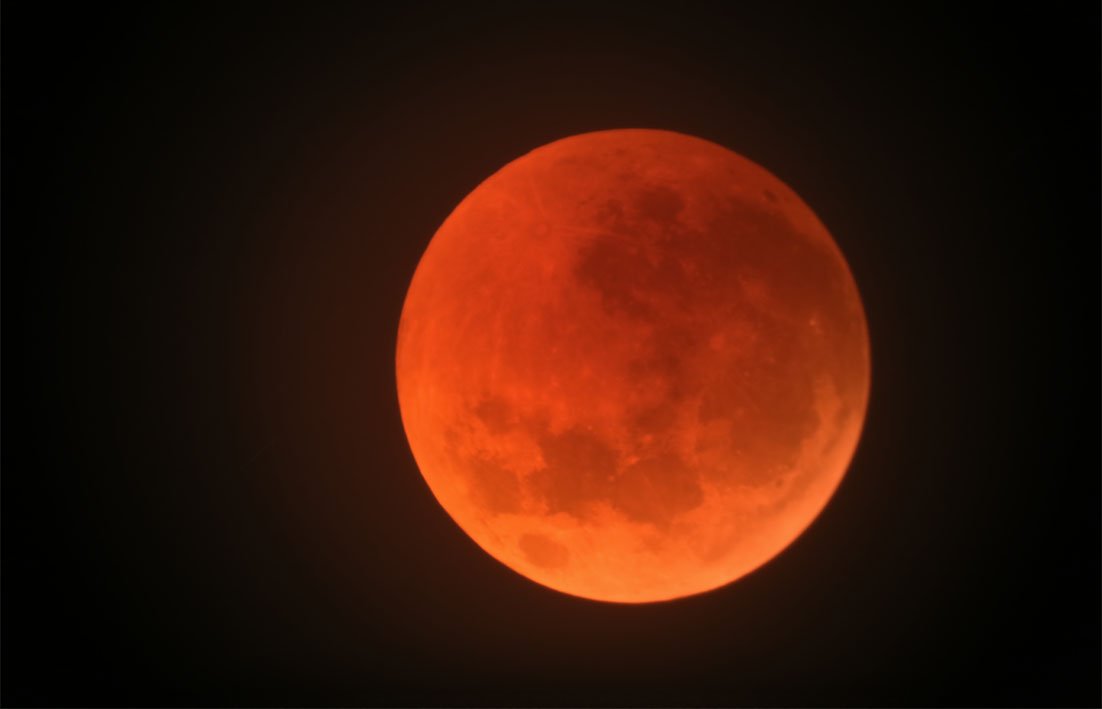
PERTH Hills residents will have the chance to catch a total lunar eclipse in the coming week with great vantage points to rug up at and look skyward.
For residents that stay up past midnight this Sunday, they will be able to watch the moon turn red as it passes into the shadow of the Earth at 1.30am on Monday, September 8.
Perth Observatory tour administrator and Swan View resident Matt Woods said the eclipse was a great opportunity for families to get involved in astronomy, especially with the school holidays underway.
“On the early morning of Monday, September 8, Perth will be treated to one of the most spectacular sights,” he said.
“A total lunar eclipse, when the moon takes on a striking blood-orange colour in what’s often called a blood moon.”
Mr Woods said the phenomenon was safe to view with the naked eye and required no specialist equipment.
“All you need is a clear view of the sky and a bit of patience,” he said.
“If you’ve got binoculars or a telescope, that’s a bonus but otherwise just head outside and enjoy it.”
Mr Woods has worked at the observatory for more than a decade and said skywatching was an accessible way to reconnect with nature.
He said the Perth Hills were particularly well suited for stargazing thanks to the lower light pollution and an active community of enthusiasts.
“There are some fantastic vantage points around Mundaring,” he said.
“This is the first time since November 2022 that we’ve actually had a total solar eclipse here in Perth.
“This is one of those rare ones where the moon is nice and high.
“You don’t need to be somewhere dark and you can see it from your backyard.”
Mr Woods said lunar eclipses were safe to watch with the naked eye and could inspire the next generation of astronomers.
“It’s free and you don’t need a telescope – these kinds of things can get kids into space and astronomy,” he said.
For those looking to photograph the eclipse, Mr Woods recommends a camera with manual mode, a tripod and exposures between one and five seconds.
“You can see this orange face of the moon and stars around it,” he said.
“Usually the moon is so bright that you can’t see stars in the same photo, but during the eclipse it dims enough that you can,” he said.
Perth Observatory will livestream the event in partnership with timeanddate.com
The observatory’s livestream can be viewed by visiting the Time and Date website livestream page.