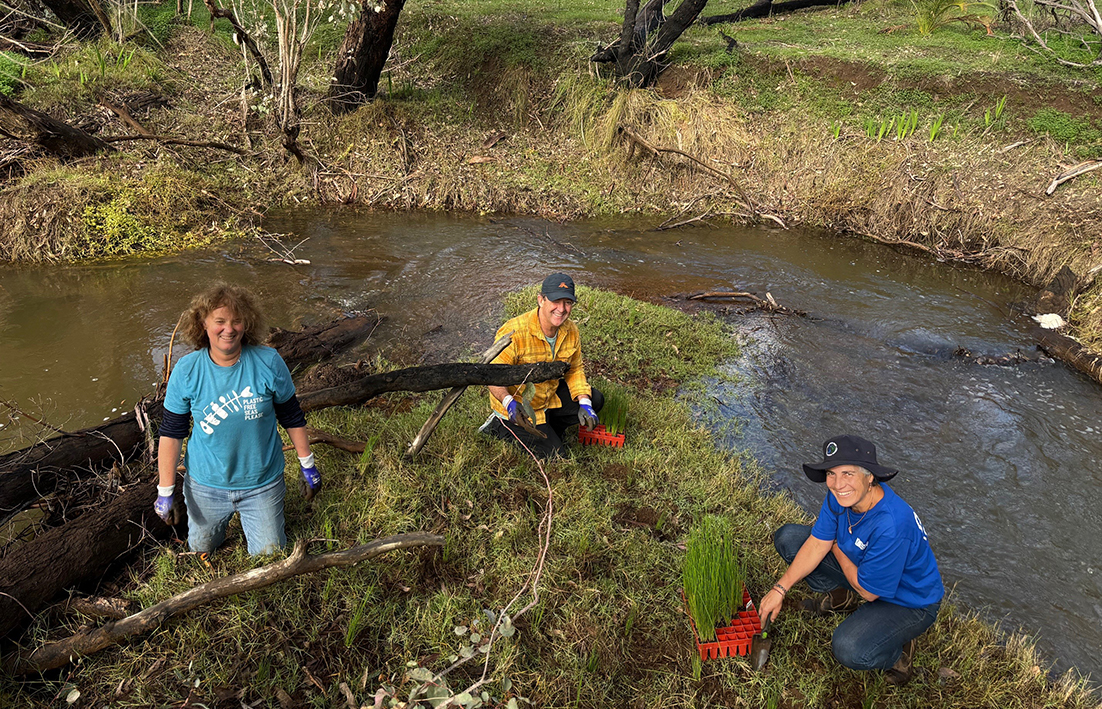
FOUR years after the Wooroloo bushfire, tiny native grass seedlings are emerging across the burnt landscape, signalling an unexpected and powerful turning point in the region’s recovery, powered by a unique collaboration between nature and people.
The Wooroloo post-fire environmental recovery project, delivered by Perth NRM through its state community stewardship program in partnership with the City of Swan, is bringing together an alliance not typically seen in fire recovery.
First Nations land management practitioners, local catchment groups, government agencies, environmental organisations, landholders and volunteers, are all working side by side to deliver practical, on-ground recovery of revegetation, erosion control, and weed management - all designed to restore biodiversity, stabilise the soil, and improve waterway health.
“You don’t restore a landscape like this with one organisation,” Wooroloo Brook post-fire recovery project officer Karyn Hobdyn said.
“What we’re seeing now - especially the natural return of native grasses - is the outcome of nature revegetating with trust, relationships and genuine collaboration. Everyone - from local government to community volunteers - has played a role in helping the land heal.
“I knew families who’d lost homes in the fire. I and so many others wanted to help people reconnect with their land and rebuild what was lost.
“This unique collaboration of nature and people in this post-fire recovery project is about rethinking how we live with our environment - learning from fire, building resilience, and creating a future where people and nature thrive together,” she said.
More than 1800 native seedlings have been planted across the catchment, but the natural regrowth is proving just as important. Native grasses improve biodiversity, stabilise soil and reduce flammable fuel loads, offering ecological benefits that introduced species cannot.
“Seeing native grasses reappear on their own is significant. It tells us the landscape is ready to heal - and that the community-led restoration efforts are working,” she said.
A key element of the recovery has been the integration of Whadjuk Noongar knowledge through Aboriginal Land Care ngala boodja, Perth’s only wholly Whadjuk Noongar-owned environmental management business.
Since late 2025, their team has removed up to 15 invasive weed species across the 10ha restoration site, clearing space for native species to return and significantly reducing the risk of severe future fires.
“We’re helping Country recover while also helping the people who lived through the fire,” managing director Matthew Kickett said.
“That’s what makes this work meaningful.”
Local residents have also become central to the restoration effort.
The Susannah Wooroloo Brook Catchment Group has mobilised volunteers through community planting days, property-based workshops and hands-on field activities. Their involvement has not only accelerated ecological recovery but helped rebuild community confidence after the fire.
“We’ve cared for these sites for a long time, so getting involved in the post-fire recovery felt natural to us. Many of the areas Perth NRM is working on are places where our members were already doing revegetation, so joining forces just made sense,” Susannah Brook Catchment Group chairman Dwayne Scook said.
Workshops on erosion control, land rehydration and Firewise property design have further equipped landholders with practical skills to manage their landscape safely and sustainably in a changing climate.
As the project moves into 2026, efforts will focus on expanding native grass populations, improving soil health and strengthening long-term fire resilience across the catchment.
For those involved, the small patches of returning native grasses represent more than just plant growth - they mark the beginning of a renewed, resilient landscape built through partnership, cultural knowledge and community determination.