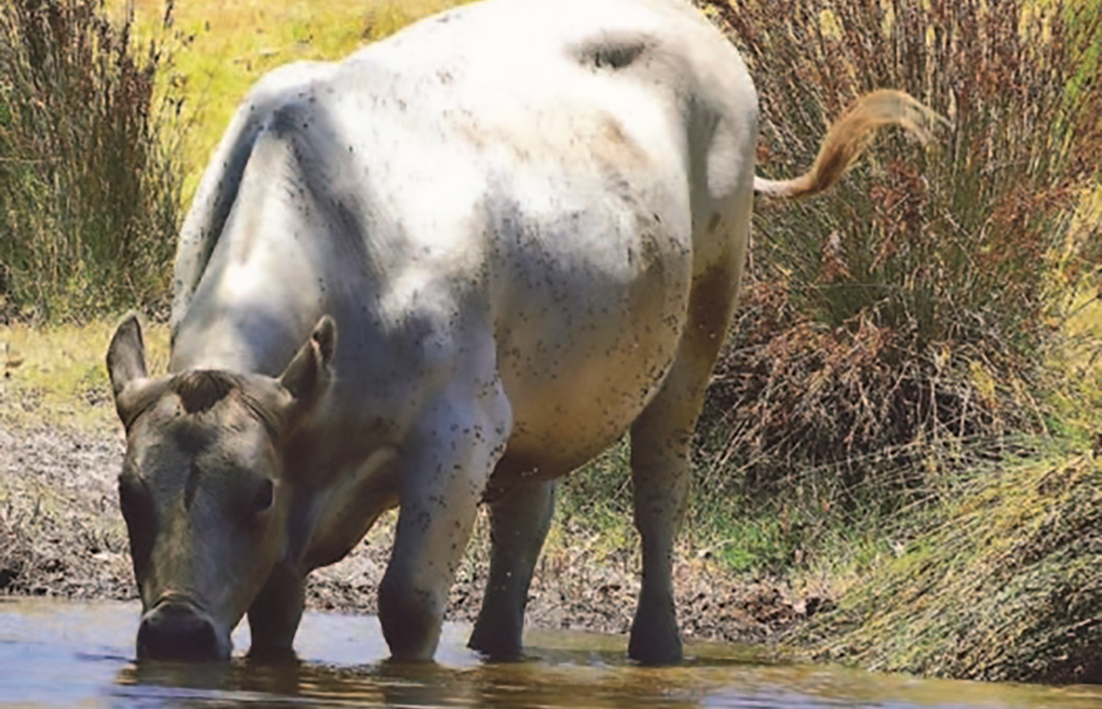
THE Department of Primary Industries and Regional Development (DPIRD) reminds landholders along the Swan Coastal Plain to take action to reduce stable fly this summer.
Stable fly (Stomoxys calcitrans) is a serious pest which bites livestock including cattle, horses and pets, causing pain and stress to the animal.
It is a declared pest for 14 local government areas in Western Australia, requiring primary producers and landholders in these areas to undertake control measures.
Stable fly occurs mainly along the coastal plain, including north and south of Perth, breeding in moist organic material such as manure, compost, grass clippings and vegetable waste.
DPIRD Invasive Species and Environment Biosecurity Director Ron Shepherd said there were steps that primary producers and landholders could take to reduce stable fly breeding, particularly during the warmer months which pose the highest risk.
“Controlling organic waste is critical to reducing the impact of stable fly in our communities – good hygiene and regular clean-ups make a big difference,” Mr Shepherd said.
“Stable flies breed in the rotting organic material. By reducing decaying organic matter in and on the soil, you are reducing the number of breeding sites available to stable flies.
“Regularly remove organic waste like vegetable waste, grass clippings, manure, waste feed and old hay at least once a week.
“Feed animals on hard-stands or in troughs to keep food off the soil. If feeding on the ground, lay feed in long thin lines to prevent trampling and contamination.
“After harvest, clean up waste vegetation within two days. Either bury it deeply or, if it’s left on the soil, turn off irrigation, mulch it into small pieces to let it dry out.”
Stable fly is a declared pest for the cities of Armadale, Cockburn, Joondalup, Kwinana, Rockingham, Swan and Wanneroo, the shires of Capel, Chittering, Gingin, Harvey, Kalamunda, Serpentine-Jarrahdale and part of the Shire of Murray.
“Primary industries and landholders in these areas must manage waste appropriately on their properties using information available from DPIRD and the Stable Fly Management Plan,” Mr Shepherd said.
“DPIRD is working with horticultural industries, landholders, local governments and affected communities to reduce stable fly breeding to support long-term management of the issue.”
Landholders and community members in these areas are encouraged to report stable fly to their local government authority.
More information is available from the DPIRD website www.dpird.wa.gov.au/stablefly