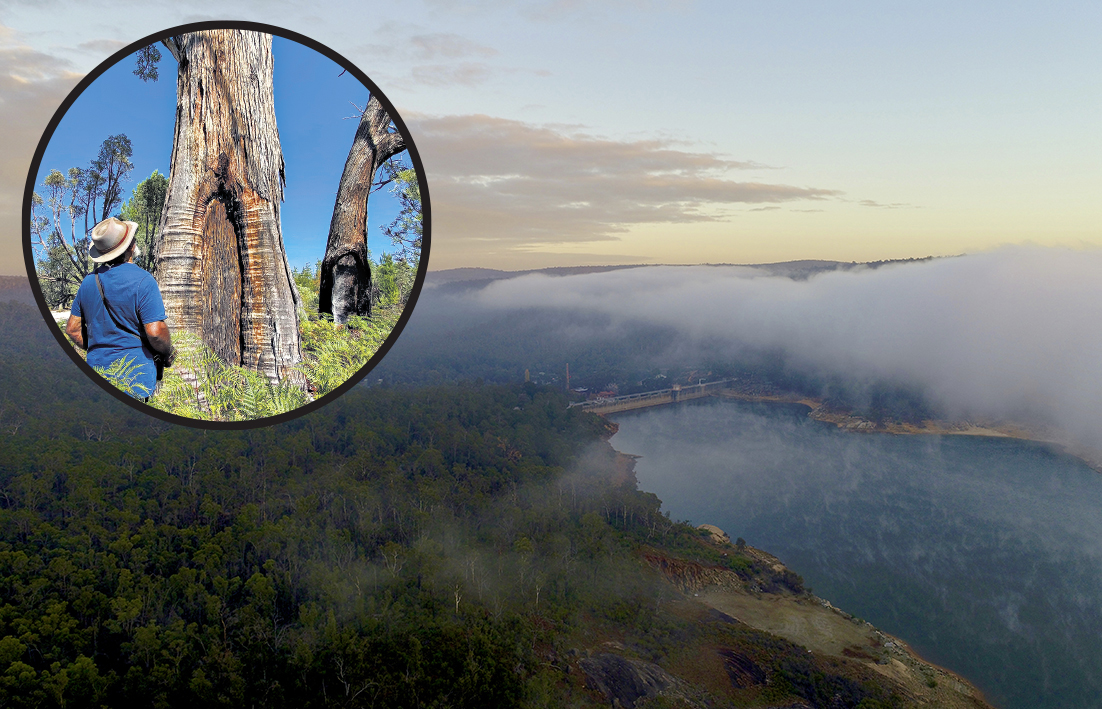
ALCOA announced their removal of the Perth Hills from their proposed exploration plans on Monday, following months of opposition from the hills communities.
Bibbul Ngarma Aboriginal Association (BNAA) chairperson and Noongar Elder Walter McGuire said working together was key to making sure the community was heard.
“It is our role and responsibility to care for the waterways and forests as the First People of this land,” he said.
“Since colonisation, we’ve been denied this role, but now we are bringing back the traditional ways of caring for Country for the benefit of all who live on Noongar Boodja.
“It is shocking to realise that companies like Alcoa and others have held open mining rights to our forests and access to our water sources for many years.
“For decades, successive WA governments have allowed them to exploit these rights, destroying our land and bypassing our community’s rights to safe drinking water and clean air.
“Working together is the only way to get the best outcomes for Country.
“We are bringing people together to understand that we’re just one human race, with many cultures and many differences, but we need to come together as one to look after our planet Earth.”
BNAA senior Elder May McGuire said strip-mining land and pollution of water remained key concerns and pressure needed to come from the top down.
“We don’t want our forests to go, especially our big trees up there in the hills,” she said.
“They are beautiful the old jarrah, they are our family, it is a healing tree.
“The government has to put the best foot forward and start doing the right thing by the country and for all the people.”
Alcoa director of regulatory approvals Kane Moyle said the decision reflected stakeholder and local community input during the EPA’s recent public comment period on the environmental assessments.
“Community and stakeholder consultation is an important part of Alcoa’s planning for the future,” he said.
“While exploration drilling is a low-impact activity and does not indicate an intention to mine an area but rather to broaden geological knowledge of the region, we understand the strong environmental and social values of the Perth Hills to local communities and the broader public.
“We listened to feedback and are making changes that will be reflected in both MMPs.”
The alarm was first sounded in the hills when the BNAA shared excerpts from Alcoa’s hundreds of pages long submissions to the Environmental Protection Authority.
These documents formed part of Alcoa’s submissions seeking approvals for ongoing plans to mine for bauxite and expand the envelope for their exploration operations.
Parts of Mundaring and Kalamunda were included in the area outlined in Alcoa’s proposed expansion area, which covered drinking water catchments such as the Helena River feeding the Mundaring Weir as reported in Alcoa’s Perth Hills expansion zone.
A BNAA spokesperson said the community was grateful for Echo News’ coverage of the issue and the local media played a critical part in raising awareness of the situation.
“(Echo News) media coverage has been a pivotal part of this campaign, and we really appreciate the commitment to our local community,” they said.
“This is a victory for the people of Perth and for the Mandoon Bilya (Helena River) drinking water catchment that supplies Mundaring Weir.
“But make no mistake – the fight is far from over.”
BNAA executive director Francesca Flynn said Alcoa’s exit from the hills was a defining moment.
“Everyday people, local governments, and community organisations have already shown the power of standing united,” she said.
“Alcoa plans to consume around 17 billion litres of water every year.
“More than one-third of the Kwinana desalination plant’s maximum output (50 billion litres annually), at a time when the community are being urged to conserve water.
“Speak with your local government councillors, your state and federal MPs, and with each other.
“Now we must amplify our voices.”
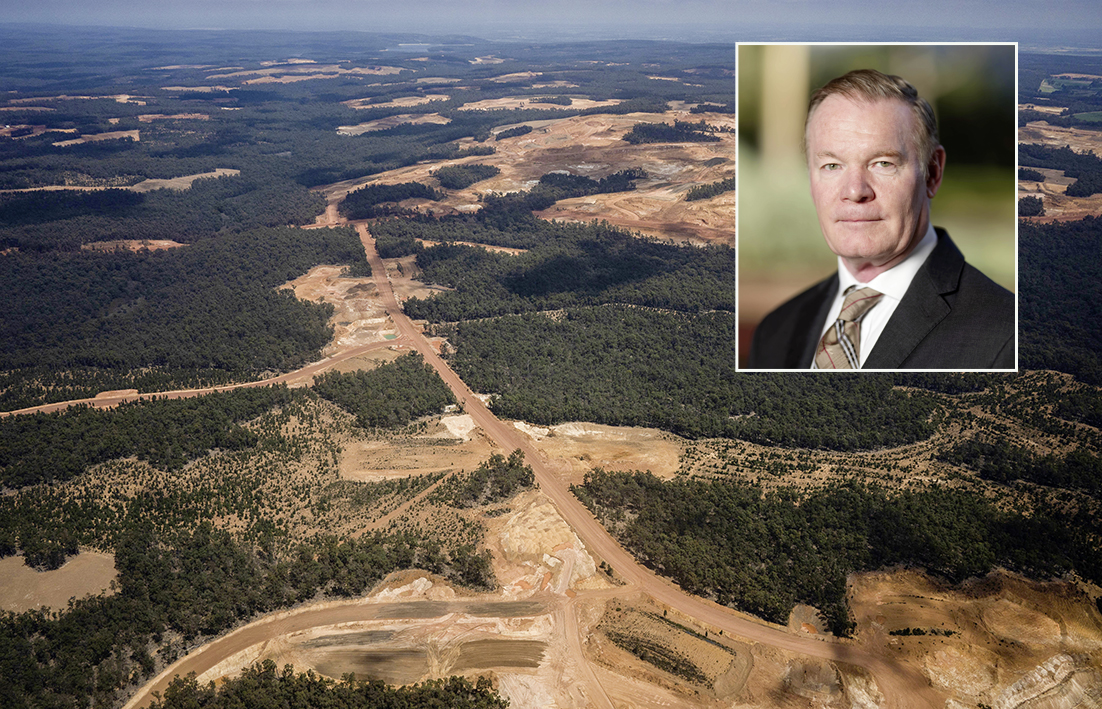
THE Environmental Protection Authority (EPA) chair Darren Walsh has confirmed more than 59,000 public submissions were lodged in the past 12 weeks over US mining giant Alcoa’s plans to expand operations in the Northern Jarrah Forest.
“This is the largest number of submissions the EPA has ever received and clearly indicates a high level of public interest,” he said.
“However the aim of the EPA’s public review is about ensuring that all environmental matters and information relevant to the assessments have been considered.
“The submissions from the Alcoa public reviews are currently being reviewed and consolidated into a summary of submissions to be provided to the proponent for response.
“Alcoa’s responses will be published before the independent EPA completes its assessments and delivers its report to the Environment Minister.”
Public submissions closed on August 21, following a community campaign including a 2000 strong rally to parliament and a series of public town hall meetings organised by End Forest Mining highlighting the impact of Alcoa’s bauxite mining in the Darling Range.
Issues discussed included deforestation, forest rehabilitation shortcomings, loss of habitat for threatened species, concerns surrounding contamination of Perth’s water supply, and the significance of the Northern Jarrah Forest from a First Nations perspective.
Recently, national advertisement regulators Ad Standards upheld a ruling they made in August regarding breaches in a print advertisement by Alcoa in the West Australian newspaper.
Alcoa’s print advertisement was found by the Ad Standards panel to have breached four out of five sections in which complaints were raised.
“The panel considered that the overall impression created by the advertisement was inaccurate and likely to mislead or deceive target consumers,” the Ad Standards panel said.
“While the advertisement begins with the statement that rehabilitation is happening and includes a qualification that some features of a forest take time to mature, these were not enough to counteract the overall impression that the cleared areas had already been rehabilitated to a point which would look like a forest.
“A target consumer was likely to interpret the statement ‘75 per cent of the cleared forest has already been rehabilitated’ as the rehabilitation work was already done, to a point where the area would resemble a forest.
“The reference to ‘self-sustaining forest’ adds to this interpretation.
“The panel considered that the word forest is widely understood to be an ecosystem of dense trees and undergrowth.”
Due to the finding, the panel upheld the complaint and Alcoa discontinued the advertisement and said there were no plans for the advertisement to be used again.
WA Forest Alliance director Jess Boyce said WA residents sent a clear message about their opposition to forest mining.
“This huge response, with more than 5000 individual responses in addition to the nearly 54,000 people who signed their names to organisations’ submissions, we believe, is the highest number of submissions ever received by the WA EPA,” she said.
“This has been a whole of community response, with West Australians and indeed people from right across the country, from all walks of life right across the social and political spectrum, saying enough is enough.”
Conservation Council of WA executive director Matt Roberts said this was the first time in 60 years that the public had an opportunity to scrutinise the company’s mining operations.
“Clearly, the people of WA have taken up this opportunity with gusto to share their views on how this proposal threatens the Northern Jarrah Forest and its biodiversity, climate, culture, water, and natural heritage for future generations,” he said.
“Alcoa’s expansion plans would see the equivalent of 27.5 Kings Parks bulldozed to extract bauxite.”
Perth Hills LGAs oppose Alcoa lease reported the City of Kalamunda and Shire of Mundaring both voted to oppose the proposed expansion during their council meetings on August 12.
Alcoa’s Perth Hills expansion zone reported a portion of the mining lease agreement did cover an area of Mundaring and Kalamunda.
However, an Alcoa spokesperson said Alcoa’s plans for new mining being assessed by the EPA did not fall within the Kalamunda or Mundaring areas and exploration did not necessarily indicate intention to mine.
Mr Walsh said the EPA intends to produce one report, which will provide its assessment and recommendations on each of Alcoa’s proposals.
“Both assessments are expected to be completed in the first half of 2026,” he said.
“After a three-week public appeal period the Minister will consider any appeals before making a final decision on the proposals.”
Alcoa has been contacted for comment.
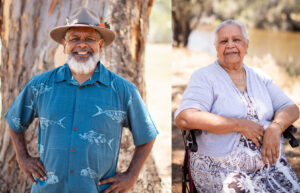
BIBBUL Ngarma Aboriginal Association (BNAA) have added to the chorus of opposition to the continued expansion of mining by Alcoa in the Perth Hills’ jarrah forests - especially in the Mundaring Weir drinking water catchment, the focus of their Helena River conservation program.
“Community and scientists alike have serious concerns about Alcoa’s activities that relate to drinking water, community health and the irreplaceable loss of environmental, cultural and social values too numerous to list,” a spokesperson said.
“Our forest is the only jarrah forest in the world. We have already lost over 50 per cent of it in less than 200 years, and the remainder is under enormous pressure from a drying climate, low rainfall, dieback and disease, polyphagous shot-hole borer, tree canopy death, increased bushfire risk, feral species, and land clearing for development.”
The association claims that in 60 years, Alcoa have cleared 280sqkm (28,000ha) of forest, an area fourteen times the City of Perth and now want to clear another 110sqkm (11,000ha).
“Yet not one single hectare of rehabilitated land has been accepted back by the WA government as restored to our state’s rehabilitation criteria. Even worse, clearing is outpacing rehabilitation, meaning there is a growing backlog. Alcoa’s operations are now visible from space,” the spokesperson said.
“Mining currently impacts 10 of 15 major drinking water catchments for Perth and the southwest. Proposed exploration extends those impacts to all 15 catchments. This is a disaster.”
The association said while the Cook Labor government did not create the Alcoa State agreements, they are responsible for managing them and acting in the best interests of all Western Australians, including protecting drinking water and unique wildlife, including iconic black cockatoos and mainland quokkas.
“Alcoa’s drilling expansion is within the same area that we recently discovered a new mainland quokka population in Mundaring Weir catchment,” they said.
“We strongly believe there should be no further expansion of mining in our jarrah forests until we properly understand all of the risks. The stakes are simply too high. When our drinking water is impacted, it is already too late. Once the jarrah forest is gone, it is gone forever.”
The association acknowledged and thanked the many people and organisations in the community who have spoken out to protect the forests and waterways, including several local governments in the Perth Hills who have formally opposed Alcoa’s expansion, including Shire of Mundaring, City of Kalamunda, City of Armadale, Shire of Serpentine Jarrahdale and Shire of Waroona.
“Our community will not accept the continued destruction of the world’s only jarrah forest and the certain risk to our drinking water,” the spokesperson said.
BNAA Chairperson and Noongar Elder, Walter McGuire said his people have lived on this land for millennia, drinking from all the freshwater streams, rivers and creeks.
“Now in 2025, no one can drink safely from our rivers without treatment. Western Australian government reports highlight that less than 1 per cent of waterways are now pristine,” Mr McGuire said.
He said he was also deeply concerned about impacts to archaeological and cultural heritage sites and their likely damage and destruction.
“We know there is a high density of heritage sites in Alcoa’s expansion area, especially around waterways and granite outcrops, but only a handful of these sites are registered with the Department of Planning Lands and Heritage because there have been very few formal heritage surveys in the area. This leaves these sites vulnerable and without legal protection.
BNAA Senior Elder, May McGuire said she did not like Alcoa going in the country in the hills because they will kill the water and make it no good to drink.
“They will spoil the streams and kill the land, the bush itself, the jarrah trees, the birds, the fish, the quokkas, all the animals,” she said.
BNAA executive director and environmental scientist Francesca Flynn said mining and drilling in drinking water catchments is inherently very risky.
“It carries a lot of complex risks, and many are worsened by a drying climate including rising salinity, disturbed water flows and aquifer recharge, disrupted rainfall runoff and reduced streamflow, increased soil erosion and dust, and increased risk of pollution and drinking water contamination,” she said.
“Mundaring Weir catchment taught us the link between tree clearing and salinity - when the weir was constructed, trees were ringbarked (killed) to increase water flow into the dam, but it also increased salinity.
“The government spent years reforesting the area, including land buy back, to stop the rising salinity and protect our drinking water. Clearing for mining activities will have a similar effect.”
THE City of Kalamunda and Shire of Mundaring both passed motions this month opposing any proposed expansion of Alcoa’s mining operations following multiple community deputations at each.
Both held on August 12, the council meetings in Kalamunda and Mundaring saw motions that were unanimously approved by their respective councils.
At the Mundaring meeting, deputees raised concerns about impacts to the environment and drinking water.
Environmental charity Bibbul Ngarma Aboriginal Association executive director and environmental scientist Francesca Flynn presented at both meetings and said Alcoa’s plan was exploratory drilling which carried risks.
“Exploratory drilling carries many of the same risks associated with mining, rising salinity, water flow disruption, erosion, dust, sedimentation, pollution, habitat destruction, wildlife disturbance and disease,” she said.
“While drilling may not always lead to mining, mining always follows drilling.
“Our forest is the only jarrah forest in the world.
“It is already under enormous pressure from drying climate, low rainfall, disease, shot hole borer, increased bushfire risk, to name just a few.
“We believe there should be no further expansion until we properly understand all of the risks involved.”
Following the resolution, the Shire of Mundaring will prepare a submission to the Environmental Protection Authority (EPA) as part of the public environmental review process.
The shire told Echo News Shire of Mundaring President Paige McNeil wrote directly to Alcoa stating council’s strong opposition to exploration drilling and potential bauxite mining operations within the shire.
The letter requested the voluntary excision of the Mundaring Weir catchment area from Alcoa’s mining and management program 2023-27 and mineral lease 1SA.
Mundaring confirmed they will meet with neighbouring governments, including Kalamunda, to form a regional response calling for the protection of the Northern jarrah forest and the environmental biodiversity of the Perth Hills.
City of Kalamunda Mayor Margaret Thomas said the deputations to council on the night demonstrated the strength of feelings residents had on the issue.
“The city will be preparing a formal submission to the government of Western Australia reflecting council’s position,” she said.
“As part of this process, the city has committed to engage with neighbouring local governments including the Shire of Mundaring, City of Gosnells, City of Armadale and the Shire of Serpentine Jarrahdale to explore opportunities for jointadvocacy.
“We have also written to relevant ministers and stakeholders to outline our position.
“While it is still early in the process, we look forward to constructive dialogue with state representatives and our neighbouring local governments as we move ahead.”
Resident Janelle Sewell presented during the Kalamunda meeting and said she had been on the Alcoa tour.
“I did the Alcoa tour,” she said.
“Now the trees that are being replanted, the rehabilitation is not native trees.
“These are trees that are introduced and does nothing in terms of biodiversity.”
According to a 2022 article by the Chamber of Minerals and Energy WA Alcoa has won state government Golden Gecko Awards for their environmental excellence and was the first mining company to be on the UN’s Environmental Program Global 500 Honour Roll.
In that same article Alcoa Australia senior research scientist Matthew Daws said, in a video interview, that in 1988 the company changed from planting pines and Eastern states eucalypts to the native WA species.
“Particularly jarrah and marri, the two key tree species, and aiming to return a functioning, self-sustaining jarrah forest ecosystem,” he said.
“The rehabilitation we’re standing in at Willowdale here is around 10 years of age.
“You can see we’re surrounded by young developing jarrah trees – there’s also a diverse shrub and in the understory layer we’re really aiming to return as many species here as we find in the surrounding unmined forest.
“Many of our workforce live locally – they live and work in and around the jarrah forest.
“They’re incredibly passionate about actually returning the jarrah forest in as good a state as they possibly can.
“And they’re really proud that they can look at some of our rehabilitation and say that they’ve been involved in putting it back.”
Kalamunda MLA Adam Hort said he had been working closely with both Perth Hills local governments and have heard from residents who thought it unfair for a company to possibly have access to areas restricted to residents.
“Locals keep asking how it can be that they’re told they cannot camp, ride a bike, walk the dog or fish in these forests yet it’s even a question that exploratory drilling and potentially mining could take place in those very same areas,” he said.
“We need to see what the EPA says about the proposal before the next moves are considered.”
An Alcoa spokesperson said they met with both the City of Kalamunda and Shire of Mundaring and will consider their feedback regarding their exploration plans as part of the next stage of the EPA assessment process.
“As we stated in our previous response to (Echo News questions), low impact exploration work is designed to define the extent of ore bodies throughout our lease area to assist in understanding the geology,” they said.
“Exploration activity does not indicate an intention to mine an area.
“Alcoa’s plans for new mining that are being assessed by the EPA do not fall within the Kalamunda or Mundaring local government areas.”
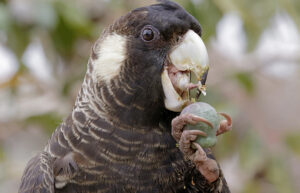
BIRDLIFE Western Australia has joined the opposition to Alcoa’s proposal to expand its bauxite mining in the Northern jarrah forrest and warns that Baudin’s black cockatoo will go extinct if the expansion goes ahead.
“Right now, US-mining giant Alcoa has applied to bulldoze over 11,000ha of forest on the Darling Scarp – equivalent to 6500 football ovals – critical black cockatoo habitat. A further 16,400ha of forest will be impacted,” Birdlife WA spokesperson Dr Mark Henryon.
The forests are home to WA’s iconic Baudin’s black-cockatoo – internationally recognised by the International Union for Conservation of Nature (IUCN) as critically endangered – as well as two other threatened species of Black cockatoos: Carnaby’s and the forest red-tails.
“Baudin’s black-cockatoo depend on the Northern jarrah forest for survival. They breed down south before migrating north to feed in the Northern jarrah forest during the non-breeding season,” Dr Henryon said.
“If we lose these forests, we lose the birds. Forever,” he said.
“Alcoa says its mine expansion will be safe for these birds, but their claims don’t add up.”
Dr Henryon said while Alcoa says it avoids high conservation value areas, its own documents show they will remove mature jarrah and marri forests that provide essential feeding grounds, roosting sites, and nesting hollows for black-cockatoos.
“Bulldozing these forests removes their homes and any chance of a future. Chicks perish. Parents starve.”
He said Alcoa claims it is restoring plant diversity and 75 per cent of mined areas are under rehabilitation.
“But research by experts at Curtin University showed that jarrah forests can never be restored after bauxite mining because bauxite itself is part of the forest’s ecological fabric,” Dr Henryon said.
“Not a single hectare of the 28,000 mined by Alcoa since the 1960s has met the WA Government’s own rehabilitation standards – a fact that has proven disastrous for all three of WA’s black-cockatoos.
“Alcoa claims that most animals return to rehabilitated areas, but this doesn’t apply to WA’s Black-cockatoos, they rely on old trees for food and nesting – trees that are destroyed during mining.”
He said Baudin’s black-cockatoo has already declined by more than 90 per cent in the last 40 years. Only 2500-4000 mature individuals remain.
WA’s Environmental Protection Act requires environmental offsets to counterbalance the lasting damage caused by a project and deliver measurable conservation benefits.
“But for black-cockatoos, offsets have repeatedly failed,” he said.
“Alcoa’s proposal is no different. It amounts to mapping and monitoring nesting trees, installing water troughs, raking around some tree bases to reduce the risk of fire, and conducting the occasional bird survey.
“It will not replace a single hectare of the 11,000 hectares Alcoa plans to destroy. It will not create new habitat. It will not halt, let alone reverse, the decline of Baudin’s.”
Dr Henryon claimed the WA Environment Minister, Matthew Swinbourn already knows it.
“Recently, the minister rejected a proposal to clear just 2.3 hectares of Carnaby’s Black-cockatoo habitat at Cocanarup, near Ravensthorpe, ruling that the “significance of the area and the scale of the impact … is unable to be adequately offset,” he said.
The Northern Jarrah Forest lies within the Southwest Australia biodiversity hotspot – one of only 36 recognised global hotspots for exceptional endemism and critical threat.
Dr Henryon said aluminium is the most abundant metal in the Earth’s crust.
“Is it really worth destroying a globally significant forest, pushing Baudin’s to extinction, and erasing WA’s invaluable natural heritage for this?”
As reported in Alcoa’s Perth Hills expansion zone Environmental Protection Authority released a survey which closed August 21 for residents to provide feedback on Alcoa’s proposal to expand operations into sections of the Perth Hills.
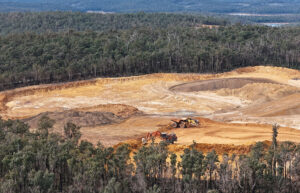
THE Environmental Protection Authority has released a survey due next month for residents to provide feedback on Alcoa’s proposal to expand operations into sections of the Perth Hills.
Parts of Mundaring and Kalamunda have been included in the area outlined in Alcoa’s proposed expansion area, which covers drinking water catchments such as the Helena River which feeds the Mundaring Weir.
The ABC reported Water Corporation had serious concerns about drinking water contamination as a result of Alcoa’s mining.
In response to questions from Echo News, a Water Corporation spokesperson said the new expansion area did indeed encompass areas of the Perth Hills and that the Environmental Protection Authority (EPA) urged residents to have their say.
“The mining and management program (MMP) increases the area of exploration available to Alcoa, extending Mundaring, Canning, Wungong and Harris dam catchments, parts of which sit within the local government areas of Kalamunda and Mundaring, among others,” they said.
“Our highest priority is supplying safe drinking water to the community.
“We are working constructively with key stakeholders, including the Department of Water and Environmental Regulation, to advocate for effective catchment controls that protect our drinking water dams and water quality.
“Protecting drinking water sources remains the most effective way to ensure safe and reliable supply.
“The EPA encourages all stakeholders and interested community members to make a submission on Alcoa’s expansion into future mining regions by August 21, 2025.”
According to EPA, Alcoa’s bauxite mining activities on the Darling Range are part of their mineral lease ML1SA which is documented in annual rolling five-year MMPs.
The documentation is a requirement of the state, and the 2023-27 program has not yet been approved although Alcoa operations in other parts of the state will still be undertaken in this time.
The lease concerning the Perth Hills would not include processing of bauxite ore into aluminium but is mainly looking at but not limited to clearing vegetation, establishing haul roads, transporting ore, rehabilitation and exploration activities.
The EPA accepted a referral from the WA Forest Alliance (WAFA) and will now assess the company’s mining plan.
WAFA said it was the first time in 60 years residents could have a say on Alcoa’s operations proposal.
Alcoa released an environmental review to the EPA with 13 assessment files and 79 appendices which remains accessible on the EPA’s page for Alcoa’s bauxite mining on the Darling Range from 2023-27.
In response, WAFA have released a guide for public submission to the EPA which said their most recent mining management program assessments were under review as part of the highest level of assessment possible by the EPA.
“Proposals by Alcoa to clear nearly 11,500 ha of the northern jarrah forest for bauxite mining are now under assessment by the EPA,” the document said.
“This is nearly 29 times the size of Kings Park.
“The EPA combined these two assessments ‘for the sake of efficiency and to allow better consideration of the combined and cumulative impacts to the northern jarrah forest’.
“The northern jarrah forest is one of the last great ecosystems of its kind; a rich, ancient, and incredibly diverse landscape found only in the Southwest biodiversity hotspot.
“It provides critical habitat for many plants and animals including black cockatoos and mainland quokkas.”
The WA Forest Alliance and the Conservation Council of Western Australia will hold a community meeting on the proposed expansion of drilling operations at Kalamunda Community Centre at 6pm on August 13.
Extra informational events will be available at Fremantle on July 29, Jarrahdale on August 6, and online via the End Forest Mining website on August 18.
The Alcoa spokesperson said the company's mineral lease has existed for more than 60 years and while the lease covers an overall envelope between Mundaring in the north and Collie in the south, they had no plans to mine in the catchment areas.
“The company does carry out some very low impact exploration work to define the extent of ore bodies throughout the lease area to assist in understanding the area’s geology, excluding national parks, conservation reserves and other areas of cultural, environmental and social significance,” they said.
“Exploration activity that may be undertaken to understand minerality does not indicate an intention to mine an area.
“Where exploration drilling may take place, we use custom-designed rigs that have minimal impact on the forest.
“In areas where any Alcoa operation do take place, we have rigorous controls in place to ensure any potential risks to drinking water are managed.
“In more than 60 years of exploration, mining and rehabilitation work carried out in the Northern Jarrah Forest Alcoa has never negatively impacted drinking water supply, and we intend to maintain this record.”