CANOLA and pulse growers have been urged to monitor crops regularly for native budworm and take action to protect canola and pulse crops, after a surge in numbers across the Wheatbelt.
The Department of Primary Industries and Regional Development’s (DPIRD’s) early warning trap network suggests numbers are likely to be similar to the high pressure years of 2018, 2019 and 2024.
Native budworm (Helicoverpa punctigera) cost growers dearly, eating the seeds of canola and all pulse crops, including lupins, field peas, faba beans, lentils and chickpeas – particularly when pods are present.
Current hot spots include Dalwallinu and Wongan Hills, while Narrogin crops have also been attacked as the pest populations migrate south from the Pilbara and Murchison following favourable seasonal conditions.
DPIRD research scientist Christiaan Valentine encouraged growers to monitor crops for damage and do regular sweeps to ascertain population numbers and to treat according to threshold requirements.
“If growers are seeing large numbers of moths caught in traps, they can expect to see small caterpillars in a few weeks and damaging caterpillars the week after, as warm spring conditions arrive,” Mr Valentine said.
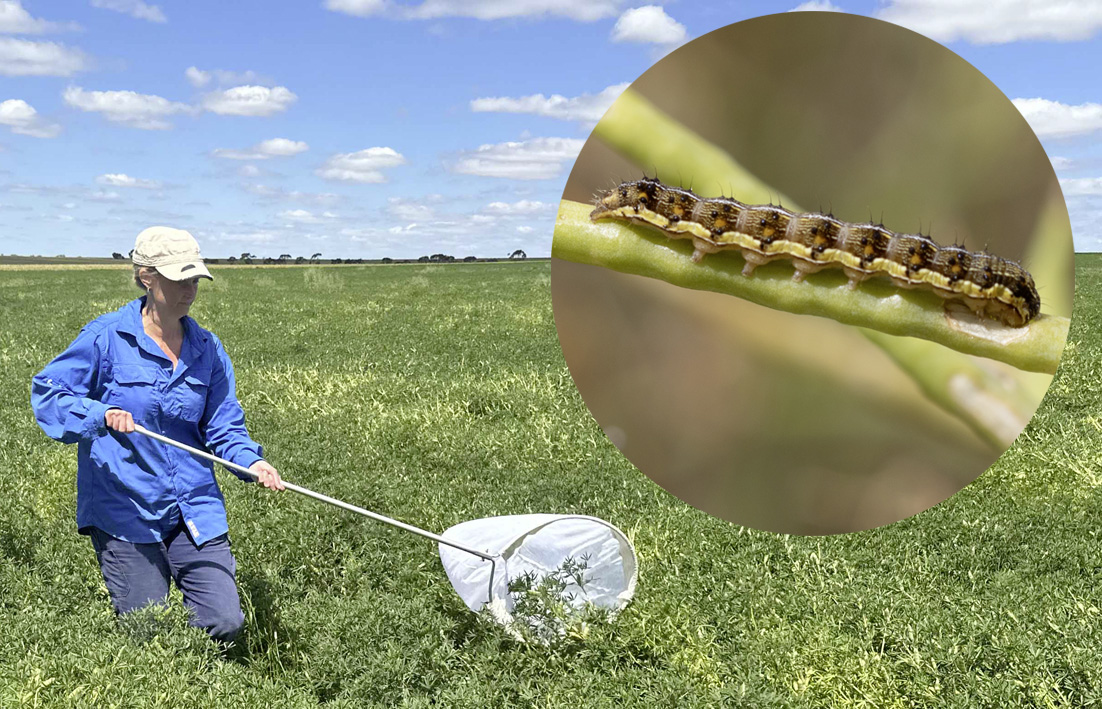
“The quickest and easiest method to sample most crops is to sweep with an insect net, taking two metre long sweeping arcs in several parts of the crop.
“It’s recommended growers take multiple samples of 10 sweeps each and average the results, as the treatment thresholds are based on the number of caterpillars per 10 sweeps.
“Crops are most at risk after flowering, when they turn from green to yellow, so it’s important to monitor them weekly or even daily – depending on severity.”
Effective treatments are available to control native budworm and one well-timed spray should be sufficient to control the pest in most situations.
Registered Insecticides can be found in the 2025 DPIRD Winter-Spring Insecticide Guide.
Growers are encouraged to consider the timing and economics of spraying and to consult DPRID’s online Native Budworm Spraying Threshold Guide.
If caterpillar numbers are below the threshold levels, the decision to spray should be delayed and periodic sampling continued.
DPIRD’s MyPestGuide CropScout app can be used by growers and consultants to enter their sweep net results to calculate native budworm spray thresholds quickly in the field.
With harvest approaching, growers are reminded to be aware of chemical withholding periods to reduce the risk of chemical residues.
“Many traditional pyrethroids have a 21 day withholding period in canola but there are newer products that have a shorter withholding period of seven days or less,” Mr Valentine said.
“Growers should also remember that windrowing or swathing is classified as harvest and this must be taken into account when determining withholding periods.”
Stay up to date with native budworm detections and advice by signing up for DPIRD’s regular PestFacts WA newsletter, while further information on economic thresholds, monitoring, and control is available on the department’s website.