SCHOOLS in the eastern suburbs of Perth are walking the tightrope of integrating AI into education in ways that support learning rather than undermine it.
Publications released as far back as May 28 show students at La Salle College using AI for its image generation abilities to create illustrations to accompany their own creative writing.
In the examples they provided, the illustrations that AI generated were still marked with noticeable artifacts that betrayed their AI origins.
Pupils were imperfect ellipses, hands had misshapen fingers, and the artificially generated lines didn’t appear to know where to start and end, leading to limbs defying physics.
In the two years since, AI had evolved to solve many of their early issues which also made the technology less detectable for educators scanning for generated work.
Capabilities of AI to generate not only images, but also content of essays and mathematics have also improved drastically in the span of two years.
The National Education Summit Australia revealed figures earlier in August that showed in a survey of over 3000 Australian high school students, the majority were incorporating the technology into their study.
The summit publication reported that many students were using AI ethically with 37 per cent using it to explain difficult topics and 18 per cent using it as a spell and grammar checker.
However, 40 per cent of students admitted to unethical use with 20 per cent using it to write their essays and the other 20 per cent using it to do their maths or science work for them.
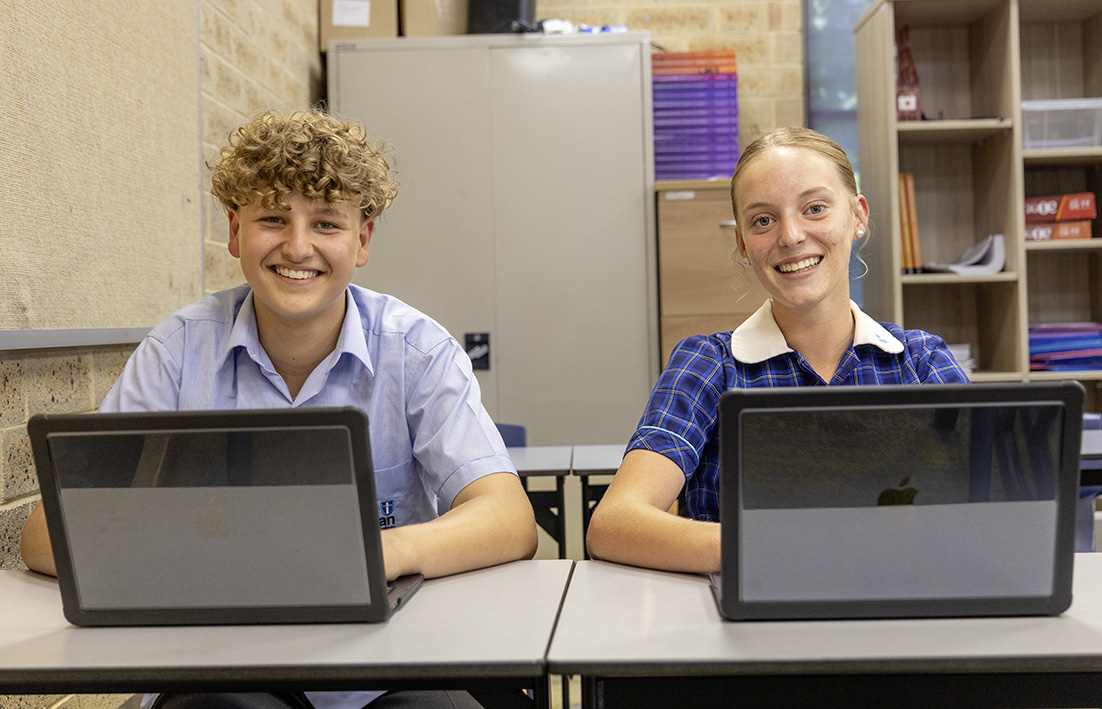
At Swan Christian College (SCC), AI is being rolled out to students with almost 100 per cent of parents having signed up for a program to shift all students to the usage of managed devices.
“While we cannot eliminate every digital risk in a rapidly changing online world including AI tools, we are taking deliberate steps to create the safest and most productive learning environment possible,” a SCC publication stated.
SCC principal Darnelle Pretorius said in an August SCC publication that AI was a tool that needed to be used correctly to ensure it did not replace teaching.
“AI is powerful, but it is not neutral. It reflects the data and biases it has been trained on and can be a helpful educational partner, offering tailored resources to meet a student’s learning pace and style,” she said.
“It can support revision, provide practice exercises, and help explain difficult concepts in new ways.”
Dr Pretorius said despite the positives, the technology’s limitations and risks had to be acknowledged.
“An over-reliance on AI can reduce opportunities for original thought, deep problem-solving, and the joy of creative struggle.
“While AI can spark curiosity, there is a danger that its instant answers might diminish the wonder of exploration and discovery.”
Kalamunda Senior High School has also begun incorporating policies into their documents aimed at countering AI based cheating.
According to their policy students are not permitted to submit for marking as original any work which is copied or downloaded from the internet, including AI generated responses from the internet, without acknowledging the source.
Echo News contacted the Department of Education (DOE) about the figures reported by the National Education Summit Australia.
The DOE said the state curriculum was helping students learn about the safe and ethical use of technologies and develop digital literacy skills.
“Guidance and resources are available for school staff about safe adoption of AI, including the Australian Framework for Generative AI in Schools.
“Parents can refer to general online safety guidance offered by the eSafety commissioner, parents and the digital technologies hub for families.”