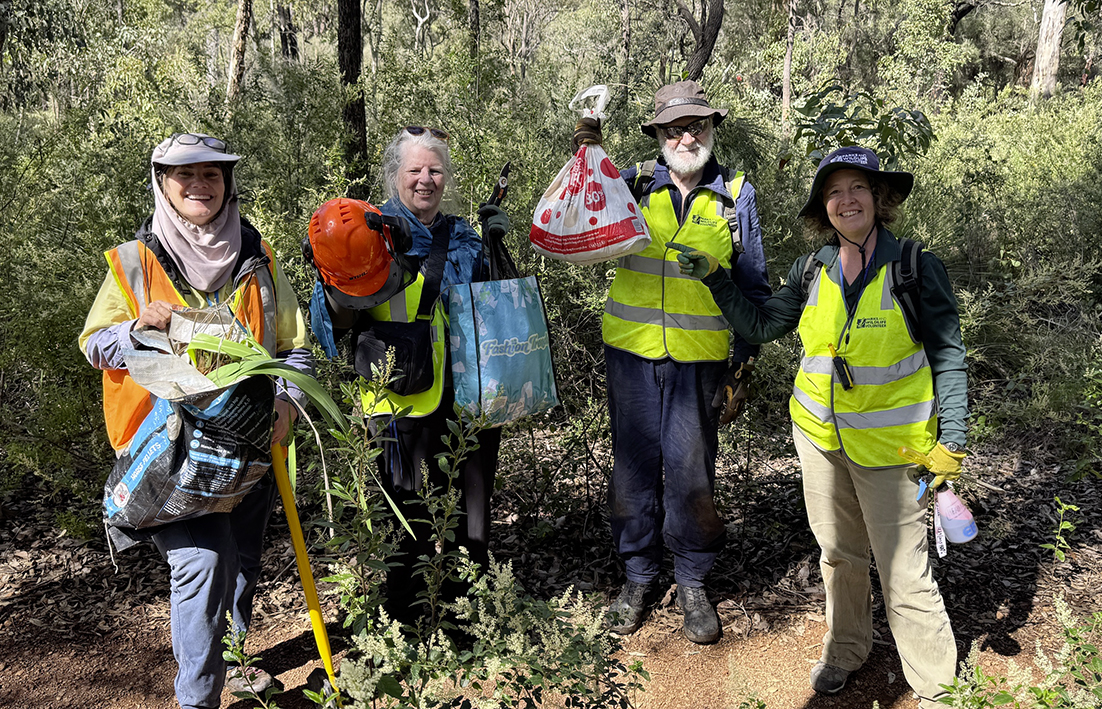
DEDICATED conservation volunteers are sounding the alarm after a new wave of highly competitive and toxic weeds were recorded in John Forrest National Park last week.
For years Friends of John Forrest National Park (FoJFNP) have successfully chipped away at major offenders breaching the national park like Watsonia, Pink Gladioli, and Cape Tulip.
However, the latest invaders – suspected to be aggressive garden escapees from neighbouring residential properties – are now threatening to undo that progress.
Once established, these invasive species form dense, suffocating clumps that steal vital water and sunlight from vulnerable native species growing along the creek banks.
Easter lilies, Arum lilies, Three-cornered garlic, and Sour grass are the new species recorded in localised spots in the national park.
FoJFNP coordinator Val English, says the appearance of these new species has been alarming.
“All of them have the potential to get very dense and outcompete all the native species of the banks of Jane Brook,” she said.
“Even these new species like the Three-cornered garlic, already has thousands and thousands of plants in the park that weren’t originally there.
“Some of them are incredibly toxic too, Easter lilies for example… are very toxic… if they were ingested by animals… they could get sick and possibly die.”
According to the Urban Bushland Council of WA a number of the new species, including Three-cornered garlic, are designated as high priority for removal, due to their threat to conservation values in the South-West Province.
Sour grass, Three-cornered garlic, and Arum lilies are also highly toxic to animals and humans when ingested in sufficient quantities, raising concerns of the welfare of fauna in the nature reserve.
While the volunteers of FoJFNP are dedicated to eradicating new expansive pests in the park, Ms English concedes that the goal of eradication is unlikely and the focus of the group is to contain the spread as much as possible.
“You can really only contain because there’s so many sources of weed,” she said.
“Local properties, seeds flowing down the creek, or catching on peoples shoes, or even blowing in from the wind.
“We can contain and reduce but we absolutely have to be consistent.
“Missing one year of removal can result in significant lost ground against the invaders.”