CITY of Kalamunda unanimously voted to support a scheme amendment rezoning the density coding to allow for more housing in Forrestfield to be developed by Satterley.
Taylor Burrell Barnett Planning principal Jarrod Ross presented to council at their most recent ordinary council meeting, supporting local planning scheme (LPS) amendment 116.
LPS amendment 116 seeks to recode the Dawson’s Nursery land from R15 to R40, allowing for higher density housing developments.
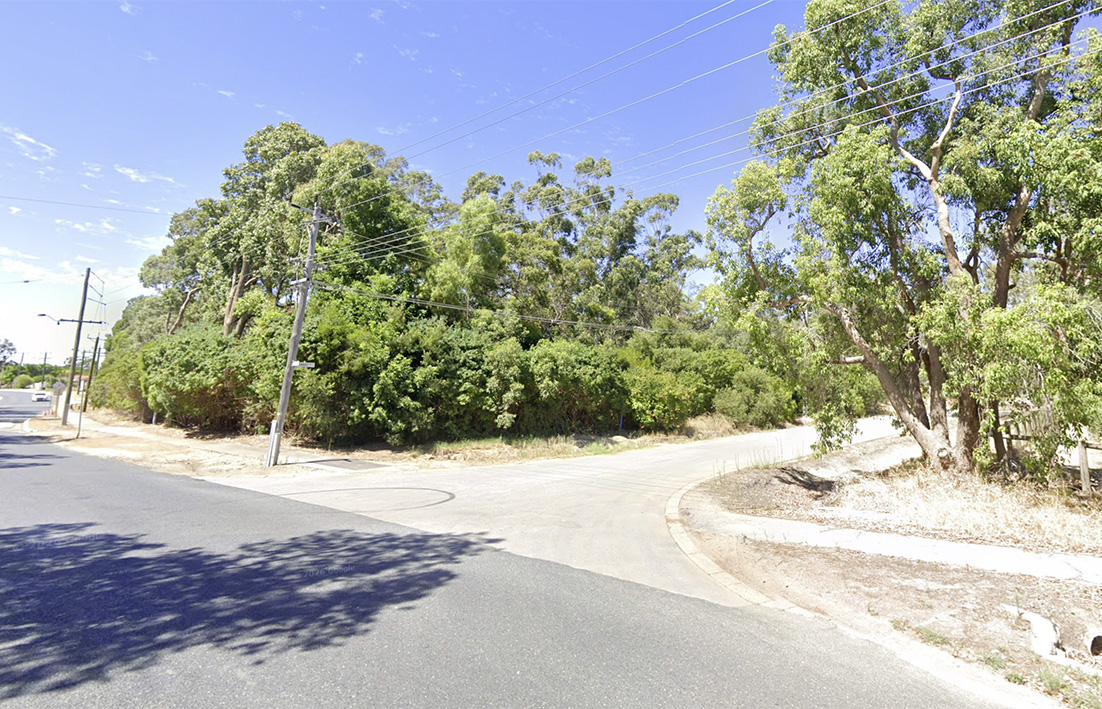
Mr Ross confirmed Satterley now owns the land where Dawson’s Nursery used to be.
Mr Ross said that in March he noted the site was one of the remaining genuine infill opportunities in the area and a more contemporary medium density coding such as R40 is appropriate to provide the best outcome for what is a well-located land parcel supporting the city’s housing infill objectives.
“Recognising that there’s some concern amongst council regarding the R40 density coding that was raised at the agenda briefing forum, I have provided an additional memorandum and supporting information which hopefully elected members have had time to review,” Mr Ross said.
Mr Ross said there was broad support for the proposal from government agencies and only three public objections.
He said residents mainly raised concerns with construction management, potential traffic impacts, and the integration of new residents and not with the density coding.
“These are common and well understood matters in infield development regardless of what coding would be applied,” he said.
“Importantly, each of these issues is well considered by the existing state and local planning policies and will be carefully managed throughout the subdivision and development stages.”
Mr Ross said it was important to note the memo he provided council included an indicative development principles plan, but it was not a final concept.
“It’s our current thinking and an initial draft to illustrate how the site might develop showing key considerations of open space, interface design, road and pedestrian connections and a mixture of housing types,” he said.
“I’ll reiterate R40 is the maximum coding that we are proposing.
“It does not mean that the whole site will be developed at that density.
“The development concept plan that we’ve provided shows that the built form, the residential development is intended to be graduated and balanced ranging between R25 and R40 which is consistent with the established development patterns in the local area.”
Mr Ross said the range of dwelling types and lot sizes was a significant strength of the proposal from a commercial and community perspective.
Cr Giardina asked how wide the roads were as he found it difficult to get through some streets that were coded R40.
“I struggled to get through some of the streets where there were cars parked either side of the road,” he said.
“Are we going to have the same problem down here in Forrestfield in some of these developments that you’re trying to do?”
Mr Ross said the width of roads in new subdivisions were determined by a state policy called liveable neighbourhoods which analyses the volume of traffic that’s going down a road and considers its function.
“Generally speaking, in these types of new estates a road would be 15m wide and that would accommodate the road carriageway and embedded parking in addition to the footpath and the like,” he said.
Mr Ross said although it wasn’t mandated that interface lots, meaning lots at the edge of the estate, would be mandated to be R25 to R30, it would be the logical and highly likely outcome.
“The lots interfacing with the bush forever side will have a necessary setback because of the bushfire considerations,” he said.
“Generally, an R40 lot will be accommodated with an area of higher amenity so it will be adjacent to public open space to offset the smaller lot size.
“Those lots realistically aren’t going to sell and they’re also going to provide what is a very inconsistent streetscape because of what’s on the opposite side – it’s going to appear disjointed from an estate perspective.
“So, it’s highly, highly unlikely that that would even be proposed even though we are not proposing to mandate it.”
Cr Giardina asked about how treed the area would be and Mr Ross said landscaping plans weren’t on hand at the time, but developers were very aware of the council’s desire to see the area treed.
“There absolutely is the intention for street tree planting along all the streets,” Mr Ross said.
Councillor David Modolo spoke in support of the rezoning to accommodate the estate’s density demands.
“In a housing crisis, we do desperately need residential zone land, and this location in Forrestfield would be a wonderful place to live,” Cr Modolo said.
City of Kalamunda Mayor Margaret Thomas said she supported the motion and Kalamunda was lucky to have a developer of Satterley’s calibre looking to provide new housing in Forrestfield.
“We’ve heard from (Mr Ross) that the bulk of the estate will be R25 to R30,” she said.
“We heard that the three objections weren’t about density, and I believe they’ll do a really beautiful development because the market suggests what they need to do.”