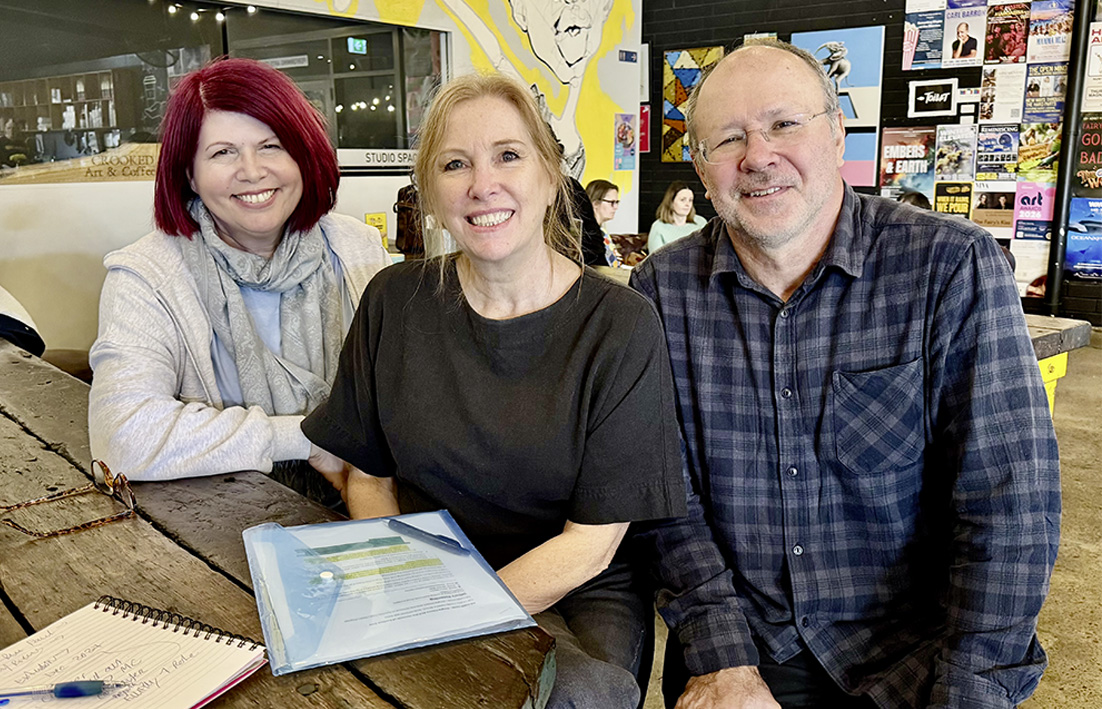
GUILDFORD resident Simone Brown is lacing up her running shoes for an extraordinary challenge - to complete every Parkrun in Western Australia, to raise awareness and funds for research into CADASIL, a rare inherited brain disease with no known cure.
Her campaign named CADASIL Awareness - One Run at a Time launched on Thursday, January 1 at her local event, the Woodbridge Riverside Parkrun.
From there she plans to run at every Parkrun across the state, one week after another, sharing her story and shining a light on this often-overlooked condition.
Her motivation is driven by her family history.
Her mother Gwenda Christmass was diagnosed with CADASIL in 2020 following years of unexplained fatigue, confusion and balance issues - a diagnosis that came after Simone’s uncle had passed away from the same disease.
“Mum was always such a strong and independent woman. She loved gardening, swimming, walking and volunteering at her local op shop. Watching her decline was heartbreaking - but if what I’m doing helps another family recognise the signs earlier, or supports research that leads to treatment, it will be worth every step,” Mrs Brown said.
CADASIL - which stands for Cerebral Autoomal Dominant Arteriopathy with Subcortical Infarcts and Leukoencephalopathy - is a rare, progressive genetic condition that affects the small blood vessels in the brain.
Most people begin to experience symptoms in their thirties to fifties, but there is a wide spectrum of severity, and symptoms can vary greatly from person to person.
Common signs include stroke or ministroke, migraines with visual disturbances, cognitive decline, depression, anxiety, apathy, fatigue and, in some cases, seizures.
The disease is caused by a mutation in a single gene, giving the children of those affected a 50 per cent chance of inheriting it.
It produces a distinct pattern of brain changes that can be detected on MRI scans, but despite these recognisable markers, CADASIL is often underdiagnosed or misdiagnosed.
While there is no specific treatment or cure, doctors focus on managing cardiovascular health to reduce the risk of stroke and slow disease progression.
Current estimates suggest around 1350 Australians may be living with CADASIL, though researchers believe the true number is higher.
That’s where research comes in. The Centre for Healthy Brain Ageing (CHeBA) at UNSW Sydney is home to AusCADASIL, the first and only dedicated Australian study of CADASIL, led by Dr Danit Saks under the direction of Professor Perminder Sachdev.
The program is currently recruiting participants across Western Australia, New South Wales, Victoria and Queensland.
Prof Sachdev, CHeBA co-director said Mrs Brown’s efforts are both moving and important.
“Her commitment is truly inspiring. CADASIL is an under-recognised condition that profoundly affects families. Research is critical to understanding the disease and finding pathways to treatment. Community champions like Simone play an invaluable role in driving awareness and hope.”
Funds raised from the campaign will go directly to support CHeBA’s AusCADASIL research program, which aims to improve understanding of the disease, identify targets for treatment and help families prepare for the challenges ahead.
“Maybe I can’t help Mum anymore, but maybe I can help someone else - another family, a doctor looking for answers, or a researcher searching for a breakthrough,” she said.
To donate please visit the donation website.