TIME is running out to be part of the Great Cocky Count with registrations ending on Sunday, March 22.
BirdLife Australia is making a final call for volunteers to join the 2026 Great Cocky Count - the largest single survey of black-cockatoos in WA - taking place at sunset on Sunday, April 12.
Great Cocky Count coordinator Merryn Pryor has been counting black cockatoos at dusk for years.
She knows the conspicuous calls that signal their approach towards a roost site, and the way even experienced volunteers hold their breath and start counting. She also knows what the numbers have been telling her.
“Numbers of Baudin’s black cockatoos have declined by 90 per cent over the last few decades,” Ms Pryor said.
“Every year we do this survey; we’re not just collecting data - we’re bearing witness to what’s happening to these birds. And right now, they need every person we can get out there to help monitor them and identify critical habitat.”
The survey is straightforward. Volunteers stand near known roost sites - tall trees where cockatoos gather to sleep - and count the birds as they fly in at dusk.
Counters are needed at sites from Chapman Valley in the north to Esperance along the south coast.
What those volunteers are counting has never been more precarious.
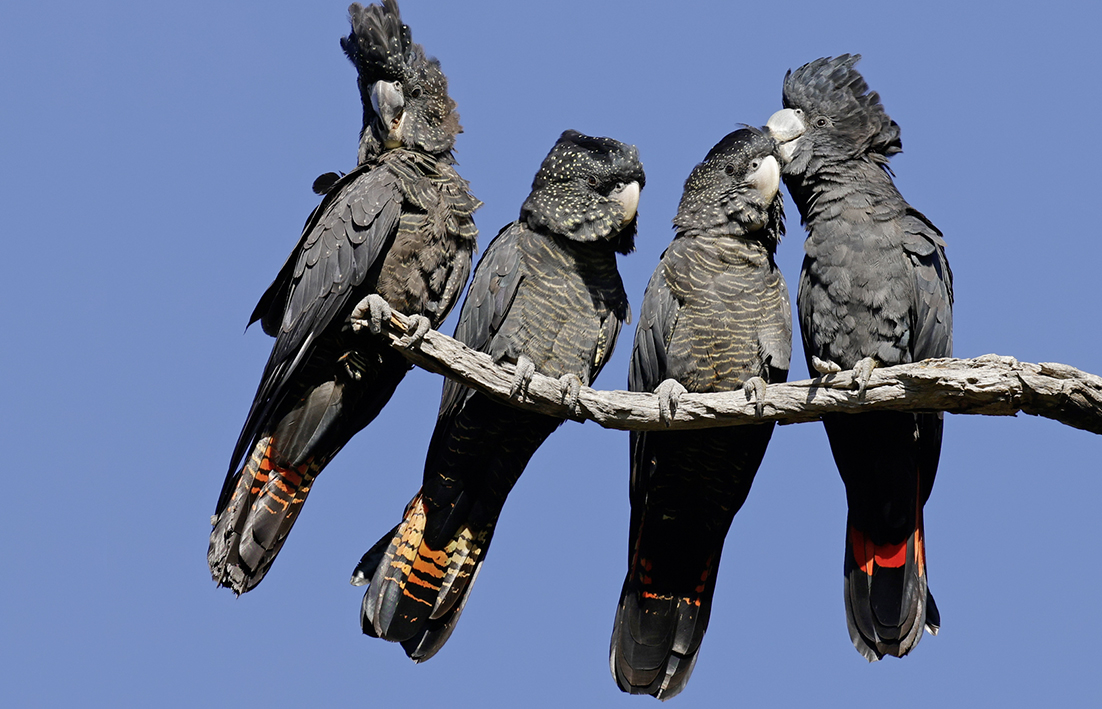
All three species monitored by the Great Cocky Count are in serious decline.
Baudin’s black cockatoo is classified as critically endangered by the International Union for Conservation of Nature.
Carnaby’s black cockatoo is listed as endangered under state and federal legislation, while Forest red-tailed black cockatoos are listed as vulnerable.
The Great Cocky Count is one of the primary tools scientists and conservationists use to track whether populations are stabilising - or still falling.
The count started as a focused Perth survey for Carnaby’s black cockatoos and has grown over two decades into a region-wide citizen science event, now covering sites right across south-western WA, and focusing on all three black-cockatoo species.
The annual snapshot of black-cockatoo populations feeds directly into advocacy for habitat protection and land-use planning.
BirdLife Australia is also asking the community to report any roost sites they know about before the count.
“A roost site is an area with tall trees where black cockatoos congregate at dusk to sleep overnight,” Ms Pryor said.
“They can be in remnant bushland, urban parks, or private properties. If you know of one in your area, please tell us - it could be added to this year's survey.”
The Great Cocky Count is supported by funding from the state government's NRM Program.
Registrations close Sunday, March 22 and can be made at https://birdlife.org.au/events/great-cocky-count