DISALLOWANCE motions related to two North Ellenbrook metropolitan region scheme (MRS) amendments were lost in parliament on Tuesday.
The result comes on the back of months of Swan community campaigning for a rethink on how water management is handled at the state government level.
In Saffioti eager for action on Swan flooding and new review (Echo News, July 31), Deputy Premier and West Swan MLA Rita Saffioti said she acknowledged the severity and complexity of flooding issues in Swan.
The matter was brought up during the debate on the motions in parliament this week with members quoting the Deputy Premier’s acknowledgement of the flooding impacts.
Greens leader MLC Brad Pettitt moved the dissallowance motion and said the state had a one size fits all policy for drainage and water in urban areas.
“It’s pretty clear in the Swan Valley those standard drainage solutions are not working,” he said.
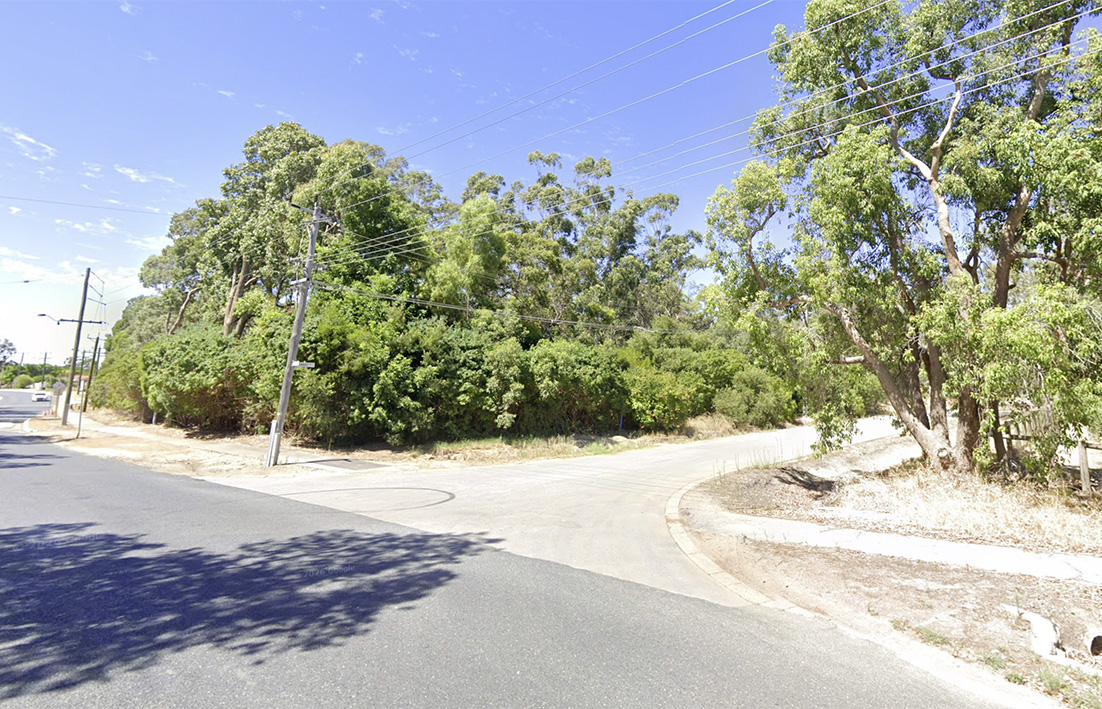
“The reason for this disallowance is that we are about to repeat those mistakes that have become apparent in the Swan Valley all over again further north in north Ellenbrook.
“This is a moment for this parliament to do its job, to ask that this development be paused whilst a different approach to drainage and water is come up with and looked at seriously.
“It’s been a slow-moving catastrophe (and) for a long time, government denied there was a problem because it takes a long time for that water to build up.
“Everyone thought, ‘Oh, it’s just a wet year, that’s why there’s waterlogging this year… it’s just seasonal’.
“What we’re seeing now again and again is that the data is overwhelming.”
Mr Pettitt said the flooding issues came down to basic geology and as the western parts of Perth were largely sand compared to the east.
“As you go towards the coast, unsurprisingly, most of Perth is limestone (and) sand (which) drains extremely well.
“When you put hard surfaces that drain off into increasingly limited amounts of land, it drains pretty quickly into the soil below.
“What has become apparent in more eastern parts of this north-eastern corridor is that this doesn’t happen.”
Guildford-based Liberal MLC Anthony Spagnolo spoke in support of the residents of Swan and addressing the flooding issues but against the disallowance motion.
“We agree that there is an issue; we disagree on the remedy to fix it,” he said.
“I do not support this disallowance because this is not the right tool to solve the problem.
“It is like dropping a nuclear bomb on something that needs a couple of right hooks.
“It is over the top and will actually halt progress.
“I think allowing this land to go ahead and move towards urban development will actually help… there are many steps before we get to development.
“Before these future approvals are put in place, those issues will need to be addressed (and) it is actually that bit of the process that will put focus and attention on addressing it.
“Let me be clear (as) I stand with (Swan residents) in their desire to have these issues fixed, but I also support housing in Western Australia – we need to build more homes.”
Labor MLC Jackie Jarvis voted against the disallowance motion and said the priority was to get more houses built.
“I am advised that groundwater challenges in the area of North Ellenbrook differ from the circumstances in the Swan Valley area,” she said.
“The main one is that (Mr Pettitt) referred to matters on the Swan River flood plain.
“I am told that North Ellenbrook has a greater separation distance from the Swan River flood plain and that the Swan Valley and Dayton areas are on a flood plain adjacent to the river.
“We have property development around the world and in Australia on clay soils – I am told that the North Ellenbrook area has lower clay content in the soils and a higher separation to regional groundwater levels.
“I am also advised that North Ellenbrook has local waterways that control groundwater levels such as gullies and naturally occurring waterways, as opposed to the Swan Valley and Dayton areas where water is transferred to local agricultural drains in the Swan Valley on that flood plain – I am told that the issues are different.”
Ms Jarvis said during the preparation of the local structure plans, there was sufficient opportunity and obligation to manage groundwater.
“That will occur in the next stage,” she said.
“As part of the local structure plan process, DWER will review and consider a local water management strategy for each of the respective structure plan areas.
“Both the local structure plan and the local water management strategy will be appropriately reviewed and considered by the WA Planning Commission in due course before those subdivision plans proceed.”
Ms Jarvis said the loss of the disallowance motion would not authorise subdivision, earthworks or development and wildlife habitat was also accounted for.
“We believe these amendments are crucial for the delivery of 11,000 houses.”
Mr Pettitt said refusing the motion under the banner of more housing was a sign the evidence he presented had not been listened to.
“Even if we do rush this forward now… when do we think we will see houses out of this?” he said.
“We heard that there are other mechanisms for making sure that we resolve some of these water and drainage issues.
“There is no other mechanism for Parliament to do that.
“In fact, what we will see is none of these things being addressed because the evidence is that they do not get addressed.
“The very fact that we are where we are in the Swan Valley shows that these issues have not been previously addressed.”
Mr Pettitt said the information Ms Jarvis received about different soil types conflicted with previous information.
“Part of the government’s advice was that the soils are different despite its own report saying that they are not different – I ask the minister to show us the government’s evidence,” he said.
“The links the minister gave me do not show the difference… they show that the soils are largely the same and, therefore, the problems are largely the same.”
Swan Community Environmental Alliance vice-chair Jan Zeck said there was a lack of available data.
“The outcome was very disappointing and there’s still a need for a review,” she said.
“These are problems that need an answer, and we need to look at what has happened in south (of the proposed North Ellenbrook amendment areas), why it has happened and how we can apply what we learn.”
The disallowance motions were lost 9-27.