CHANGES to FOGO guidelines following the release of the state government’s new waste strategy last month is causing a stink in the Perth Hills.
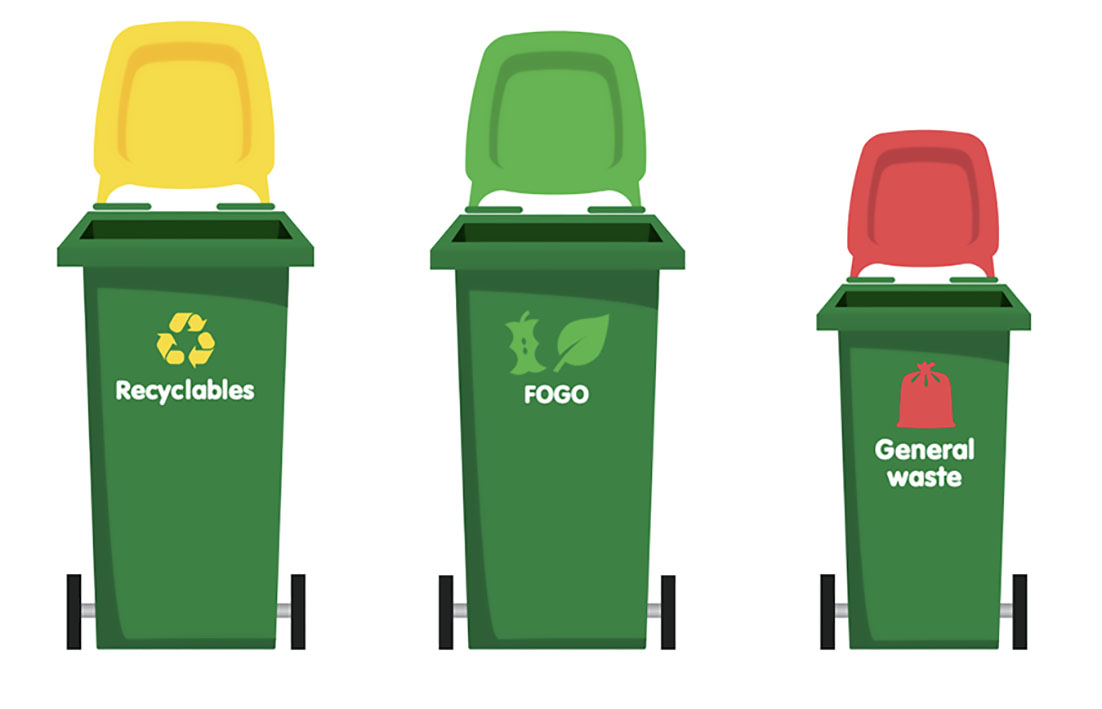
In July this year the Shire of Mundaring updated its (Food Organics, Garden Organics) FOGO guidelines to ban a number of previously accepted items from the green-lid FOGO bins following the new government guidelines.
The new rules come with a trade-off, with the collection of red-lidded general waste bins reduced from weekly to fortnightly, leading to claims of overflowing bins and reduced waste capacity.
Mundaring Residents and Ratepayers Progress Association president Tom Johns said he was sympathetic to young families in the hills who may be struggling with the new smaller bin sizes.
“Our situation in the hills is somewhat different to some other places due to larger blocks and other considerations,” Mr Johns said.
A Shire of Mundaring spokesperson acknowledged community concerns around bin capacity and household needs.
“Residents with higher volumes of general waste have the option of upgrading to a larger 240-litre general waste bin or purchasing an additional bin service,” they said.
“A compassionate waste service is also available for residents with medical waste requirements, and an extra collection has been organised during the Christmas period when households typically generate more waste.”
The spokesperson said accepted FOGO materials were now restricted to food organics, garden organics and certified compostable caddy liners only.
“The updates to the FOGO accepted list makes sorting waste simpler for households, consistent across local governments and helps produce high-quality compost,” they said.
As reported in Mundaring residents raise general waste concerns many residents claimed illegal dumping was happening due to the reduced size of the general waste bins along with their fortnightly collection.
Kalamunda MLA Adam Hort said people across the Perth Hills were rightly asking why a one-size-fits-all waste model should apply to large rural properties that often managed their waste very differently.
“I support better recycling but the state government should give councils the flexibility to deliver it in a way that works for their communities.
“Concerns from locals about smaller red bins, fortnightly collections and summer hygiene are legitimate and the shire should be given the freedom to find a practical local solution, something the state government seems disinterested in.”
A Department of Water and Environmental Regulation (DWER) spokesperson said local governments were responsible for delivering household waste services, including decisions about bin sizes and collection arrangements for their communities.
“As part of these programs, participating local governments adopted service configurations designed to maximise recovery of food and garden organics and reduce waste sent to landfill, while retaining responsibility for the delivery of waste services to their residents,” they said.