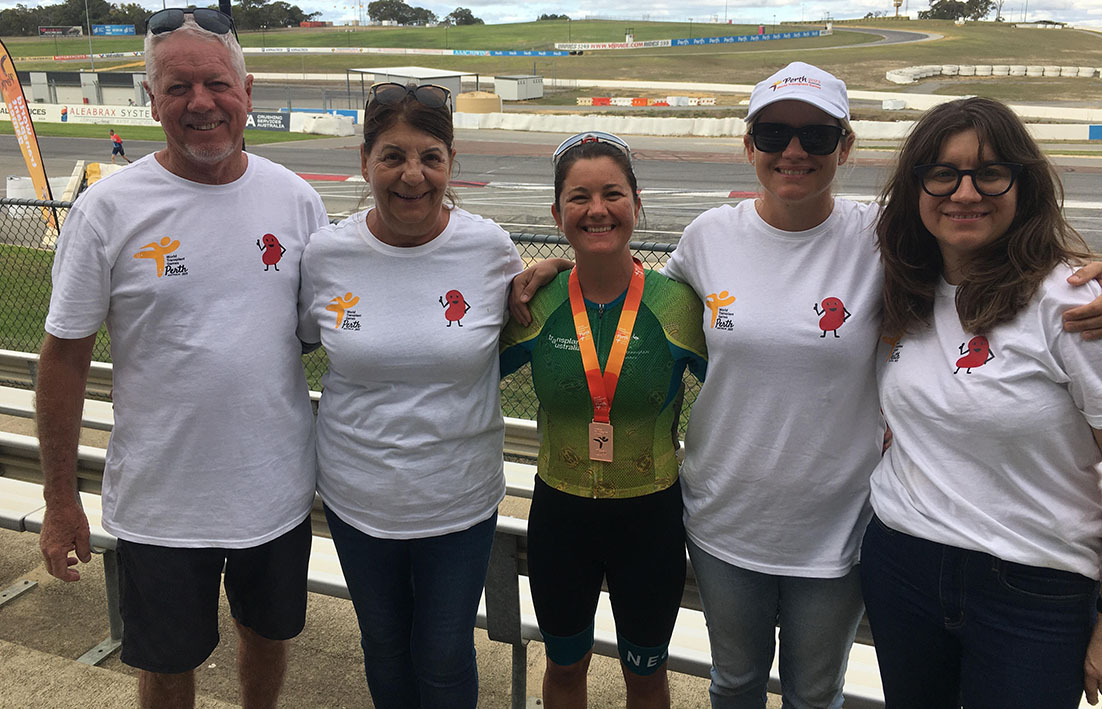
HIGH Wycombe’s Kate Harper is heading to the World Transplant Games in Dresden, Germany later this month.
The games will be held from August 17 to 24 and represents a powerful international celebration of second chances, resilience and the gift of life.
For Ms Harper, life has been a journey of resilience and family support, marked by two kidney transplants over three decades.
She was just three-years-old when she received her first kidney transplant after being born with polycystic kidney disease and spending her early life on dialysis.
That kidney lasted 29 years, allowing her to enjoy an active childhood filled with swimming, mountain biking, and family adventures – all while managing specialist appointments and treatment.
In recent years, her kidney function gradually declined, and facing this challenge head-on, she stepped back from clinical nursing to focus on her health.
After receiving a second kidney transplant from her sister Nikki in 2022, Ms Harper’s recovery wasn’t without challenges, including a bout of Covid-19 just 6 weeks post-transplant.
Her resilience and positive outlook on life is attributed to the support of her family in encouraging her to live every day to the fullest.
Just six months after her transplant, Ms Harper began training to compete at the 2023 World Transplant Games.
For her, the games represent not just personal achievement but a celebration of the gift of life and the vital role of organ donation.
“It’s been a tough road, but I’m here because of my donors and my family. The games are a way to honour them and raise awareness about the importance of organ donation,” Ms Harper said.
She will be part of Team Transplant Australia – more than 120 participants consisting of solid organ recipients, bone marrow and stem cell recipients, donor families, living donors and supporters.
All up Germany is expecting to welcome 2500 participants, aged four to 80 plus, from 55 nations competing in 17 different sports.
Transplant Australia chief executive officer Chris Thomas emphasised the feel good nature of the event where everyone shares a common bond – owing their lives to the generosity of someone else.
“These games are a chance to showcase the incredible second chance these athletes have been given through the gift of life. It is more than medals, it’s a celebration of health, achievement over adversity, gratitude and the opportunities made possible by the selfless act of organ and tissue donors,” Mr Thomas said.
The youngest member of team Australia is six-year-old Anthony Schiller from South Australia, who received a liver transplant. At the other end of the age spectrum, there is 82-year-old Esther Scott from Western Australia, who also received her liver transplant 25 years ago.
Another standout in the team is 68-year-old Victorian Nigel Goldsworthy, who is marking an extraordinary milestone – competing 51 years after his kidney transplant, an example of how organ donation extends life far beyond what was once thought possible.
The games highlight the importance of talking to family and friends about organ and tissue donation and registering as a donor on the Australian Organ Donor Register.
The World Transplant Games shine a spotlight on the power of organ and tissue donation – not only to save lives but in giving people a chance to live them fully.
As these athletes head over to Germany, they remind us of generosity of donors and their families who said ‘yes’ to donation.
More than 1800 people are waiting in Australia for a life-saving transplant, Transplant Australia is committed to promoting donation to help give patients a second chance at life. To register as an organ and tissue donor, visit www.d onatelife.gov.au and tell your family about your decision.