MOST Hills residents, especially those in the Shire of Mundaring, will be very familiar with the Bilgoman Aquatic Centre near the top of the hill going up the Great Eastern Highway towards Glen Forrest.
Not so many, though, will know about a very interesting, but much older, aquatic feature that is located in the bush about 100 metres west of the swimming pool.
In 1846, the government of the Swan River Colony was taking steps to open up the interior of Western Australia by building a road east from the Swan Valley.
The assistant government surveyor Philip Chauncy was supervising the work, which included identifying sources of water to serve those working or travelling on the new road and their draft animals.
One of these was in an area of marshy land, known by the local Aboriginal people as ‘Bilgoman’ or ‘tea tree watering place, where he directed a well to be dug 14 feet through white pipe clay’.
Some 14 years later, when the government had gangs of convicts working on the road, they needed secure accommodation for their, doubtless rather unenthusiastic, workforce. One of these little groups of huts was built near the Bilgoman Well.
For the next 20 years, the huts and the well were regularly used but, once the railway had been constructed to York in 1885, they ceased to be of practical value except as a recreational place for Darlington residents.
The walls of the huts, being made of earth bricks, gradually wasted away and, by the 1940s, the bush took over the whole area.
When it was decided to restore the well and its surrounds as a project to celebrate the Australian Bicentenary in 1988, long-time local resident, schoolteacher, and amateur historian Ron Mitchell was called upon to find the well again, and it was renovated and signs and paths installed.
There then followed another period of gradual degradation and lack of public awareness until FOBWE (Friends of Bilgoman Well) was formed in 2022.
Since then, the well site has been tidied up, signs repaired, and paths cleared, and numerous endemic native plants dug in every year.
Most recently, informative signs, similar to those on the Darlington Heritage Trail have been put in place, and new rustic benches have been installed at the well and overlooking the site of the convict ruins for visitors to sit on while they contemplate this historic rustic scene.
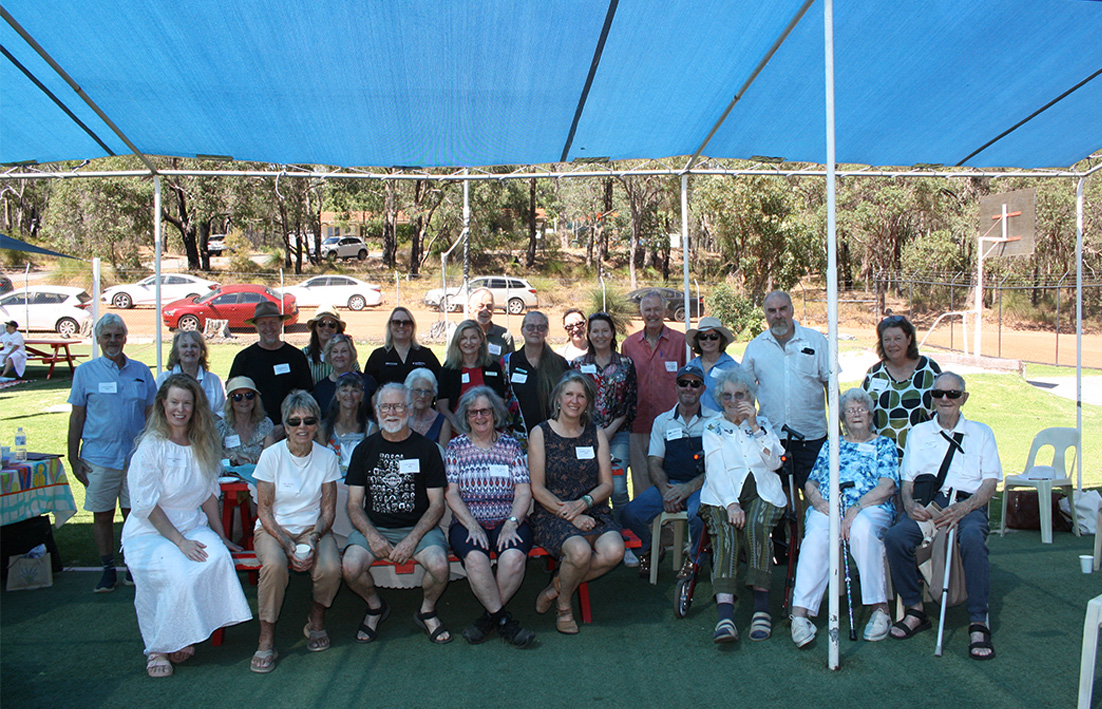
To mark this next stage in the life of the Bilgoman Well, FOBWE recently organised a brief celebration at the Bilgoman Aquatic Centre and down at the well itself to give the many people and organisations who have helped there over the years a chance to meet each other and see the results of their work.
It was a very jovial occasion, with the gathering addressed by Darlington History Group chair Lyn Myles, Mundaring Shire President Paige McNeil, and Hannah Dyer, a director of the Bendigo Community Bank that funded the cost of the most recent developments around the well.
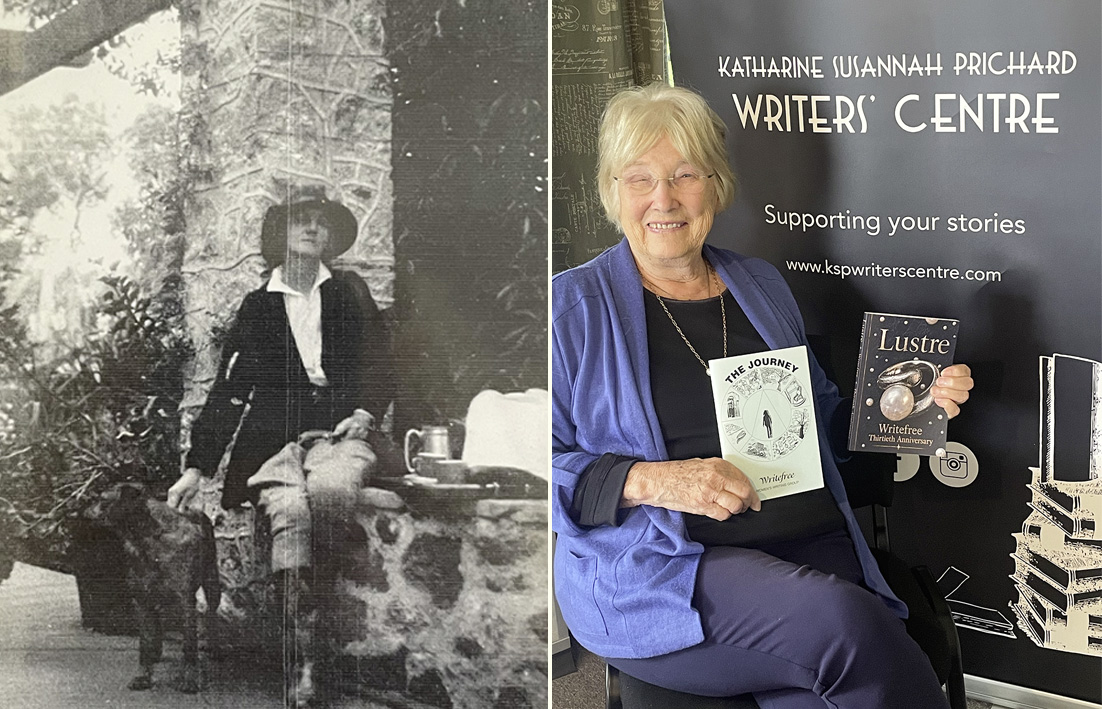
There was even at least one person there, very long-time Darlington resident Sally Herzfeld, who could remember playing around the ruins as a small child!
Everybody agreed that it was a job well worth doing and committed themselves to further efforts over the years to ensure that this important historical site is looked after and well known to the local community and the general public.