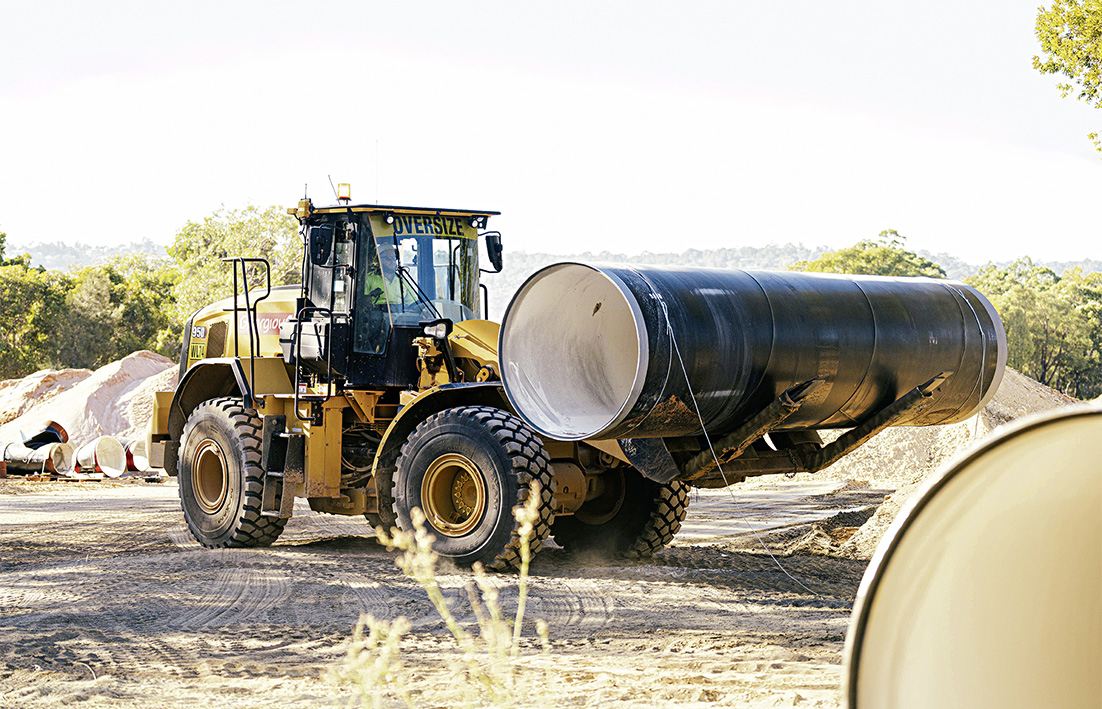
UPGRADES to the Goldfields and Agricultural Water Supply Scheme (GAWSS) have commenced as part of a $543 million state government project designed to secure water for more than 100,000 residents in the Goldfields and Wheatbelt.
To be delivered by the Water Corporation the project will involve the replacement of 44.5 kilometres along the pipeline’s 566-kilometre route, and duplication of Binduli Reservoir to support a 10 per cent increase in the pipeline’s capacity.
The project will utilise new pipes manufactured in Kwinana using Pilbara iron ore and Cockburn cement designed to last up to 150 years.
The upgrades will create more than 330 jobs throughout construction while ensuring the regions have the essential infrastructure required to support future investment and growth.
Local businesses will benefit from $42.4m in works, with $14m to be specifically spent with Aboriginal businesses.
Designed and built by CY O’Connor between 1898 and 1903, the GAWSS is one of WA’s most significant infrastructure pieces, delivering water to regional communities for more than a century.
Premier Roger Cook said the project was about securing the infrastructure regional communities need to grow and thrive.
“As part of our Seven Cities vision, we’re ensuring the Goldfields has the essential services needed to create jobs and support new economic opportunities in regional WA.
“By manufacturing the pipeline in WA, we’re backing local industry today, and with a lifespan of up to 150 years, we’re delivering the water security and economic foundations the Goldfields and Wheatbelt will rely on for generations to come.”
Water Minister Daniel Pastorelli said the upgrade will increase the scheme’s capacity by 10 per cent, helping to meet growing demand and secure reliable water supplies well into the future.
“Replacing 44.5 kilometres of ageing pipeline is a major step in renewing this historic infrastructure, to ensure this vital scheme can continue serving the Goldfields and Wheatbelt for generations.
“The new pipeline sections are being built to last up to 150 years, combining modern engineering with careful preservation of an important part of WA's history.”
More information available on the website.