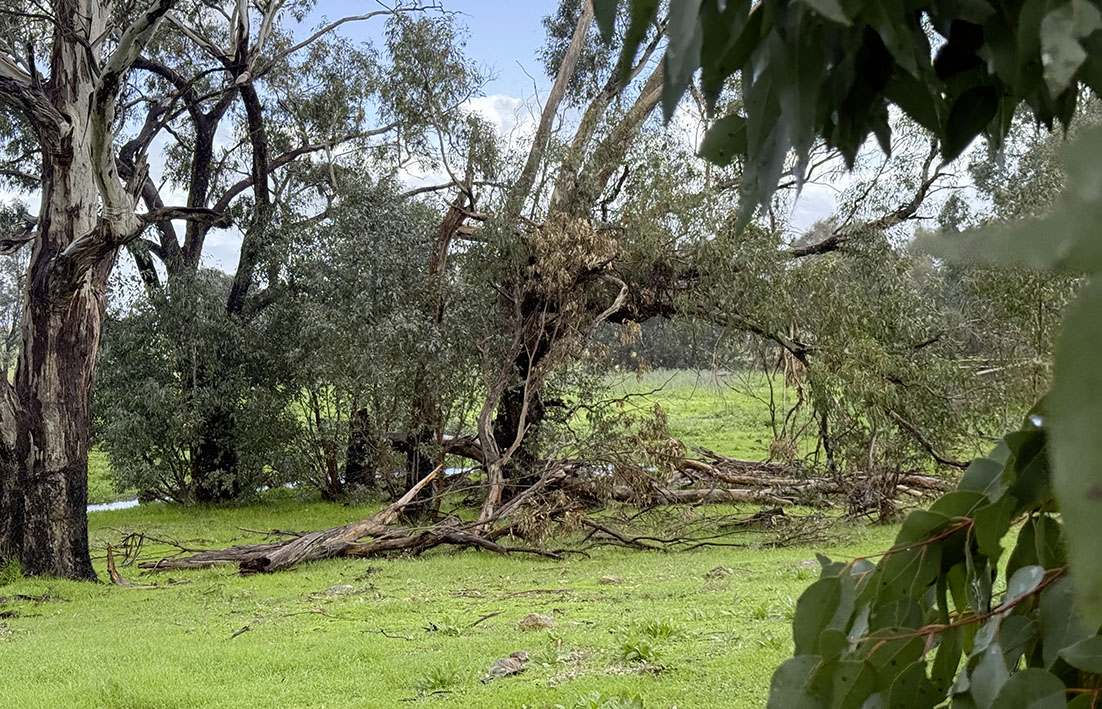
RESIDENTS in the Perth Hills are being urged to take extra care around local bushland, with large numbers of dead and dying trees now at risk of falling after months of extreme weather.
West Swan Bushfire Brigade member and Swan Valley resident for the past 52 years Anita Peiris warned that following one of the driest summers on record, thousands of trees across the region have suffered severe stress, with many unable to recover.
She said the recent heavy rainfall has further weakened already compromised trees, leaving them waterlogged and unstable.
“Environmental groups and researchers have described the widespread tree death as part of a ‘forest collapse’ event, stretching from the Perth Hills through to parts of the Wheatbelt and Great Southern with jarrah, marri and tuart trees are among the species most affected,” she said.
“Dead and waterlogged trees are more likely to drop limbs or collapse entirely, especially during storms or strong winds, and I advise residents not to park or walk beneath large trees in bushland reserves, along trails, or on rural properties after heavy rainfall.
“People need to be aware that these trees can fall without warning.”
She said after such a dry summer followed by intense rain, many trees have been left unstable, so it’s important for everyone, walkers, families and even drivers, to take care in the hills right now.”
She said members of public could help by reporting hazardous trees to their local council or ranger, using the UWA Dead Tree Register to log observations, and exercising caution in parks, reserves and road verges during and after wet weather.
“While the natural environment of the Perth Hills has shown resilience in the past, experts warn that the combination of hotter summers and reduced rainfall will place increasing pressure on native trees in the years ahead,” she said.
For now, residents are encouraged to remain alert and to treat falling trees as a very real hazard at this time of the year.