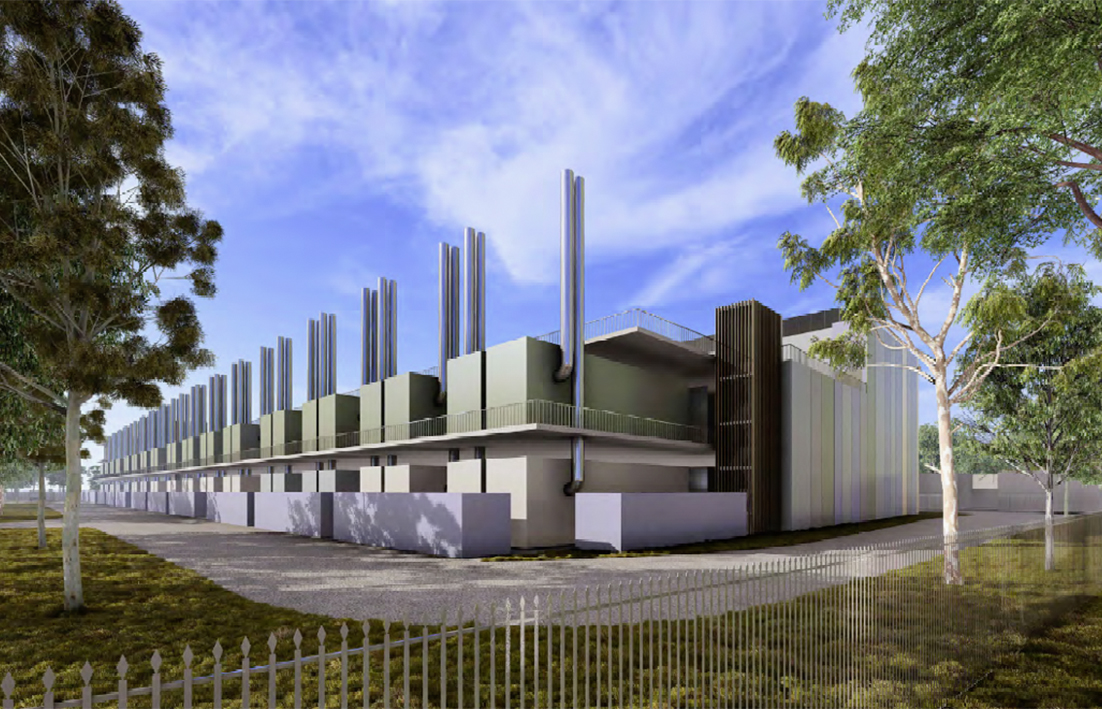
FOLLOWING significant public opposition, including a petition signed by more than 1300 people, the City of Swan has extended the cut-off date for public submissions on a proposed new data centre by 10 days until 5pm on Monday, March 30.
The centre, to be built on Lots 14 and 15 Stirling Crescent, Hazelmere has attracted condemnation from many local environmental and community groups due to the proposal’s short consultation time.
City of Swan chief executive officer Stephen Cain said that at the request of the community and noting the extensive public interest in this application, the city had negotiated with the applicants an extension of the public consultation period.
He added the application was currently undergoing assessment.
Guildford Association president Christine Hughes said the community was concerned the rush on this development application would result in it avoiding the level of scrutiny needed.
“The Development Assessment Panel (DAP) are unlikely to have the skills in all areas to be able to comment,” Mrs Hughes said.
“Submissions will no doubt cover multiple issues and the community is grateful for the extra days granted by the city.
“The process largely avoids real public scrutiny and certainly the voice of the elected councillors.
“I also note the city’s own website Swan Engage does not list some of the most contentious issues such as the 88 diesel generators necessary to run the proposed centre, but it does mention two bicycle bays and two ACROD bays.”
Mrs Hughes cited the proposed centre’s close proximity to the Helena River Waldorf School and the Helena River floodplain as major problems.
“Both sites carry registration with Aboriginal Cultural Heritage notations (ACH 3758 & 4006 respectively),” Mrs Hughes said.
“The proposal is for a 23.5m tall building, which equates to an eight-storey residential living height and occupies most of the sites operating 24 hours a day.
“The rear of the development backs onto the Helena River flood plain and can be expected to have a significant impact on wildlife, black cockatoo habitat and risk of contamination of the waterway, particularly in the event of fire or diesel spillage.
“Emissions are also a major concern as this is a 120megawatt data centre with very high water demand.
“The proponents do discuss ultimately building a dedicated substation to provide for its energy needs.”
The Blackadder Woodbridge catchment group’s Francesca Irwin said it was important to understand that whilst the City of Swan will not be the decision maker for this application, city planning staff prepare a Recommended Authority Report (RAR) for JDAP to consider as part of their determination.
“Therefore, we encourage the public to urge the City of Swan to use their own guidelines to interrogate the enormous scale of this application and to ask our JDAP council representatives (councillors Henderson, Zannino and Congerton) to object to this proposal,” Mrs Irwin said.
Lower Helena Association chair Marilena Stimpfl said while she accepted that data centres were essential infrastructure and powered our digital economy, what was in dispute here was where they should be built and whether this proposal has been properly defined and assessed.
“For a facility of this scale, water demand could reach tens to hundreds of millions of litres per year,” Dr Stimpfl said.
“Despite this, the application provides no clear water source, no quantified demand and no defined wastewater or trade water strategy.
“Data centres also typically need to store enough diesel fuel onsite to operate for 72 hours on diesel generation, perhaps longer depending on contracts.
“I estimate that at full design load with 88 generators of at least 2MVA capacity, it would equate to a fuel burn rate of about 460L per hour per unit.
“With 88 units at capacity that would be equivalent to about 2.9 million litres of diesel over 72 hours.”
Dr Stimpfl said this was an engineering estimate because the report identified 88 generators and a 120 MW load but did not state the generator rating or actual fuel storage design.
Executive director and principal environmental scientist of the Bibbul Ngarma Aboriginal Association Francesca Flynn said the proposal was missing essential cultural, environmental, hydrological and engineering information, making it incapable of proper technical assessment.
She said it was also a high-risk proposal as the site was not connected to the sewer network and the nearest Water Corporation sewer main was a high duty bypass main that could not service the development.
In the story, Proposed new data centre comes under fire concerns were raised by residents over the short public consultation period.
Further details of the data centre proposal can be found on Swan Engage.
Anyone wishing to sign the petition rejecting the data centre may visit the dedicated Change.org page.